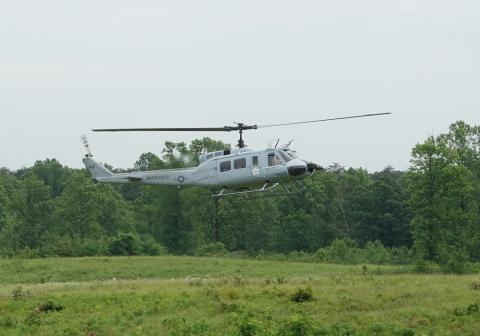
San Diego State University (SDSU) has launched its new Center for Unmanned Systems Technologies—also known as the Drone Lab—which will be used to “capitalize on its potential for crowd protection, surveillance and research while heading off potential dangers.”
Right now, SDSU students can fly their UAS on campus at two designated “fly zones,” but the school notes that it is a safety hazard to have too many UAS flying around campus, especially by pilots that are inexperienced.
Technology
Technology
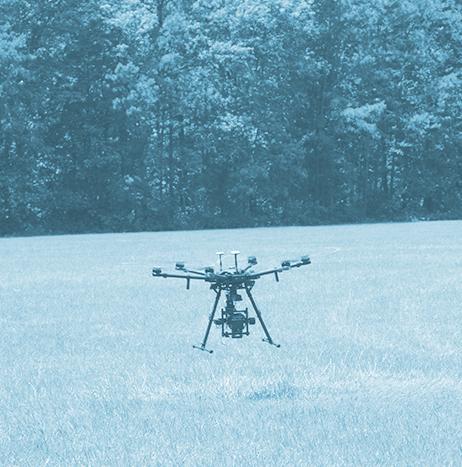
Bye Aerospace successfully installs and ground tests SolAero solar cells on its UAV
Bye Aerospace has announced that solar cells from a company called SolAero were successfully installed and ground tested on both wings of Bye Aerospace's initial prototype of the StratoAirNet UAV, which is an advanced, medium-altitude, long-endurance solar-electric aircraft being developed by the company.
In a statement, Bye Aerospace's CEO George Bye expressed appreciation to SolAero for the company’s active participation in developing the StratoAirNet UAV.
“SolAero is a business and engineering partner in every sense of the word,” Bye says. “With the completion of ground tests for the solar cells on the wings, we can advance to the next stage of assembly and testing.”

University of Washington, Columbia University to use AUVs to study Antarctica's ice shelves
Researchers from the University of Washington (UW) and Columbia University are preparing to study Antarctica’s ice shelves from the ocean below, using battery-powered Seaglider AUVs.
According to GeekWire, the results of the study are expected to provide a better understanding of how ice retreats, and how climate change could “affect the loss of polar ice sheets and the resulting rise in sea levels.”
This study, which is being funded by billionaire philanthropist Paul Allen, could go a long way in proving that the devices from UW’s Applied Physics Laboratory (APL) are capable of doing this type of work.

DroneBase launches Augmented Reality platform for UAS
According to UASweekly.com, DroneBase, which is a large network of UAS pilots, has announced the launch of AirCraft, which is the first Augmented Reality (AR) platform for both commercial and recreational UAS use.
Using the AR platform, pilots of any skillset can use their UAS to create, edit, and share objects in the sky.
“AirCraft gives pilots of all skill levels new reasons to fly their drones,” says Dan Burton, Co-Founder and CEO, DroneBase.
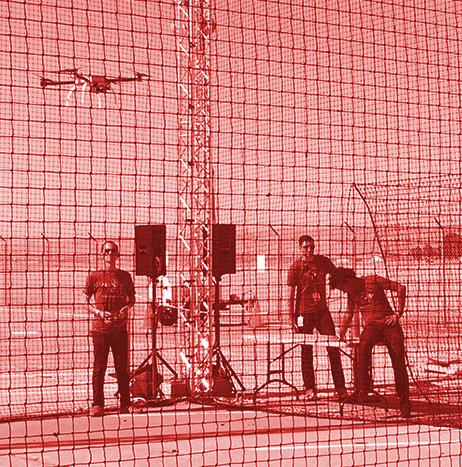
Vanilla Aircraft's Heely says more to come from long-duration VA001 aircraft
Vanilla Aircraft's VA001 UAS recently completed a historic flight, as it flew for a little over five days for a total of 121.4 hours.
After executing a pilot-controlled takeoff on Oct. 18 from the NASA Wallops Flight Facility, the UAS switched to autopilot control and quietly orbited above Wallops Island's Virginia Space UAS Runway at 5,000 feet in a two-mile orbit.
Weekend Roundup
This Week in the Unmanned Systems and Robotics World
Using the company's KnifeFish UUV, which is a mine countermeasure (MCM) UUV, the General Dynamics Mission Systems' Knifefish team has successfully completed contractor trials for the U.S. Navy's Knifefish program. Using buried, bottom and volume type mine-test targets, the UUV operated in multiple mine test target fields at-sea. At various depths, the UUV showcased its ability to detect, classify and identify potential mines that would serve as unique threats to naval vessels operating in a mission area. (PR Newswire)
EasyMile's EZ10 shuttle bus becomes first autonomous vehicle operating in Germany
A German railway company called Deutsche Bahn has welcomed the first autonomous vehicle to the roads of Germany, in the form of EasyMile’s EZ10 shuttle bus.
The EZ10 shuttle bus is currently operating in Bad Birnbach, which is a municipality in the district of Rottal-Inn in Bavaria, Germany.
The vehicle, which has one staff member onboard to take over operation of the vehicle if necessary, will be used on a route that is approximately 700 meters long, from the town center to the thermal baths. Next year, the route will be extended to connect the town center and rail station.

LiquidPiston wins NOVUS Unmanned startup pitch competition
LiquidPiston, a company that has designed a revolutionary new rotary engine, took home the top prize at AUVSI’s NOVUS Unmanned conference and competition in San Francisco.
Ten companies vied for the top spot and seed funding at the conference, which was cosponsored by Investorfest, a company that coaches startups to help them get funding. They outlined their business plans and early successes before the judges picked a winner.
LiquidPiston will go home with $50,000 worth of prizes, including a presence at upcoming AUVSI shows and conferences and coaching from Investorfest.
DroneDeploy unveils "sweeping updates" to its enterprise software; announces new partnerships
According to Unmanned Aerial, DroneDeploy, which is a San Francisco-based UAS software platform provider, has unveiled “sweeping updates” to its enterprise software.
Aurora's Optionally-Piloted UH-1H receives Special Airworthiness Certificate from FAA
The FAA has granted a Special Airworthiness Certificate to Aurora Flight Sciences’ UH-1H helicopter, which is the company’s newest optionally-piloted aircraft, and the third manned aircraft overall that Aurora has converted to robotic-controlled or OPA operation.
As the latest development in the Office of Naval Research’s (ONR) Autonomous Aerial Cargo/Utility System (AACUS) program, Aurora has created the “Autonomy-enabled UH-1,” also known as AEH-1, by adding a complete digital flight control system.
“The Special Airworthiness Certificate is a significant validation of the program’s capabilities by the FAA,” says John Langford, Aurora Chairman and CEO.