Jamming. Spoofing. Interference from the landscape or cityscape. Interference from other flight equipment.
Such snarls arise often enough with satellite signals to make it clear: Routine UAS flight beyond the line of sight (BLOS) will likely never happen with traditional GPS technology alone. To assure safe travel over long distances, unmanned aircraft systems need greater capability to ensure accurate positioning and routing.
Air
Air
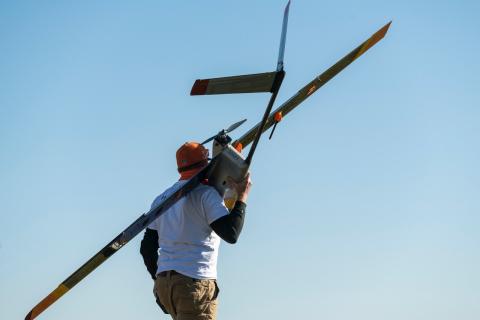
Wingcopter Secures $22 Million in Series A Funding to Aid in COVID-19 Relief
Wingcopter has secured $22 million in Series A funding to strengthen its leadership in drone-based logistics, with a special focus on healthcare-related applications including the distribution of COVID-19 vaccines.
“Our team is driven by tackling the world’s challenges through scalable innovations,” said Wingcopter CEO Tom Plümmer. “This chapter of our journey is dedicated to setting up logistical highways in the sky that leapfrog traditional means of transportation.”

Good Drone News in the Empire State
Recently, Assembly Bill 1439 was introduced in the New York State Assembly with the goal of inserting language related to unmanned aerial systems (UAS), or drones, into existing state vehicle and traffic laws. The bill’s sponsor is Assemblyman Bill Magnarelli, a Democrat from New York’s 129th Assembly District, and AUVSI applauds him for taking this important step.
Introducing: Assuring Autonomy
Welcome to AUVSI’s new blog, titled Assuring Autonomy. That brand may sound familiar, as our CEO and President Brian Wynne rolled out a video series spotlighting leaders within the unmanned systems industry under the same name in the summer of 2020. However, since the quest to increase knowledge about and familiarity with unmanned systems will be many-pronged in nature, the Assuring Autonomy brand will now encompass this blog as well as future iterations of educational videos.
AUVSI Welcomes Remote ID and Operations Over People Final Rules for UAS
Today, the Federal Aviation Administration (FAA) has delivered a Final Rule on Remote Identification (ID) for unmanned aerial systems (UAS). Thought of as a digital license plate for drones, the objective of Remote ID is to ensure that a UAS in flight is providing identification and location information that authorities can access. The FAA also released the final rule for Operations Over People, which includes rules for operations at night.
AUVSI Hosts Unmanned Systems Industry Forecast Webinar December 16th
Contact: Jackie Beckwith, jbeckwith@auvsi.org
For Immediate Release: December 14, 2020
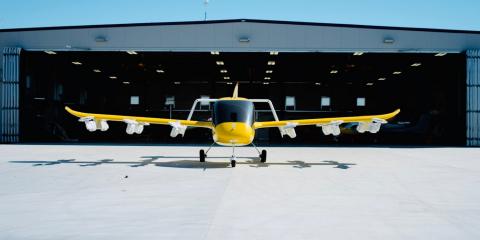
Wisk, NASA partner to safely integrate autonomous aircraft systems into UAM applications at national level
Urban Air Mobility (UAM) company Wisk is partnering with NASA to focus on the safe integration of autonomous aircraft systems into Urban Air Mobility applications at a national level.
The partnership is part of NASA's Advanced Air Mobility National Campaign strategy to develop key guidance for UAM operations. To accelerate U.S. leadership in emerging automated aviation technology, the partnership will also address key challenges such as certification and standards development.
Initially, the partnership will address critical National Campaign safety scenarios, with a focus on autonomous flight and contingency management, including collision avoidance and flight path management.
FAA announces BEYOND program following successful conclusion of UAS IPP
On Friday, Oct. 30, U.S. Secretary of Transportation Elaine L. Chao announced that the three-year UAS Integration Pilot Program (IPP) successfully concluded on Oct. 25.
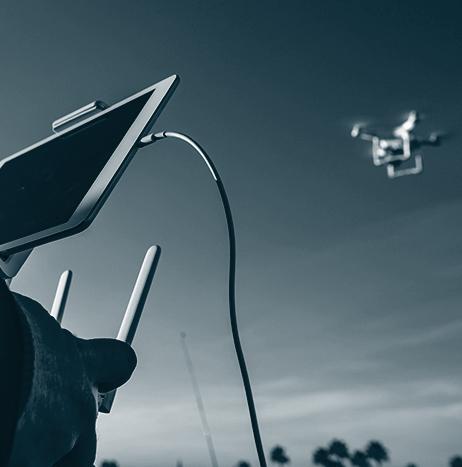
New York UAS Test Site selected to participate in Phase 2 of UPP program
The FAA has selected the New York UAS Test Site at Griffiss International Airport in Rome, New York and the Virginia Tech Mid-Atlantic Aviation Partnership in Blacksburg, Virginia to participate in phase two of the unmanned aircraft traffic management pilot program (UPP).
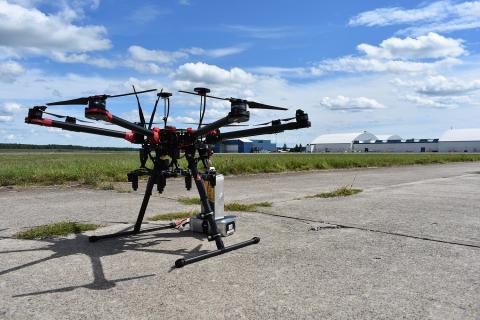
VP Racing Fuels leverages specialty fuel technology experience to keep UAVs up and running
Fuel is something that people tend to take for granted until a critical failure occurs.
In the unmanned industry, UAV operators can’t afford to have fuel issues happen, or else they risk having a potential disaster on their hands that could result in the loss of very valuable technology.