
Boeing has announced a new partnership agreement with the Queensland Government in Australia, which will result in Australia being home to Boeing’s largest autonomous systems development program outside of the U.S.
Over the next three years, Boeing will use the rapid innovation program to develop “next-generation autonomous systems capability” in Australia, in an effort to increase the independent operation of air and sea vehicles.
According to Chris Raymond, Boeing vice president and general manager, Autonomous Systems, the Queensland program formed part of Boeing’s global growth strategy to “accelerate game-changing autonomous technology for commercial and defence systems.”
Air
Air
FAA grants Property Drone Consortium permission to fly small UAS at night
The Property Drone Consortium (PDC), which is a collaboration made up of insurance carriers, roofing industry leaders and supporting enterprises, has been granted an FAA waiver that allows it to fly small UAS at night.
The waiver requires adherence to several provisions, including using a visual observer, flying with anti-collision lighting on the platform, and flying in Class G airspace, as well as compliance with all other Part 107 provisions.

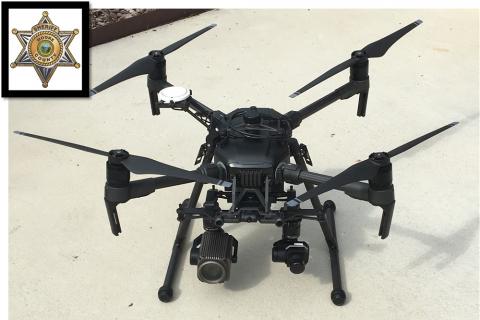
Moore County Sheriff's Office locates missing child using UAS
North Carolina’s Moore County Sheriff’s Office recently used a UAS to locate a missing 11-year-old child.
After arriving to the Jackson Springs, North Carolina residence where Moore County Sheriff’s deputies were dispatched on the night of March 1, Moore County Sheriff’s Office Drone Pilot, Lieutenant Tim Davis immediately launched the department's DJI Matrice 210 UAS to search for the child. Within just 15 minutes, the UAS observed a heat signature in the wooded area approximately 100 yards from the residence across the highway.
Lieutenant Davis used his radio to direct deputies to the location of the heat signature, and the deputies located the child, sleeping under some thick tree limbs and brush.
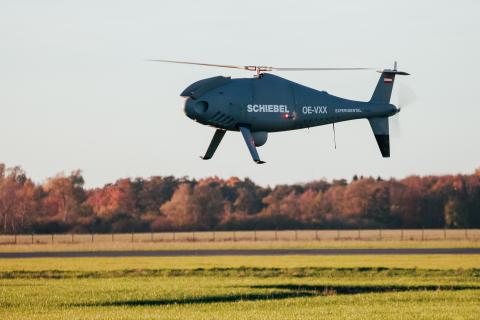
MDA selects Schiebel's CAMCOPTER S-100 UAS to fulfill contract with international customer
MDA, which is a Maxar Technologies company, has commissioned a fleet of Schiebel’s CAMCOPTER S-100 UAS to fulfill a contract with an international customer.
According to Schiebel, MDA chose the CAMCOPTER S-100 UAS because of its “impressive track record of providing critical support in sea- and land-based intelligence, surveillance and reconnaissance (ISR) missions.”
The S-100 is a vertical takeoff and landing (VTOL) UAS with a relatively small logistical footprint. This small logistical footprint allows for flexible and rapid deployment.
Schiebel says that “by day and night, the UAS functions as a platform capable of carrying a wide range of high-end payloads.”
Northeast Region UAS Unit begins proactive deployment of its UAS
According to a news release from the Grand Forks County Sheriff's Department in Grand Forks, North Dakota, via the Grand Forks Herald, the Northeast Region Unmanned Aircraft Systems Unit will begin proactive deployment of its UAS on March 1, which will allow officers that are trained as pilots to take UAS with them as they patrol their areas.
The unit has authorization to fly UAS anywhere in the nation, according to Sheriff's Lt. B.J. Maxson, who oversees the Northeast Region UAS Unit.
Before this week’s development, the unit had just two UAS, and required law enforcement to go to the Sheriff's Department to pick up the UAS. This meant that the unit was used as a reactionary measure.
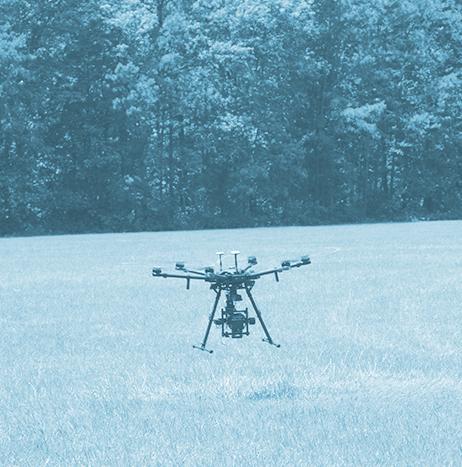
Randolph Electric Membership Corporation donates $10,000 in support of NC Public Safety Drone Academy
In support of Montgomery Community College’s (MCC) NC Public Safety Drone Academy, Randolph Electric Membership Corporation (Randolph EMC) donated $10,000 to the community college located in Troy, North Carolina.
The funds will be used to buy software and develop an educational course for REMC’s Utility Based Drone Program. The funds will also be used to allow Randolph EMC line technicians to undergo training with UAS, so that they can obtain their certification to operate the technology.
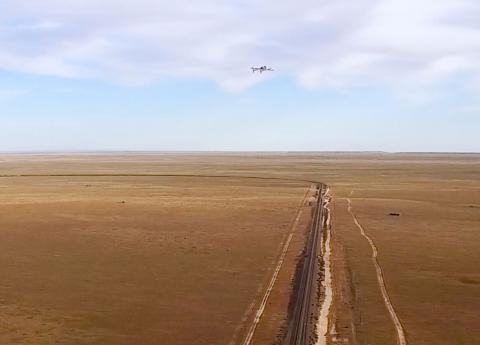
Bihrle and BNSF's 'RailVision' proves beneficial during long range UAS railway inspections
Bihrle Applied Research (Bihrle) and BNSF Railway (BNSF) have announced that they successfully demonstrated the processing of several thousand images at a time, covering hundreds of miles of track for the automatic detection, classification and reporting of rail conditions.
This feat was made possible thanks to RailVision, which is a “computer vision technology solution” developed by the companies in support of BNSF’s UAS research initiatives.
RailVision allows BNSF to automatically process images collected by UAS during supplemental railway inspection flights, and generates actionable reports in a significantly less amount of time required by traditional methods.
Intel's Shooting Star UAS light up Olympic Winter Games PyeongChang 2018 Opening Ceremony
The Olympic Winter Games PyeongChang 2018 Opening Ceremony featured 1,218 of Intel's Shooting Star UAS, in what was the Winter Olympics’ first-ever drone light show.
The flight, which was prerecorded for the event, set a Guinness World Records title for the “most unmanned aerial vehicles airborne simultaneously,” breaking Intel’s previous record of 500 UAS flown simultaneously in Germany in 2016.

Oklahoma's Broken Arrow Police seeing immediate benefits using new UAS
In Broken Arrow, Oklahoma, the Broken Arrow Police Department says that its new UAS has proved beneficial in a variety of use cases over the last two months.
The UAS provides a real-time view from above, which officers say is very important when their special operations team is activated.
One recent use case for the UAS came a few weeks ago, when the UAS was deployed during a standoff. Via News on 6, officer James Koch says that “the initial information that we received was that there may be someone inside who could have someone held hostage.” Koch goes on to say that “we didn't know if there was anybody inside that was lying in wait.”
Military moving fast to field advanced technology, speakers say
The U.S. military is committed to moving faster to get high technology into the field, according to several speakers at the opening day of AUVSI Unmanned Systems Defense. Protection. Security in Maryland.
“We need new unmanned systems, fast,” said Lt. Gen. Robert Walsh, commanding general, Marine Corps Combat Development Command.
The USMC is going back to its early days of being a highly experimental command, Walsh said, resurrecting its Sea Dragon series of exercises and putting a variety of off-the-shelf systems into demonstrations to see how they fare.