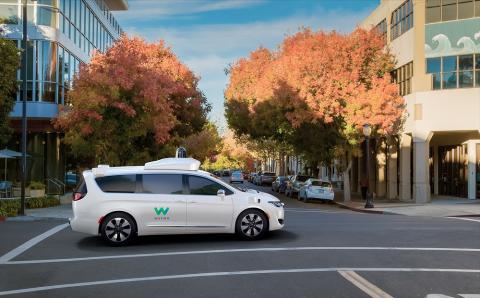
According to Reuters, Waymo is testing complimentary Wi-Fi in its autonomous vehicles operating in the greater Phoenix area.
Right now, Waymo’s Chrysler Pacifica minivans operate in a 100-square-mile territory around Phoenix. A subset of users participating in the trial of the vehicles can use the Wi-Fi, which would allow them to work on their laptops.
Autonomous Vehicles
Autonomous Vehicles
Local Motors opens Olli Fleet Challenge to Pacific Northwest
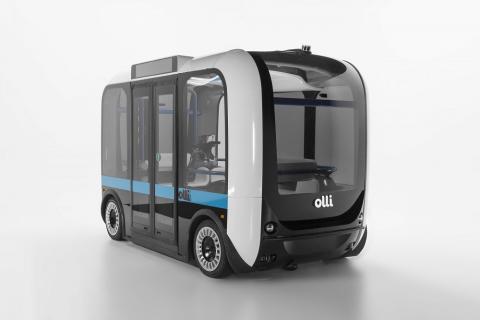
Local Motors has announced that the Pacific Northwest will be the next location for its fleet challenge for the company’s autonomous shuttle, Olli.
According to Local Motors, entries will be accepted from across Washington state and Oregon.
The entry window for the Pacific Northwest opened on Monday, July 1, and will close August 26. Once a winner is chosen, engineers from Local Motors will map Olli’s autonomous route before the shuttles begin operating.
Chandler, Arizona launches autonomous vehicle ride-hailing program for city employees
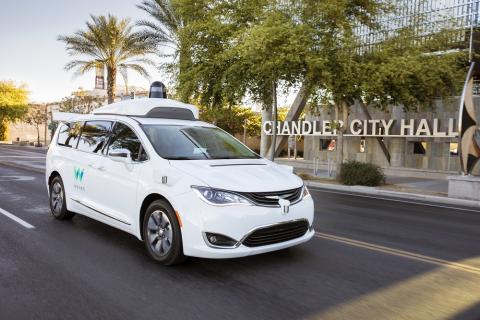
The city of Chandler, Arizona recently announced plans to launch an autonomous vehicle ride-hailing program for select city employees, in partnership with Waymo.
Expected to last for at least one year, the program will be used to evaluate the productivity of employees as they commute to and from off-site work meetings, as well as the potential fleet services cost savings.
“We’ve worked closely with Waymo for the past several years and it’s a natural progression to utilize their technology,” says Mayor Kevin Hartke.
BlackBerry, LG partner to advance connected and autonomous vehicle technology
In an effort to “accelerate the deployment of connected and autonomous vehicle technology” for automotive OEMs and suppliers around the world, BlackBerry Limited is expanding its partnership with LG Electronics Inc.
Through the agreement, LG Electronics will build next generation digital consolidated cockpits— including infotainment systems, digital instrument clusters, and telematics systems for several OEMs—using a variety of BlackBerry QNX software and services.

Waymo making its self-driving minivans available for Lyft customers in Arizona
According to CNBC, Waymo is now making some of its self-driving minivans available for Lyft customers.
The rides will be offered in a small area just outside of Phoenix, where Waymo has been testing its technology. Waymo has even launched its own autonomous ride-share service called Waymo One in the area.
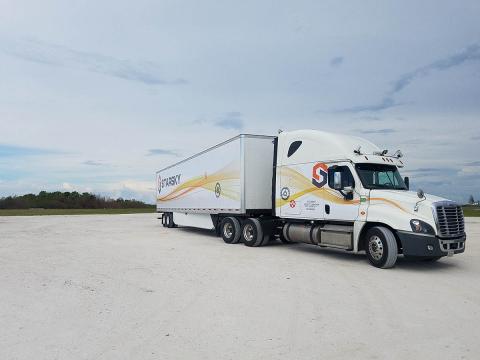
Starsky Robotics successfully tests unmanned 18-wheeler on Florida highway
Starsky Robotics says that it is the first company to test an unmanned 18-wheeler on a stretch of U.S. highway.
Starting June 16, Starsky began testing a Volvo semi-truck equipped with cameras and radar on a 9.4-mile stretch of the Florida Turnpike in Orlando. The vehicle was connected to a Starsky “teleoperations” center in Jacksonville.
During testing, the truck performed several tasks, including navigating a highway rest area, merging onto the Turnpike and changing lanes, all while maintaining an average speed of 55 miles an hour.
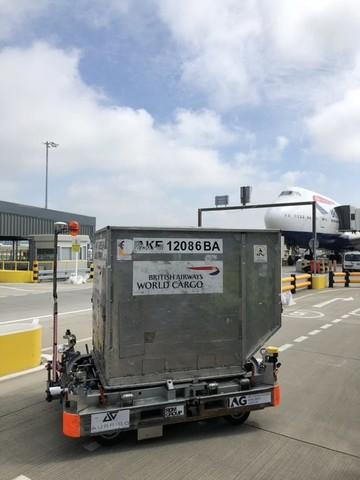
Aurrigo develops autonomous baggage carrying dolly for airports
After being approached by the International Airlines Group (IAG) about using its expertise in driverless technology to develop the world’s first autonomous baggage carrying dolly, UK-based autonomous tech company Aurrigo has developed and deployed an autonomous ‘baggage’ platform that can transport luggage around airports.
Since March, an existing dolly that was converted into a self-driving, electric vehicle using lidar and GPS technology has been operating in Terminal 5 at Heathrow Airport, and it is now operating in the baggage handling area.
Aurrigo worked with British Airways (BA) to get the dolly operational at Heathrow Airport.
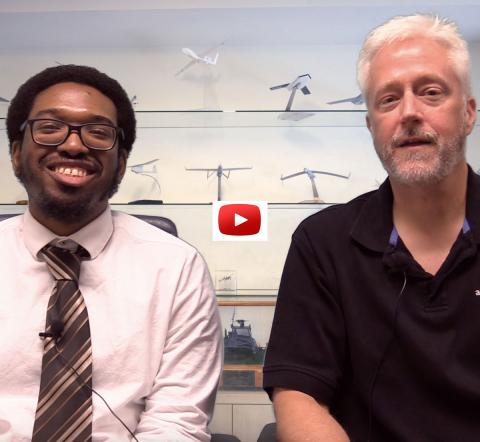
MIT researchers develop technique for driverless cars and robots to spot objects amid clutter
Researchers at MIT say that they have developed a technique that allows robots to quickly identify objects hidden in a three-dimensional cloud of data.
According to the researchers, sensors that collect and translate a visual scene into a matrix of dots help robots “see” their environment. The researchers note, though, that conventional techniques that try to pick out objects from such clouds of dots, or point clouds, can do so with either speed or accuracy, but not both.

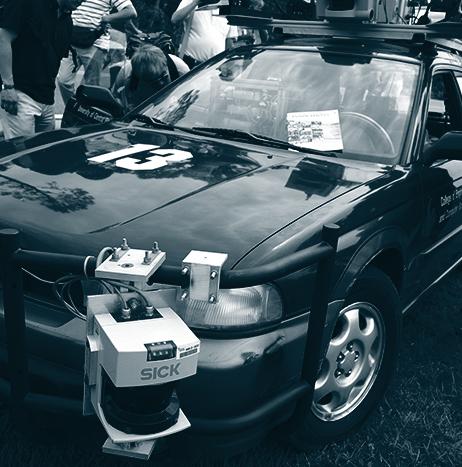
Carnegie Mellon University, Argo AI establish center for autonomous vehicle research
Carnegie Mellon University (CMU) and Argo AI have announced a five-year, $15 million sponsored research partnership that will result in Argo AI funding research into advanced perception and next-generation decision-making algorithms for autonomous vehicles.
CMU and Argo AI will establish the Carnegie Mellon University Argo AI Center for autonomous vehicle research. Through advanced research projects, the center will seek to help overcome the hurdles associated with enabling self-driving vehicles to operate in various real-world conditions.
“We are thrilled to deepen our partnership with Argo AI to shape the future of self-driving technologies,” says CMU President Farnam Jahanian.