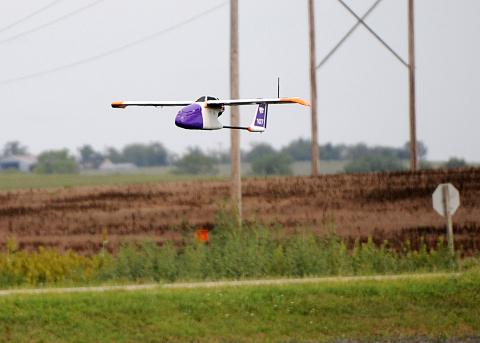
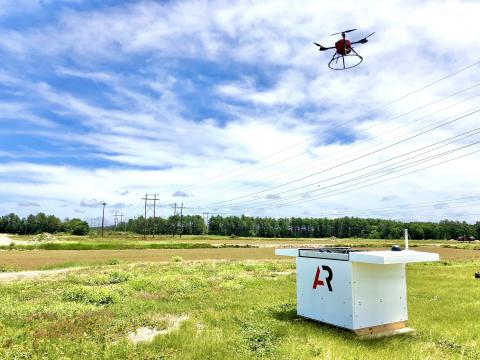
Automated drone systems developer American Robotics has become the first company approved by the FAA to operate automated drones without human operators on-site.
American Robotics is known for its Scout System, which is made up of three primary components: Scout, an autonomous, AI-powered UAS with advanced imaging payloads; ScoutBase, a weatherproof base station that serves as the nerve center and communication hub for Scout; and ScoutView, a secure web portal and API that enables remote interaction with the system, data, and resulting analytics anywhere in the world.
Federal Aviation Administration
Federal Aviation Administration
AUVSI President and CEO Brian Wynne Reappointed to FAA Drone Advisory Committee and Management Advisory Committee
Last week, it was announced that AUVSI President and CEO Brian Wynne was reappointed to the Federal Aviation Administration’s (FAA) Drone Advisory Committee (DAC) for another two-year term, allowing him to continue lending his experience and leadership to this important public-private advisory group.
FAA announces Remote ID and operations over people final rules for UAS
On Monday, December 28, 2020, the FAA announced two final rules for UAS. The new rules will require Remote Identification (Remote ID) of drones and allow small UAS operators to fly over people and at night under certain conditions.
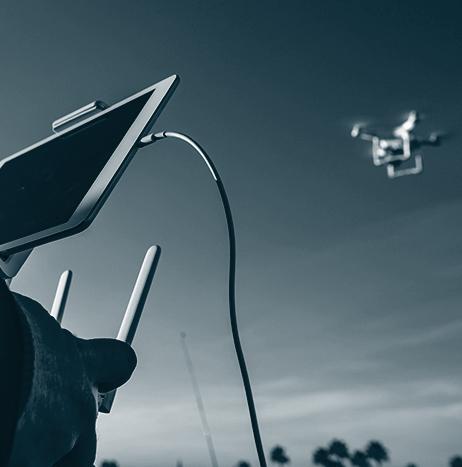
AUVSI Welcomes Remote ID and Operations Over People Final Rules for UAS
Today, the Federal Aviation Administration (FAA) has delivered a Final Rule on Remote Identification (ID) for unmanned aerial systems (UAS). Thought of as a digital license plate for drones, the objective of Remote ID is to ensure that a UAS in flight is providing identification and location information that authorities can access. The FAA also released the final rule for Operations Over People, which includes rules for operations at night.
Tacoma passes resolution supporting responsible recreational drone use
In September, the Tacoma, Washington City Council passed Resolution 40658 supporting responsible recreational drone use in Tacoma. The resolution directs the City Manager to establish a point of reference on the city's website connecting Tacoma community members to federally established laws and regulations, as well as recommended best practices.

ULM joins FAA's Unmanned Aircraft Systems Collegiate Training Initiative
The University of Louisiana Monroe (ULM) has announced that it is joining the FAA’s Unmanned Aircraft Systems Collegiate Training Initiative (UAS CTI).
According to the FAA, the initiative is a collaborative effort designed to ensure that new technology is safely incorporated into the National Airspace System (NAS) and that qualified professionals are in the pipeline to satisfy the demand of the drone industry, which continues to grow at a rapid pace.
“The FAA is serving as a kind of intermediary for schools that offer this kind of program to get together,” explains Dr. Paul Karlowitz, associate professor of aviation.
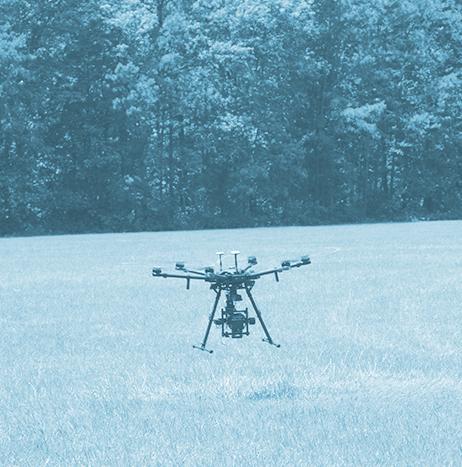
FAA announces BEYOND program following successful conclusion of UAS IPP
On Friday, Oct. 30, U.S. Secretary of Transportation Elaine L. Chao announced that the three-year UAS Integration Pilot Program (IPP) successfully concluded on Oct. 25.
Weekend Roundup: August 28, 2020
This Week (and last week) in the Unmanned Systems and Robotics World
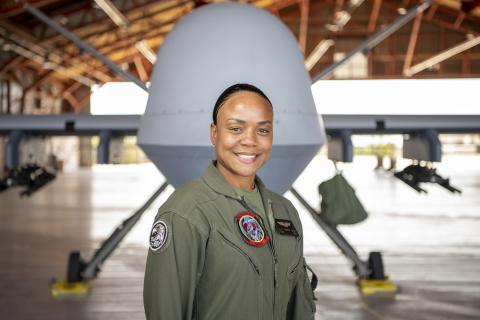
On Aug. 18, U.S. Marine Corps Capt. Shaneka Shaw, Unmanned Aerial Vehicle Squadron-1 (VMU-1), a weapons and tactics instructor (WTI), graduated from the MQ-9 Basic and Requalification/Transition Course 2 class 20-03, and became the first Black female Marine qualified to fly MQ-9 Reapers at Holloman Air Force Base, New Mexico. Shaw spent 55 training days learning to fly the MQ-9 at Holloman. (Air Education and Training Command)
Speakers tout success of UAS IPP program during Episode II of FAA UAS Symposium
With the current iteration of the UAS Integration Pilot Program (IPP) set to conclude in October, speakers during Episode II of the 5th annual FAA UAS Symposium – Remotely Piloted Edition reflected on the success of the program, and the immense value that it has provided over the last three years.
“It is spectacular to be seeing this IPP coming to a successful…I don’t want to call it an ending because it’s a continuing journey, but we are coming to the final report here and we have learned a tremendous amount,” said Earl Lawrence, executive director, Aircraft Certification Service, FAA.
As Lawrence noted, the IPP itself as we know it may be concluding, but the operations that began under the program will continue, and the FAA will continue supporting those operations.

K-State Polytechnic campus receives waiver to fly UAS BVLOS in all class G airspace nationwide
The FAA has granted Kansas State University Polytechnic Campus’ Applied Aviation Research Center a new waiver that permits K-State Polytechnic to fly UAS beyond visual line of sight (BVLOS), in all Class G airspace nationwide.
A majority of UAS flights take place in Class G airspace, which will allow K-State Polytechnic and the Applied Aviation Research Center to enhance research, education and training opportunities.
The new waiver also permits the remote pilot in command to fly from a mobile command center, providing a controlled environment that is distraction-free and out of the elements. This environment also allows a pilot to monitor the live UAS feed as well as the weather, manned traffic, telemetry feed and more.