
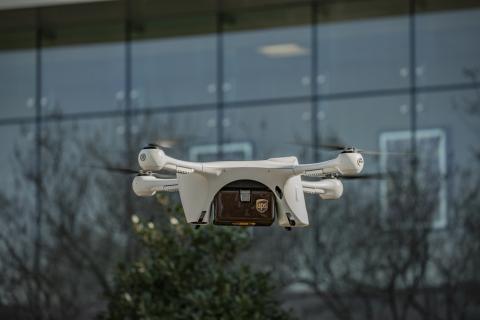
UPS has announced a partnership with Matternet to use drones to deliver medical samples in North Carolina, marking the “first FAA sanctioned use of a drone for routine revenue flights involving the transport of a product under a contractual delivery agreement,” the companies say.
IHP
IHP
PrecisionHawk uses drone technology to hunt for buried treasure in the Philippines
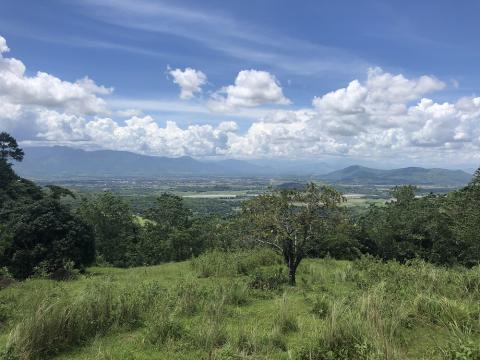
Buried treasure is often the stuff of legend, but that didn’t stop PrecisionHawk from recently traveling more than 7,000 miles to hunt for buried treasure in the Philippines left by the Japanese during World War II.
Working alongside the History Channel on a show called Lost Gold of World War II, a production company called Ample Entertainment approached PrecisionHawk in June 2018 because it needed a partner that could use lidar-equipped drones to penetrate the deep vegetation in order to map ancient trade paths across more than 70 acres of rainforest in the Philippines.
Optimus Ride deploying self-driving vehicles in New York and California
Optimus Ride has announced plans to deploy its self-driving vehicles at the Brooklyn Navy Yard and Fairfield, California's Paradise Valley Estates. With these deployments, residents and workers at both sites will have access to efficient and convenient self-driving mobility within defined, geofenced areas, according to Optimus Ride.
The Brooklyn Navy Yard deployment, which is expected to launch in the second quarter of 2019, will be the first commercial self-driving vehicle program in the state of New York. The vehicles will operate on the Brooklyn Navy Yard’s private roads, as they provide a loop shuttle service to connect NYC Ferry passengers to Flushing Avenue outside the Yard’s perimeter.

Navya's autonomous shuttle to be used at mixed-use destination in Georgia
A private, community development and commercial real estate firm called the Integral Group has announced an autonomous vehicle partnership with Navya that will result in Navya being the shuttle provider for Assembly, an adaptive reuse community, in Doraville, Georgia.
Headquartered in Atlanta, the Integral Group says that this technology will “enhance the overall accessibility of the site,” as it connects the mixed-use destination with two nearby Metropolitan Atlanta Rapid Transit Authority (MARTA) stations.
University of Washington's robotic system can feed people who need assistance eating
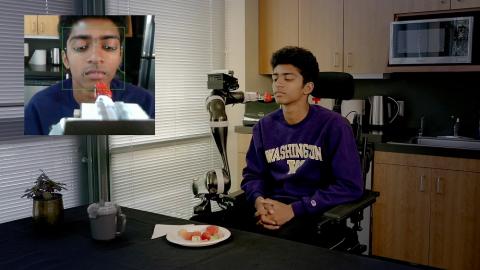
Researchers at the University of Washington are working on a robotic system that can feed people who need someone to help them eat.
The robot identifies different foods on a plate, and then strategizes how to use a fork to pick up and deliver the desired bite to a person’s mouth.
“Being dependent on a caregiver to feed every bite every day takes away a person’s sense of independence,” says Siddhartha Srinivasa, the Boeing Endowed Professor in the UW’s Paul G. Allen School of Computer Science & Engineering. Srinivasa is a corresponding author in a series of papers that the researchers published their results in.
AP uses Sonardyne's tech to stream first live broadcast to global audiences from an underwater submersible
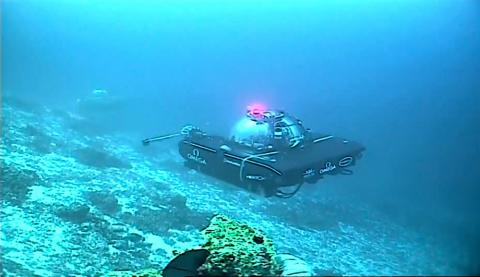
Sonardyne International Ltd. has announced that the Associated Press used its BlueComm wireless through-water optical modem technology to stream the first live broadcast to global audiences from an underwater submersible.
Coming from a two-person submersible operating in waters off the Seychelles, in the Indian Ocean, the live broadcast via YouTube was “the first multi-camera live signal in full broadcast quality from manned submersibles using optical video transmission techniques, in which the pictures transmit through the waves using the electromagnetic spectrum,” according to the AP.
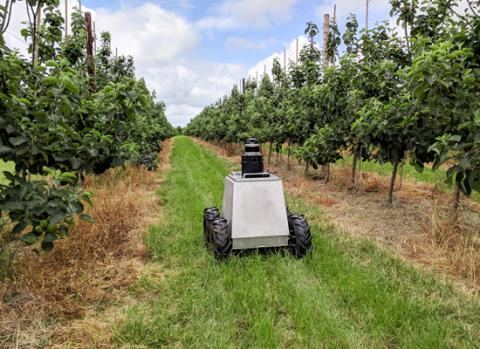
Cambridge Consultants unveils Mamut autonomous robot for agriculture
Cambridge Consultants has unveiled its autonomous robot, Mamut, which is built to explore crop fields, and capture data on health and yield at the level of individual plants on a large scale.
According to Cambridge Consultants, Mamut automates data capture, providing growers with regular, precise and actionable information on their crops, which allows them to predict and optimize yields.
Powered by artificial intelligence, Mamut is equipped with a wide range of sensors, and can map and navigate its surroundings without GPS or a fixed radio infrastructure. Its cameras capture detailed crop data at the plant level as it makes its way through rows of a field, orchard or vineyard, allowing for accurate predictions of yield and crop health.
Flirtey granted permission to conduct BVLOS UAS delivery flights under UAS IPP
The city of Reno, Nevada has announced that Flirtey—one of its partners in the UAS Integration Pilot Program (IPP)—has received approval from the FAA to conduct beyond visual line of sight (BVLOS) UAS delivery flights.
With the approval, Flirtey will be able to conduct UAS delivery operations with a pilot controlling the flights from a remote location.
“Flirtey’s industry-leading technology is now approved for drone delivery beyond visual line of sight, a major milestone that brings life-saving and commercial drone delivery another step closer to your doorstep,” says Flirtey Founder and CEO Matthew Sweeny.
ParaZero releases SafeAir Phantom System to facilitate UAS flights over people
ParaZero Technologies Ltd has announced the release of the SafeAir Phantom System to the market for sale on its website.
Described as a smart parachute system, the SafeAir Phantom System, which is ASTM compliant, monitors UAS flight in real time, identifies critical failures, and autonomously triggers a parachute, a flight termination system and an audio-warning buzzer.
Over the last year and a half, ParaZero has worked with several entities including the FAA and DJI to create a standard for small UAS parachutes that would enable flight over people.
Released in Sept. 2018, the standard (ASTM F3322-18) defines the requirements for the design, manufacturing and testing of small UAS parachute systems.
Aurrigo plans to showcase how driverless pods can help those with disabilities
An autonomous vehicle company in England called Aurrigo will soon launch a six-month trial to demonstrate how driverless pods can help improve the mobility and independence of people that have health conditions and disabilities.
Considered the first trial of its kind in the world, the trial will involve blind veterans in Brighton, England that are participating in an exercise that explores possible ‘first and last mile’ transport options.
Aurrigo has partnered with Blind Veterans UK for the trial, which is expected to start in April. The company expects to obtain valuable real-life experiences that it can use to improve the technology going forward.