
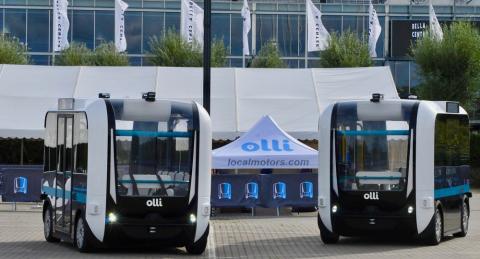
Local Motors by LM Industries Group Inc. has selected entities in Phoenix, Arizona and Sacramento, California as the winning entries for its first fleet challenge for its autonomous shuttle known as Olli.
According to Local Motors, the “first-of-its-kind global fleet challenge” invites municipalities, campuses and designated districts to propose a short-term, local use for Local Motors' self-driving, electric shuttles.
An Olli fleet is deployed to a series of select locations after the entries are evaluated and selected by a panel of esteemed judges.
Pilot Projects
Pilot Projects
DOT's BUILD Transportation Grants program awards $5.3 million to autonomous vehicle project planned for Las Vegas
An autonomous vehicle project planned by the City of Las Vegas and Regional Transportation Commission of Southern Nevada in the Las Vegas Medical District has been awarded $5.3 million by the U.S. Department of Transportation’s Better Utilizing Investments to Leverage Development (BUILD) Transportation Grants program, according to the Las Vegas Review-Journal.
Expected to begin late next year, the project, known as GoMed, will provide autonomous and connected vehicle service around a four-mile route between the Las Vegas Medical District and the Bonneville Transit Center downtown.

Meet the IPP Sites: KDOT focusing on infrastructure inspections, precision ag for UAS pilot program
More than 70 percent of the world's general aviation fleet is manufactured in Kansas, so needless to say, aviation is the state’s primary industry.
With unmanned aircraft being the newest edition to the aviation industry, Kansas has a strong interest in making sure this technology is integrated safely into the airspace. The state is an ideal location for this technology to be tested during the UAS Integration Pilot Program over the next few years, especially considering Kansas is home to 140,000 miles of public roads — many in rural areas — and the Kansas Department of Transportation maintains 10,000 miles of highway and over 5,000 bridges.

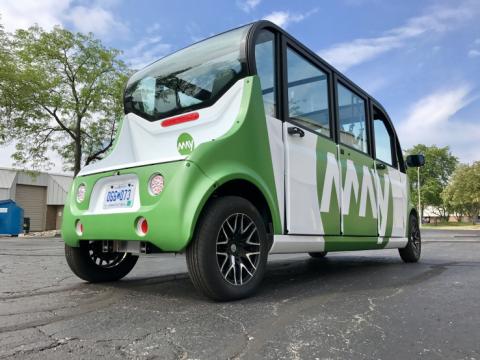
May Mobility selected to deliver autonomous transit pilot to Rhode Island
After a competitive request-for-proposals process that started earlier this year, May Mobility has been selected by the Rhode Island Department of Transportation (RIDOT) to deliver a “limited and controlled automated vehicle service” to help fill a transportation gap between downtown Providence and Olneyville.
While the service is in operation, RIDOT will seek to get a better understanding of the potential of new technology to improve mobility options for residents in the state, by testing and researching a variety of factors relating to the service.
The service will be available and free to the public for a year.
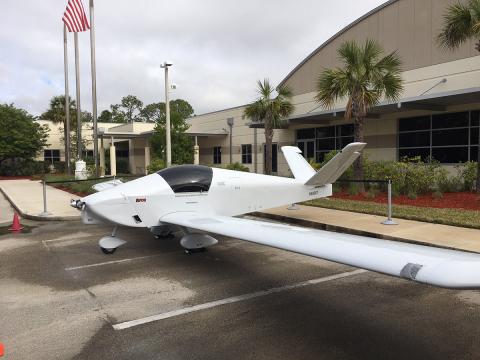
Meet the IPP sites: Drones join battle against mosquitos in Florida’s Lee County
Florida has a big problem. Actually, it’s a very small problem, but there are a lot of them: mosquitos.
Fighting mosquitos has long been an existential problem for the state, home to swamps and miles of coastal marshes. The land is flat, it’s warm year-round and there’s a lot of water, all things the biting insects love.
“We can grow more mosquitos here than anywhere else on Earth,” says Eric Jackson, the public information officer for the Lee County Mosquito Control District, which is enlisting new technology to join the fray: drones both big and small.
Autonomous shuttle service headed to Albemarle County, Virginia
An autonomous shuttle service is headed to Albemarle County, Virginia, thanks to the recently announced $600,000 partnership between Albemarle County, robotics software company Perrone Robotics (PRI), and “XR solutions provider” JAUNT Inc.
The location of the service has yet to be decided, but the partners say that the service will allow riders to get on and off the autonomous shuttle along a fixed route.
The shuttle will operate autonomously, but a safety-trained transit “ambassador” will be on-board to answer customer questions, offer any required assistance, and take over as a driver if necessary.
Ford and Walmart partner to deliver goods using self-driving vehicles
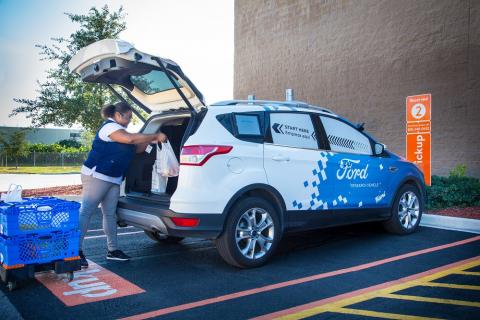
On Nov. 14, Ford announced that it is teaming up with Walmart to explore how self-driving vehicles can deliver everyday goods to people.
The companies are using the infrastructure of Postmates—whom they both had an existing partnership with before—to quickly establish and launch a pilot program that explores how Ford’s self-driving vehicles can complement Walmart’s existing delivery offerings.
“Like Ford, Walmart believes that self-driving vehicles have an important role to play in the future of delivery, and that true success comes from first learning how individuals want to use them in their daily lives,” Ford says in a company blog post.
Daimler and Bosch to test automated ride-hailing service in San Jose, California next year
Next year, Daimler and Bosch plan to begin testing their fully automated driving (SAE Level 4/5) on-demand ride-hailing service in San José, California.
According to the companies, San José wants to prepare itself for a future where autonomous cars operate on the streets, so Daimler and Bosch will use automated Mercedes-Benz S-Class vehicles to offer their service to a selected user community in the San Carlos/Stevens Creek corridor between downtown and west San José.
Skyfire Consulting selected to join San Diego's UAS IPP team
The City of San Diego has selected Skyfire Consulting to join its UAS Integration Pilot Program (IPP) team.
Considered a leading provider of public safety UAS technologies in the U.S., Skyfire Consulting was selected to be a part of San Diego's IPP efforts thanks in large part to its substantial experience with FAA regulations related to public safety UAS use.
Additionally, the Atlanta-based UAS consultancy has as already worked to obtain the first two certificates of authorization (COAs) for the Chula Vista Police Department, which is also a part of the San Diego IPP team.
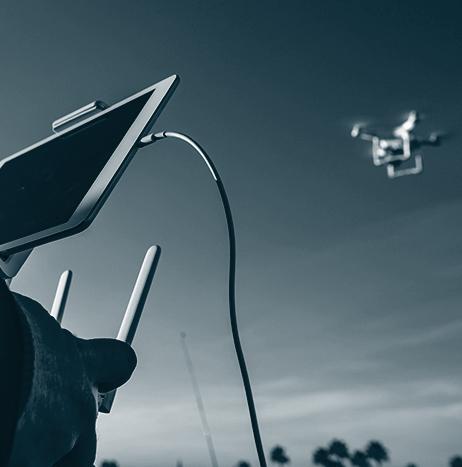
Kansas Department of Transportation and Iris Automation begin UAS test flights under UAS IPP this week
This week, the Kansas Department of Transportation (KDOT) is starting the testing phase of the UAS Integration Pilot Program (IPP).
One of KDOT’s partners for the program, Iris Automation, will focus on enabling new detect and avoid capabilities for UAS.
The winner of AUVSI’s 2018 Startup Showdown during XPONENTIAL 2018, Iris Automation will test its collision avoidance technology in the airspace above Gypsum’s farmlands. Using computer vision and artificial intelligence, the technology allows UAS to see the world the way a pilot does, which ultimately facilitates beyond visual line of sight (BVLOS) flights.
Test flights will take place throughout the week, and the technology will be evaluated through controlled UAS flights against a manned aircraft.