
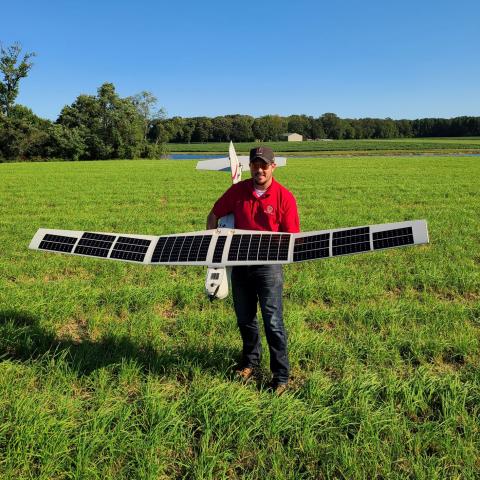
The Unmanned Aircraft Systems (UAS) Test Site at the University of Maryland (UMD) is a leader in supporting UAS regulations, commercialization, and airspace integration to accelerate the safe, responsible deployment of UAS, commonly known as drones. AUVSI connected with the test site’s leadership to learn more about their work and the capabilities being developed for private and public sectors.
Advancing UAS Innovation and Integration
UAS
UAS
AUVSI Welcomes Opportunity to Participate in FAA’s BVLOS ARC
With more and more industries relying on unmanned aerial systems (UAS) capabilities for their operations today - and many more expected to in the years ahead - the UAS industry broadly agrees that enabling routine operations beyond visual line of sight (BVLOS) is critical for high-value drone uses.
However, updates to existing regulatory frameworks will need to be made before the drone industry can fully take advantage of opportunities, such as small package delivery and infrastructure inspections, in a way that is repeatable, scalable, and economically viable.
FAA UAS SYMPOSIUM: EPISODE III, DAY TWO RECAP
The Federal Aviation Administration (FAA) and AUVSI today hosted the second day of Episode III of the UAS Symposium – Remotely Piloted Edition. Keynote and panel sessions featured a range of experts discussing international issues, STEM, regulatory updates, and other topics relevant to the unmanned aerial systems (UAS) industry.
Keynote Sessions: Diversity, Tribal Nations, and Legislative Update
To kick off the day, representatives from Women and Drones, the National Air Traffic Controllers Association, and Airspace Link discussed how diverse teams and inclusivity are pathways to enhance safety and success for individuals and businesses.
FAA UAS Symposium: Episode III, Day One Recap
Today, the Federal Aviation Administration (FAA) AUVSI hosted Episode III of the UAS Symposium – Remotely Piloted Edition. Attendees heard from a range of experts about topics relevant to the unmanned aerial systems (UAS) community and the future of drone operations.
Keynote: FAA Administrator Steve Dickson Announces ARC
Harmful Avigation Easement Bills Defeated In States
As the world's largest nonprofit organization dedicated to the advancement of unmanned systems and robotics, a core part of AUVSI's mission is to educate lawmakers about how their actions could support or hinder the growth the unmanned systems industry.
For the Drone Industry to Take Off, We Must Defeat “Avigation Easement” Proposals
Last month, AUVSI joined with CTA in a statement expressing concern over legislation that has been introduced in multiple states to roll back federal authority of the airspace, restrict and tax drone operations, and upend years of industry-government collaboration towards unlocking the full potential of drone technology for commercial use.
The UAS Policy Landscape
Even in the absence of significant federal legislation, the policy landscape for unmanned aircraft systems (UAS) has continued to evolve. The FAA recently released its highly anticipated UAS remote identification rule, along with new frameworks for operations over people a

Industry Standards Supporting Assured UAS Autonomy
As autonomous technologies become more integrated into the design and operation of the next generation of aircraft, industry standards can ensure system safety and help regulators to keep pace with evolving technology.
In a panel today at XPONENTIAL 2021, leaders from the FAA and industry discussed how consensus-based standards are critical in supporting the integration of unmanned aerial systems (UAS).
Building consensus-based standards
As the UAS industry seeks to formulate standards, panelists shared several factors that will be key for building consensus:
Standards should account for both risks and benefits in implementing an autonomous system into the aircraft.
FAA’s Remote ID Rule Will Enable Drone Integration
Last month, the Federal Aviation Administration (FAA) implemented new regulations addressing the remote identification of drones and drone operations over people and at night. The rules make critical steps toward assured autonomy by enabling more complex UAS uses, which will ultimately lead to more drone deliveries, public safety operations, and infrastructure inspections.
During today’s XPONENTIAL 2021 sessions, AUVSI hosted a panel of leading experts who were involved in the rulemaking process. Their discussion on next steps and standardization demonstrated why AUVSI approaches public policy under the umbrella of three principles: safety and security, government-industry collaboration, and performance-based regulations.
Avigation Easements Will Hurt Drone Operations, Say CTA and AUVSI
Media Contact: Jackie Beckwith, jbeckwith@auvsi.org
For Immediate Release: April 26, 2021