The Motorola Solutions Foundation, which is the charitable arm of Motorola Solutions, has awarded the Airborne International Response Team (AIRT) a grant that it will use to expand its DroneResponders program, which focuses on supporting the awareness and education of UAS use by public safety agencies and first responders across the globe.
“We are very honored to have been selected as one of the Motorola Solutions Foundation 2019 grant awardees,” says Christopher Todd, executive director of AIRT.
“This funding will help DroneResponders make an even greater impact in supporting first responders using drones for good in their local communities and beyond.”
UAS
UAS

ANRA Technologies, everis ADS collaborating to develop UTM technologies
ANRA Technologies and everis Aerospace, Defense, and Security (everis ADS) have partnered to develop comprehensive Unmanned Aircraft System Traffic Management (UTM) and U-Space technologies for safe and efficient low altitude airspace operations.
Through the agreement, the entities will leverage their respective strengths, including ANRA’s software platform for UTM. Meanwhile, everis ADS, which develops “differential solutions based on the integration of innovative technologies,” will bring its expertise to the table.
Boeing Australia announces partnership aimed at creating smarter unmanned systems through AI tech
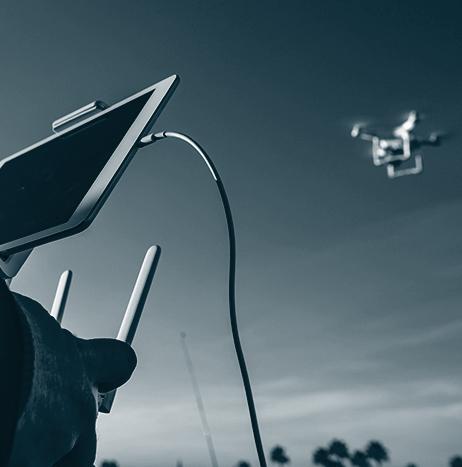
In an effort to create smarter unmanned systems for global forces, Boeing Australia and Australia’s Trusted Autonomous Systems Defence Cooperative Research Centre (DCRC) will collaborate on the development of advanced artificial intelligence (AI) technologies.
According to Boeing Australia, equipping unmanned systems with machine learning techniques will help them better understand and react to threat environments.

University of Michigan researchers demonstrate UAS attaching asphalt shingles to roofs with a nail gun
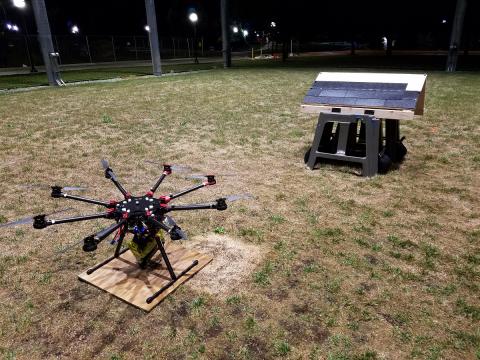
Researchers at the University of Michigan have demonstrated an octocopter attaching asphalt shingles to roofs with a nail gun.
The UAS is autonomous, which means that it can position the nail gun on a nailing point, place the nail and move to the next point all without any human intervention needed.
Speakers highlight importance of Remote ID rulemaking, safe operations during Hill Day
One of the biggest topics of discussion during AUVSI’s annual Hill Day on Wednesday, Sept. 25 was remote identification and the progress, or lack thereof, on this rulemaking.
“This is one issue we’re not going to let up on,” said Rep. Daniel Lipinski.
Like many in the UAS community, Lipinski, who co-chairs the House UAS Caucus, believes the FAA is moving too slow on the rules for remote ID. These sentiments were echoed by Rep. Sam Graves, the ranking member of the House Transportation and Infrastructure Committee.
“I think that has a lot to do with the simple fact that I don’t think they really know which direction they’re going,” Graves said.

FLIR Systems introduces multi-gas detector for UAS
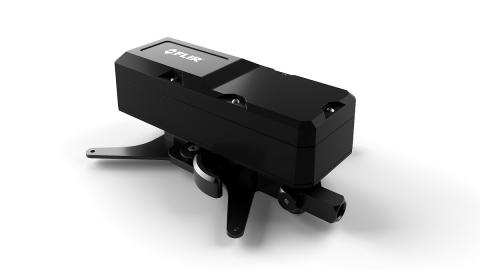
FLIR Systems has introduced the FLIR MUVE C360, which the company describes as the industry’s first multi-gas detector built specifically for UAS.
Currently compatible with the DJI Matrice 210 UAS platform, the MUVE C360 is designed to change the approach of emergency response teams when they are dealing with chemical, industrial, or environmental incidents by providing a new level of safety, significantly reducing time to action, and delivering a more complete assessment in situations where time is of the essence.
RelmaTech incorporates in US, aims at global remote ID market
RelmaTech, a remote identification and tracking company based in London, has incorporated in the United States to market to the worldwide remote ID market for identifying drones.
Based in Greenville, South Carolina, RelmaTech Inc. will take over the lead from its parent company to market its systems, including the Secure Integrated Airspace Management (SIAM) system, its flagship remote ID product.
RelmaTech says SIAM is a lightweight, low-cost module that can be installed on a variety of unmanned aircraft to provide remote identification and tracking with low latency.
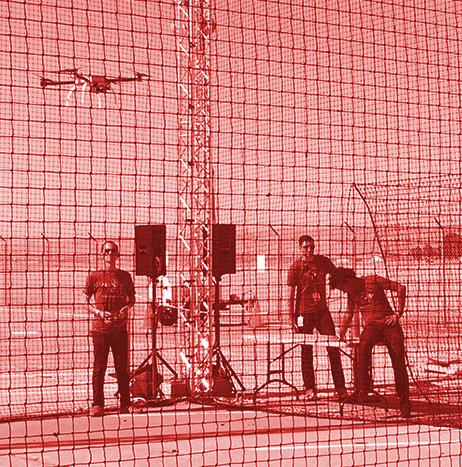

HiDRON stratospheric glider completes record-setting stratospheric flight
UAVOS and Stratodynamics have announced that their HiDRON stratospheric glider has completed a record-setting stratospheric flight.
Released from a Canadian Space Agency scientific gondola at an altitude of 111,434 feet, the glider performed a four hour controlled flight, eventually landing at Iroquois Falls Airport, which is about 80 kilometers from the Timmins, Ontario launch site.
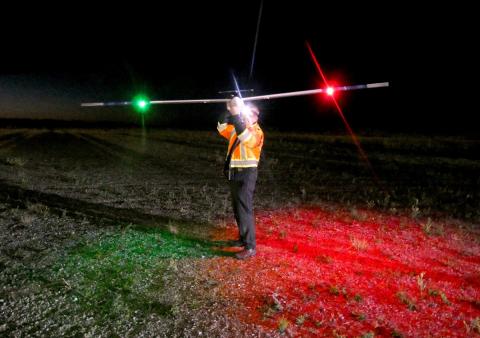
Oceans Unmanned, DARTDrones train NOAA personnel on UAS operations
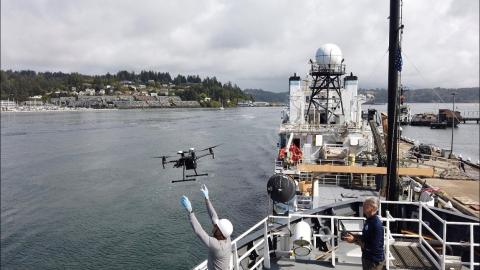
Seven NOAA ship officers and Navigation Response Team members recently received training on UAS operations from Oceans Unmanned and DARTDrones at the NOAA Marine Operations Center in Newport, Oregon.
Conducted over the course of two days, training included classroom instruction, as well as hands-on flights that focused on research and mapping missions conducted from vessels. Students also practiced launch and recovery procedures, and programmed mapping missions from the deck of the NOAA Ship Hi‘ialakai while alongside the marine facility.