
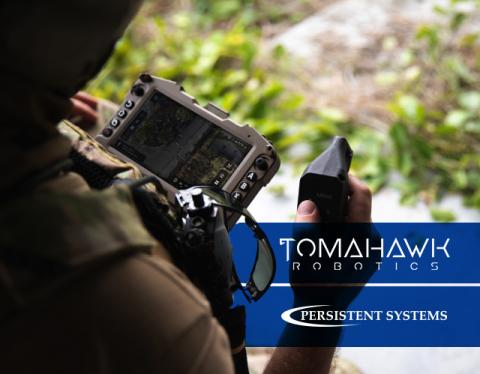
Persistent Systems has announced that Tomahawk Robotics has joined the Wave Relay Ecosystem, which is a growing industry alliance of unmanned system and sensor companies that use Persistent’s Wave Relay mobile ad hoc network (MANET) as their preferred network.
As part of this agreement, Tomahawk Robotics will make Kinesis, the company's Android-based common control system for leading UGVs and UAS, available for Persistent's MPU5 Android-based MANET radio and Rugged Display and Controller (RDC).
Technology
Technology
American Robotics receives approval to operate automated drones without human operators on-site
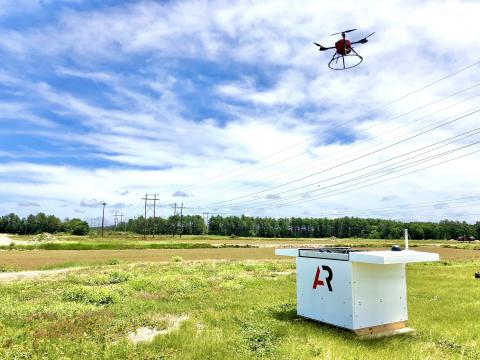
Automated drone systems developer American Robotics has become the first company approved by the FAA to operate automated drones without human operators on-site.
American Robotics is known for its Scout System, which is made up of three primary components: Scout, an autonomous, AI-powered UAS with advanced imaging payloads; ScoutBase, a weatherproof base station that serves as the nerve center and communication hub for Scout; and ScoutView, a secure web portal and API that enables remote interaction with the system, data, and resulting analytics anywhere in the world.
Weekend Roundup: January 15, 2021
This week in the Unmanned Systems and Robotics World
In Tennessee, an emergency response team recently used drone technology to locate a missing woman. After the technology helped locate the woman, the drone pilots helped guide deputies to the woman’s location, where she was then taken to a medical center for an evaluation. (DroneDJ)

Elbit Systems to supply Seagull USVs to the Navy of a country in Asia-Pacific
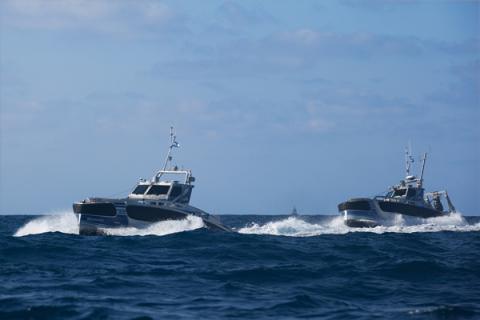
Elbit Systems has been awarded a contract to supply Seagull USVs to the Navy of a country in Asia-Pacific.
Under the contract, which will be performed over a 17-month period, Elbit Systems will provide Seagull USV systems that are specifically configured to perform Mine Counter Measures (MCM) missions while facilitating the option to add technology modules needed for Anti-Submarine Warfare.
The Seagull USVs will be equipped with Side-Scan and Forward-Looking sonars, Mine Identification and Destruction Remotely Operated Vehicles. They will also be equipped with Elbit Systems’ autonomous suite, Combat Management System and Satellite Communication capability.
Red Cat, Fat Shark and Skypersonic complete long distance drone flight remotely
Red Cat Holdings Inc. has announced that Fat Shark, a wholly owned subsidiary, and Skypersonic, the manufacturer of the Skycopter UAV, partnered to complete a long distance drone flight remotely.
During the flight, a pilot located in Orlando, Florida controlled a drone flying in Detroit, Michigan. The flight integrated Fat Shark's new digital technology, "Shark Byte" with Skypersonic's Skycopter and remote pilot software system.

Aptiv announces next generation Level 1-3 capable advanced driver-assistance systems platform
Aptiv has announced its next-generation Level 1-3 capable advanced driver-assistance systems (ADAS) platform.
According to Aptiv, its unique full-stack capabilities are helping customers realize their technology roadmaps and democratize advanced safety systems faster and at a lower cost. Considered a “game-changer” in the industry, the company’s first-generation automated driving satellite compute platform leverages the integration of Aptiv's Satellite Architecture and active safety software, perception systems and compute. Over the next few years, multiple OEM’s around the world will deploy Aptiv’s Satellite Architecture on more than 10 million vehicles.
Weekend Roundup: January 8, 2021
This week (and the last two weeks) in the Unmanned Systems and Robotics World
Buffalo Automation demonstrated its autonomous water taxi, the “Greycraft,” to city leaders in Knoxville, Tennessee this week. Considered the world’s first autonomous ferry, the solar and electric-powered taxi can give people rides from Volunteer Landing on the north side to Suttree Landing on the south side of the Tennessee River. (WATE-TV)

Robotic Research joins Persistent Systems' Wave Relay Ecosystem
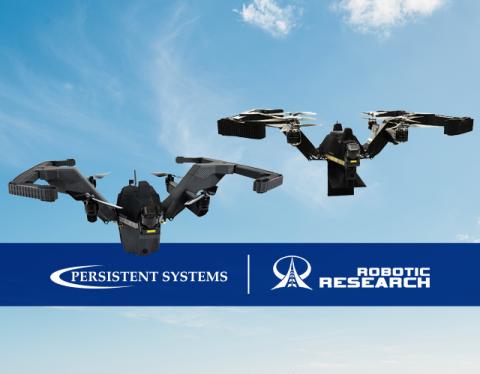
Persistent Systems has announced that Robotic Research has joined its Wave Relay Ecosystem, which is an alliance of sensor and unmanned system companies that all use Persistent’s Wave Relay mobile ad hoc network (MANET).
“The aim of the Wave Relay Ecosystem is to deliver the warfighter a truly unified battlefield network where all of the sensors and unmanned systems are united to deliver the warfighter real-time situational awareness,” explains Jeffrey Washington, director of Business Development at Persistent Systems.
15 teams awarded $41 million to improve transportation access to persons with disabilities and individuals with mobility challenges
Through two Department of Transportation design challenges that are meant to improve transportation access to persons with disabilities and individuals with mobility challenges, 15 teams in 15 states will be awarded more than $41 million, U.S. Secretary of Transportation Elaine L. Chao announced on Wednesday, Jan. 6.
“These exciting projects support the development of new innovative, inclusive, and affordable transportation technologies that address mobility and access challenges,” Secretary Chao said.

Weekend Roundup: December 18, 2020
This week in the Unmanned Systems and Robotics World
Skydio has announced the general availability of a broad set of advanced AI-pilot assistance capabilities for enterprise and public sector operators called Skydio Autonomy Enterprise Foundation (AEF). According to Skydio, AEF optimizes the Skydio 2 drone for professional use in a wide range of missions, including outdoor/indoor inspections, search and rescue, emergency response, security patrol, and situational awareness. (Skydio)