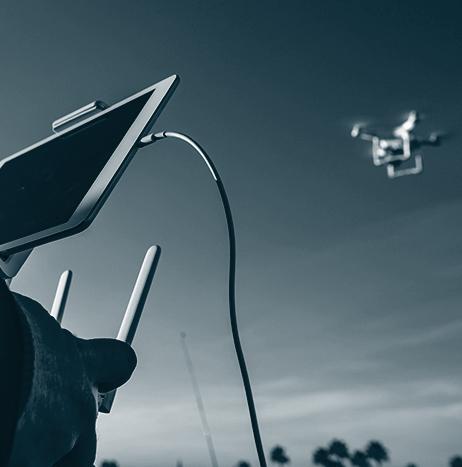
Trillium Engineering has begun airborne testing of its new lightweight, high-definition HD55 system, which is designed for use on Group 2 and smaller Group 3 UAS.
In a gimbal just 5.5 inches in diameter and weighing 1750 grams, the HD55 system utilizes electro-optical (EO) and cryogenically cooled mid-wave infrared (MWIR) cameras, as well as an onboard image processor.
“At Trillium, we are constantly on the hunt for state-of-the-art technology, and the development of the HD55, the newest addition to our family of gimbaled systems, exemplifies this approach,” says Rob Gilchrist, cofounder and president of Trillium Engineering.
Technology
Technology
Elbit Systems introduces lifesaving capability to its Hermes 900 Maritime Patrol UAS
Elbit Systems has introduced a lifesaving capability to its Hermes 900 Maritime Patrol UAS.
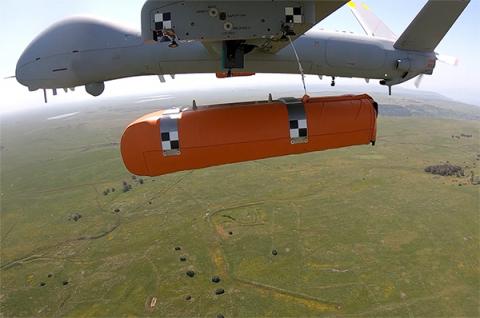
The Hermes 900 Maritime Patrol UAS can now perform long-range maritime Search and Rescue (SaR) missions thanks to the integration of detection and identification capabilities, onboard inflated life-rafts, and a precision dispatch capability.
A version of this UAS with these configurations was recently delivered to an undisclosed customer in South-East Asia.
USAIG, USI partner to enhance utility of safety benefits made available to all UAS policyholders
United States Aircraft Insurance Group (USAIG) and the Unmanned Safety Institute (USI) are collaborating to enhance the utility of safety benefits made available to all UAS policyholders.
The insurer’s Performance Vector Unmanned initiative began in 2016 by affording each UAS policyholder the chance to obtain a package of safety-focused services during each policy year of coverage. The UAS industry's evolution since that time, along with the safety needs of operators diversifying, led to USAIG’s latest update to Performance Vector Unmanned giving its UAS policyholders the ability to customize their annual safety benefit from an expanded list of offerings.

U.S. Navy, Northrop Grumman begin flight testing MQ-8C Fire Scout equipped with AN/ZPY-8 radar
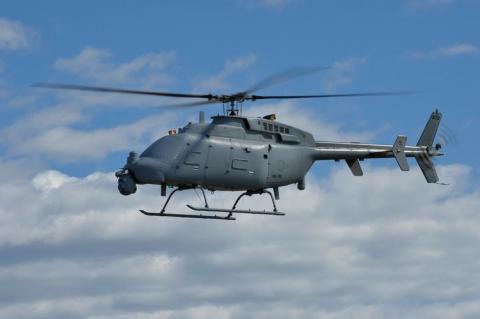
Northrop Grumman and the U.S. Navy recently began flight testing of the MQ-8C Fire Scout UAS equipped with the Leonardo AN/ZPY-8 radar.
The Fire Scout’s first flight with the radar took place on Feb. 27 at Webster Outlying Field. Before that flight, several weeks of ground tests were conducted. As the entities consider mission expansion opportunities for the UAS, testing will continue to progress.
Dive Delivery granted permission to conduct drone deliveries in California
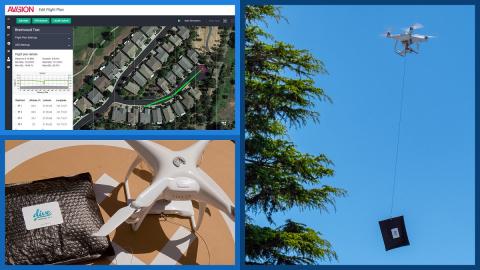
A delivery service focusing on residential and commercial drone delivery called Dive Delivery has received permission from the FAA to perform drone deliveries under existing Part 107 rules and regulations.
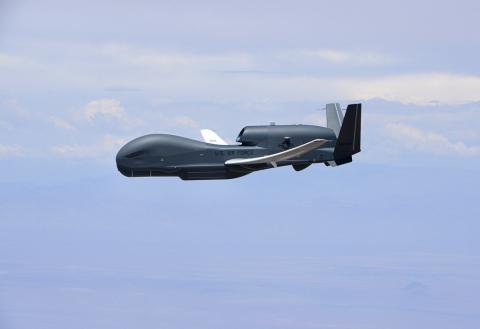
Report calls for using HALE drones for 'deterrence by detection' military strategy
According to a new study by Washington's Center for Strategic and Budgetary Assessments (CSBA), the fleet of high-flying, long-endurance unmanned aircraft operated by the United States and its allies could be a vital hedge against efforts by Russia and China to expand their borders and influence.
The report, "Deterrence by Detection: A Key Role for Unmanned Aircraft Systems in Great Power Detection," says Russia and China can conduct rapid strikes on neighboring countries on their peripheries, often before the United States or its allies could react.
Weekend Roundup: May 8, 2020
This Week in the Unmanned Systems and Robotics World
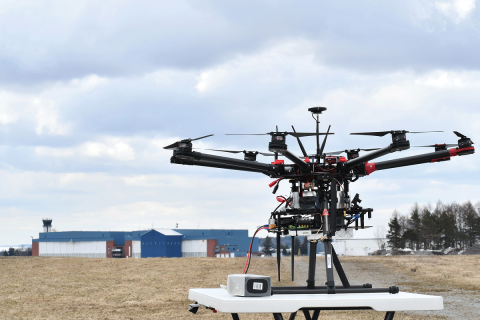
The FAA recently awarded a $1.6 million contract to advance unmanned traffic management (UTM) at the New York UAS Test Site. A team of five commercial companies—led by CAL Analytics—will develop a single, integrated contingency management platform (CMP) for UAS integration. (NUAIR)
2G Robotics launches line of payloads for light, modular AUVs
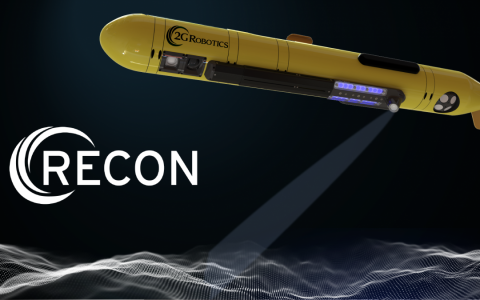
2G Robotics has launched a line of payloads that can be used on light, modular AUVs.
The RECON line of products includes the RECON CS, which is a 4K stills camera and LED lightbar payload, as well as the RECON LS, which is a payload that features the ULS-500 Micro laser scanner and Micro OBSERVER stills camera.
“We have proven this as a viable inspection solution for man-portable AUVs for commercial and naval mine countermeasure (MCM) applications,” says Chris Gilson, Product Development manager for 2G Robotics.
“This removes the final barrier to adoption of these small vehicles and could revolutionize the cost effectiveness of high accuracy inspection operations.”
PIT becomes first U.S. airport to deploy autonomous robotic cleaners equipped with ultraviolet lights
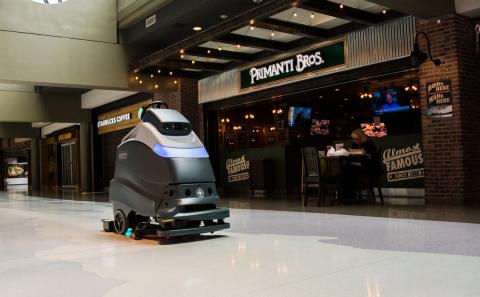
Pittsburgh International Airport (PIT) has become the first airport in the United States to deploy autonomous robotic cleaners equipped with ultraviolet (UV) lights that augment their traditional cleaning tools.
PIT and Pittsburgh-based Carnegie Robotics have partnered to deploy a pair of autonomous floor scrubbers that clean floors in an ultra-efficient manner.
According to Katherine Karolick, senior vice president of Information Technology for Pittsburgh International Airport, using UV is part of a strategic airport-wide approach to cleaning as airport officials look to incorporate UV disinfecting technology in other ways such as on handrails of escalators and moving walkways, elevator buttons and other high-touch areas.
Eight companies selected to help establish requirements for future Remote ID suppliers
On Tuesday, May 5, the FAA announced the eight companies that will help the Federal government establish requirements for future suppliers of Remote Identification (Remote ID). With Remote ID, UAS will be able to provide identification and location information while operating in the nation’s airspace.
Through a Request for Information process in Dec. 2018, Airbus, AirMap, Amazon, Intel, One Sky, Skyward, T-Mobile, and Wing have been selected to develop technology requirements for future Remote ID UAS Service Suppliers (USS).