
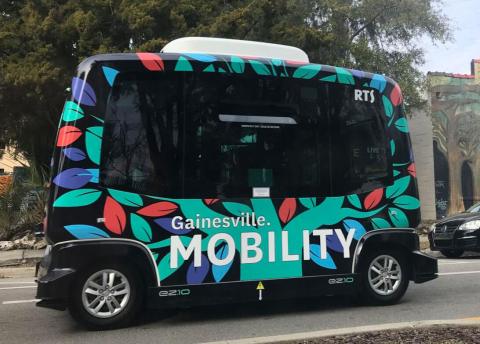
An autonomous shuttle began operating between downtown Gainesville and the University of Florida (UF) campus on Monday, Feb. 3.
The Florida Department of Transportation (FDOT) funded the shuttle, and the City of Gainesville’s Regional Transit System (RTS) is operating it.
The pilot project is part of a real-world testbed called I-STREET. The testbed offers unique opportunities to test transportation technologies, and allows for the development and deployment of innovative research throughout the city and the UF roadway network. The testbed is a result of a partnership between the University of Florida Transportation Institute (UFTI), FDOT, and the City of Gainesville.
Technology
Technology
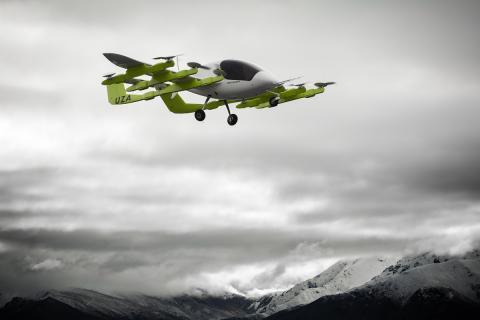
Wisk, New Zealand Government announce passenger transport trial featuring self-flying air taxi
Urban Air Mobility (UAM) company Wisk is partnering with the New Zealand Government to establish a passenger transport trial in Canterbury, New Zealand utilizing Cora, Wisk’s self-flying, all-electric air taxi.
“We are delighted to now have a signed agreement with the New Zealand Government, which will propel Cora’s entry to the air taxi market,” says Wisk CEO, Gary Gysin.
“We see this agreement as a sign of confidence in our product and abilities to develop and deliver a safe and reliable air taxi service, starting in New Zealand.”
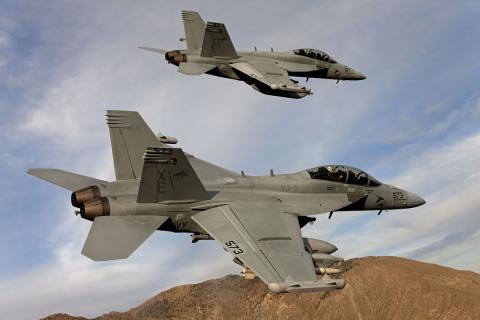
Boeing, U.S. Navy use Growler as mission controller for two unmanned Growlers
Boeing and the U.S. Navy successfully flew two autonomously controlled EA-18G Growlers as UAS, and used a third Growler as a mission controller for the other two.
Conducted during the Navy Warfare Development Command’s annual fleet experiment (FLEX) exercises, the flights, which took place at Naval Air Station Patuxent River, “proved the effectiveness of technology” allowing F/A-18 Super Hornets and EA-18G Growlers to perform combat missions with unmanned systems, according to Boeing.
UPS, Henry Schein to explore and test various UAS delivery use cases
UPS and Henry Schein Inc. have signed an agreement to explore and test various UAS delivery use cases. The use cases would examine UAS within business-to-business operating models.
As part of their agreement, the companies will focus on testing the transport of essential healthcare products by UPS to customers of Henry Schein, which provides healthcare items to office-based dental and medical practitioners.
“It is exciting to see Henry Schein come aboard this groundbreaking program,” says Scott Price, UPS chief strategy and transformation officer.
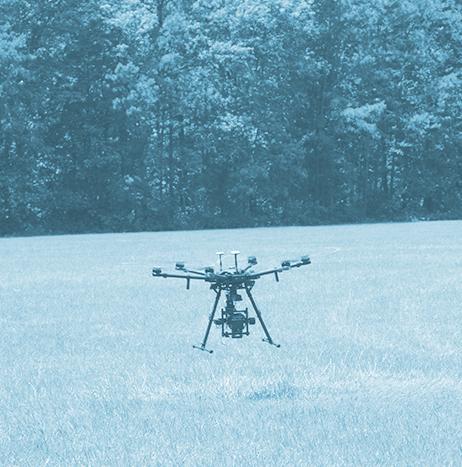
Implementing drones to inspect electric utility wires
It’s plotting a new course to the destination utilities are already sailing to (a proactive condition based asset management) and that this new course or technology is often seen as a disruption first before realizing it as an opportunity.
Q&A with Ilkka Hiidenheimo, CEO, Sharper Shape
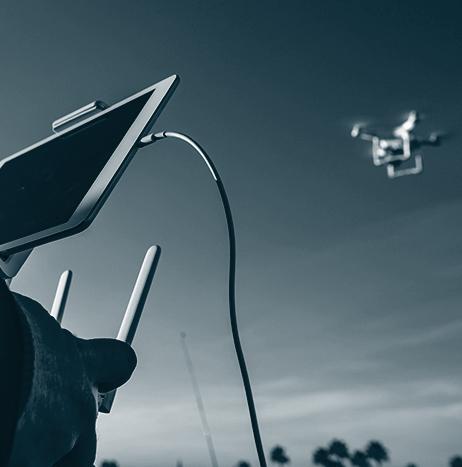
ZM Interactive selects Iris Automation as detect and avoid provider for its UAS
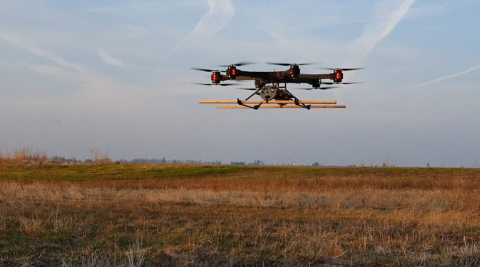
ZM Interactive (ZMI) has selected Iris Automation as the detect and avoid (DAA) provider for its drones, which will allow ZMI customers to conduct beyond visual line of sight (BVLOS) operations.
ZMI manufactures the xFold drone, which is an industrial, military-grade UAS that comes in various sizes and configurations. Its frame can change between a x4 (Quad), x6 (Hexa), X8 (octo) and X12 (Dodeca) configurations in minutes, and it has a heavy payload capability of more than 300 pounds, making the UAS ideal for a wide range of commercial, industrial, military and emergency response applications. Some of its use cases include aerial cinematography, 3-D Mapping and inspections, and cargo delivery.

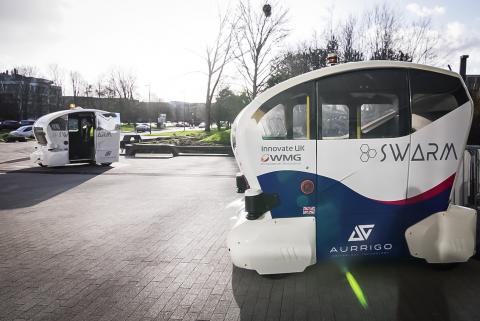
WMG at University of Warwick, partners develop autonomous pods capable of swarming
WMG at the University of Warwick in Coventry, England, Aurrigo and Milton Keynes council have conducted research that has made the concept of swarming autonomous pods a reality.
Researchers envision a scenario where passengers would be able to use an app to hail a pod, and if they are traveling in a group, they could hail a platoon of pods.
Designed for pedestrian areas and shared spaces to enable first and last mile service, the pods have been equipped with swarming skills typically used by birds and insects.
RoboSense LiDAR and the future of self-driving cars
To achieve large-scale commercialization of autonomous vehicles, a new generation of high-precision 3D environment sensing solid-state LiDAR technology products will be required to fulfill the industry’s strict requirements.
Q&A with Dr. Leilei Shinohara, VP of R&D

Apex.AI announces availability of Apex.OS 1.0 for autonomous vehicles
Autonomous driving software developer Apex.AI has announced the availability of Apex.OS 1.0 for its customers and partners.
Apex.OS is based on open-source ROS 2. According to Apex.AI, ROS is the “de facto standard” for robotics. With Apex.OS, that standard is now extending to the autonomous driving industry, which gives companies a head start on bringing safety to the autonomous driving software layer, ultimately allowing these companies to “focus their business on their own key differentiators, and much faster time to market,” Apex.AI says.