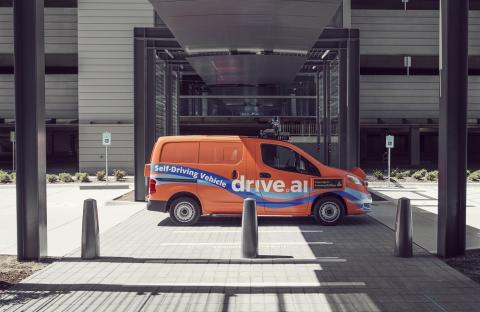
With no driver at the helm, self-driving vehicles are posed with the challenge of effectively communicating with their surroundings.
Drive.ai has addressed that challenge head-on, equipping its self-driving vehicles with external communication panels that convey a variety of messages to properly communicate with drivers, pedestrians, cyclists, and everyone else on the road.
“Our external communication panels are intended to mimic what an interaction with a human driver would look like. Normally, you’d make eye contact, wave someone along, or otherwise signal your intentions,” Drive.ai CEO Bijit Halder tells AUVSI via email.
Technology
Technology

Embry-Riddle professor develops counter-UAS tech that safely grounds unauthorized UAS
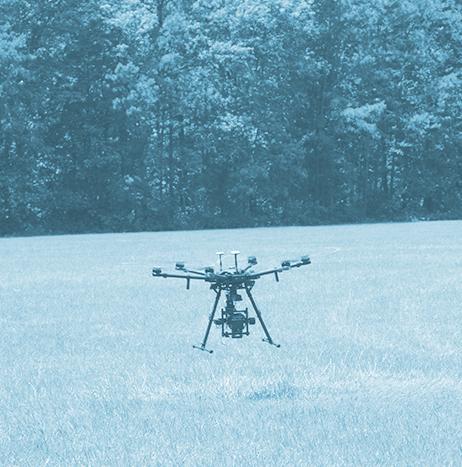
Embry-Riddle Aeronautical University and Drone Defense Systems LLC have announced a licensing agreement to commercialize new technology that detects and commandeers unauthorized UAS, and guides them to a safe landing.
Developed by Embry-Riddle faculty member Dr. Houbing Song, the technology suggests a “safe, affordable” way to neutralize rogue UAS without having to shoot them down or force them to crash-land. The technology allows for this to be done even in civilian settings such as large outdoor entertainment arenas and airports.
According to Dr. Stephanie A. Miller, executive director of technology transfer for Embry-Riddle’s Research Park, Drone Defense Systems has received exclusive rights to commercialize the technology under the licensing agreement.
University of Zurich researchers develop drone that can autonomously dodge objects thrown at it
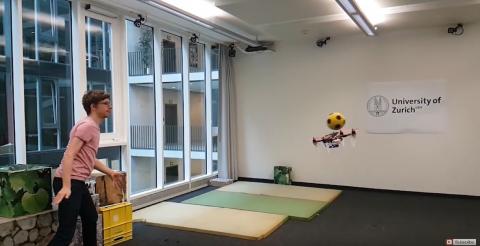
According to the Verge, researchers from the University of Zurich have developed a UAS capable of autonomously dodging objects thrown at it, even at close range.
“We wanted to really push the boundaries and see what these robots are capable of,” University of Zurich research Davide Falanga tells the Verge.
NextStep Robotics, developer of robotic therapy to help treat foot drop, receives $600,000 in funding
NextStep Robotics Inc., the developer of a personalized robotic therapy to help treat foot drop in recovering stroke patients, has announced that it received $600,000 during its second funding round.
With this round of funding, NextStep says that it will be able to move from prototyping and development to manufacturing and sales.
NextStep Robotics is based on intellectual property licensed from the University of Maryland, Baltimore (UMB). With more than a decade of research behind it, the robotic therapy is the “first effective treatment option for foot drop,” the company says, as it helps stroke survivors and others regain mobility using clinically proven rehabilitation training.

Driverless electric truck begins daily freight deliveries on public road in Sweden
According to Reuters, a driverless electric truck has begun daily freight deliveries on a public road in Sweden.
These deliveries are a “world first” according to the truck’s developer, Swedish start-up Einride, and logistics customer DB Schenker.
“This public road permit is a major milestone ... and it is a step to commercializing autonomous technology on roads,” Robert Falck, Einride’s CEO, tells Reuters.
“Since we’re a software and operational first company, a partnership with a manufacturing company is something that we see as a core moving forward.”

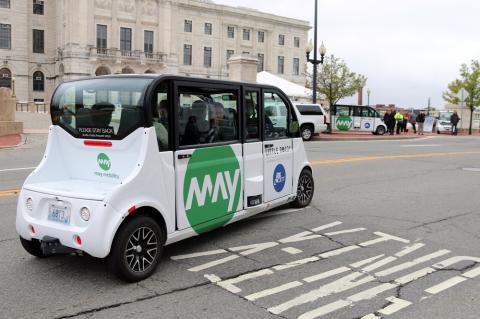
Little Roady autonomous vehicle pilot project begins service in Providence, Rhode Island
The Little Roady autonomous vehicle pilot project in Providence, Rhode Island went into service on Wednesday, May 15.
Launched with the intent to evaluate autonomous mobility technology, the research project, which is offering free service to riders, will help the Rhode Island Department of Transportation (RIDOT) “better understand the opportunities and challenges that come with integrating this new technology into RIDOT's transportation planning,” the department says.
RIDOT adds that the research will help improve transit, and provide information for communities, the workforce, and policymakers.
“It's always exciting when Rhode Island has an opportunity to lead the way in cutting-edge green technology,” says Governor Gina Raimondo.
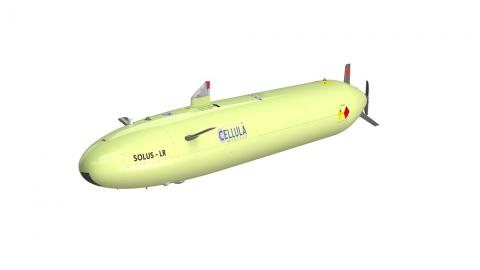
Cellula Robotics equipping its new UUV with technology from Sonardyne
Sonardyne Inc. has announced that its integrated navigation, positioning and communications technology will support Cellula Robotics’ new, fuel cell-powered long-range UUV, which is being designed for the Canadian defense department.
Known as Solus-LR, the UUV is being designed to be able to travel up to 2,000 kilometers, and stay submerged for missions stretching months at a time with support from an onboard fuel cell power pack.
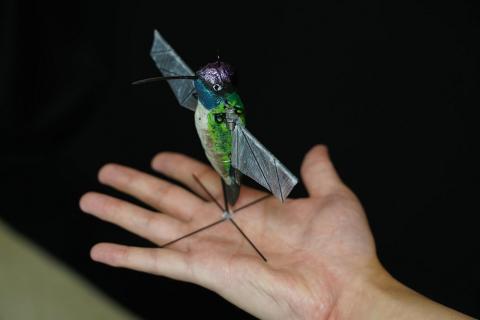
Purdue University researchers develop flying robots that emulate hummingbirds
Purdue University researchers have engineered flying robots that behave like hummingbirds, and could ultimately go to places where UAS can't.
The robots are trained by machine learning algorithms based on various techniques the bird uses naturally every day, meaning that after the robot learns from a situation, it “knows” how to move around on its own like a hummingbird would, such as knowing when to perform an escape maneuver.
The robot can also teach itself new tricks, thanks to the combination of artificial intelligence with flexible flapping wings. For example, the robot can’t see as of right now, but it senses by touching surfaces. Each touch alters an electrical current, which the researchers realized they could track.
AMP Robotics launches dual-robot system for recycling industry
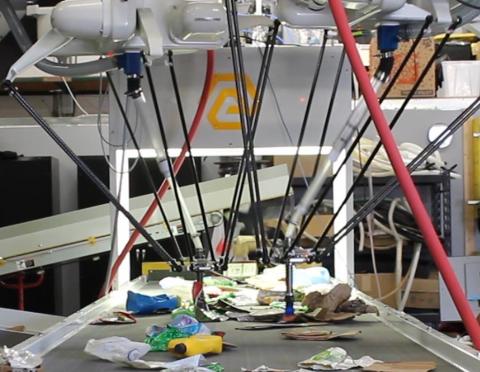
AMP Robotics Corp. (AMP), a developer of artificial intelligence (AI) and robotics for the recycling industry, has launched its new AMP Cortex dual-robot system (DRS), which focuses on material recovery in Municipal Solid Waste (MSW), Electronic Waste (E-waste), and Construction and Demolition (C&D).
Expanding on AMP’s existing product line of high-speed recycling robotics, the AMP Cortex DRS uses two high-performance robots that quickly sort, pick, and place materials at a speed of 160 pieces per minute, which creates optimum productivity, AMP says.