
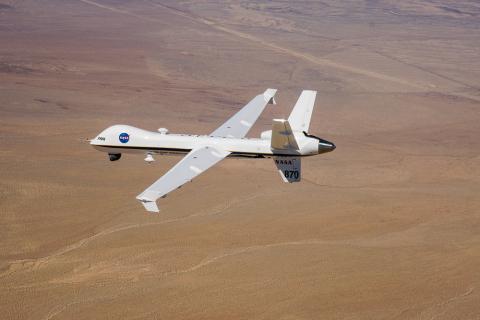
A General Atomics Aeronautical Systems Inc. (GA-ASI) developed Detect and Avoid (DAA) avionics system was the “key technology” that enabled a UAS flight through the National Airspace System (NAS) on June 12.
The DAA system, which was installed on a NASA-owned Predator B/MQ-9 UAS named Ikhana, allowed the UAS to meet the FAA’s 14 CFR 91.113(b) requirement to “see and avoid” other aircraft during its flight. The UAS took off from southern California.
“Our goal of producing UAS that can be certified to fly in non-segregated airspace took a big step forward today,” says Linden Blue, CEO, GA-ASI.
Airspace
Airspace
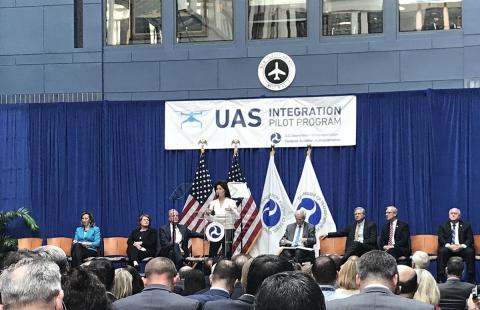
DOT Secretary Chao announces UAS IPP selectees
Ten state, tribal or local governments have been tapped to help expand the flight envelope of unmanned aircraft in the National Airspace System, the U.S. Department of Transportation announced Wednesday.
The selections for the UAS Integration Pilot Program are Choctaw Nation of Oklahoma; the city of San Diego; Virginia Tech – the Center for Innovative Technology; the Kansas Department of Transportation; the Lee County Mosquito Control District of Ft. Myers, Florida; the Memphis-Shelby County Airport Authority of Tennessee; the North Carolina Department of Transportation; the North Dakota Department of Transportation; the city of Reno, Nevada; and the University of Alaska-Fairbanks.
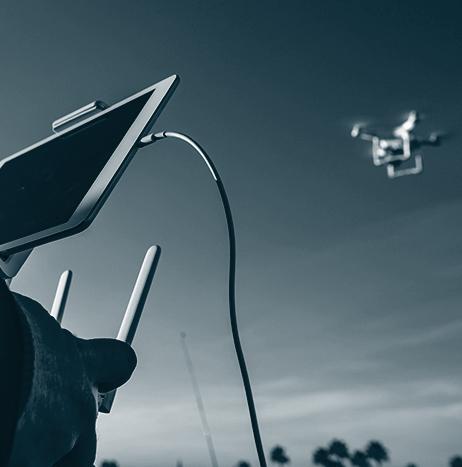
DroneUp enables LAANC available on its operating platform
DroneUp, which is a community-endorsed pilot network and leader in small UAS safe operations and training, has announced that it has enabled Low Altitude Authorization & Notification Capability (LAANC) available on its operating platform, through AirMap LAANC Deep Linking.
DroneUp says that since late 2017, it has been working to offer LAANC and other essential compliance and regulatory features to its pilots.
“We are committed to continuous education and safe operations, and we are excited to add LAANC so our community will have more opportunities to build drone businesses and fly missions,” says Tom Walker, CEO of DroneUp.

Thales signs agreement with NASA to support UTM activity
Thales, which is a global leader in air traffic management technology, has announced that it has reached formal agreement with NASA for a Space Act Agreement to support its UAS traffic management (UTM) activity.
Thales says that with the ongoing support of federal, state and local government officials, and economic development organizations, it will create jobs in New York through the agreement.
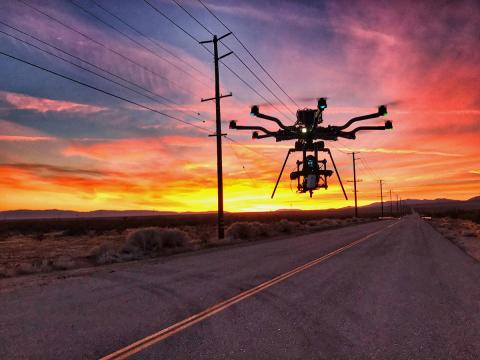
Companies that paved the way for Hollywood drone use receive Emmy recognition
A collaboration that seeded a change for UAS in filmmaking roughly five years ago will receive recognition at the 69th Annual Technology & Engineering Emmy Awards ceremony on April 8.
John McGraw, founder and principal of John McGraw Aerospace Consulting LLC in North Carolina, couldn’t be more honored or more astonished with his pending award.
“It was a totally surprising out of the blue experience,” McGraw says. “Not something I anticipated happening.”
The award, 2017 Low Latency Remote Controlled Airborne Video Platforms (non-military) for Television, recognizes the role of unmanned aircraft in filmmaking.
Unifly and Integra Aviation Academy collaborating to set up UTM system for UAS
In an effort to create an environment where UAS can be flown safely and under control in the vicinity of airports, Unifly and Integra Aviation Academy have announced that they will work together to set up an Unmanned Traffic Management (UTM) system that makes it possible to “detect, monitor and document” UAS operations on a national scale.
The entities will seek to accomplish this goal by working with some of the top manufacturers within the field.
“Airports and their surroundings are a highly specific and vulnerable area where it is vital for manned and unmanned aviation to coexist safely,” says Mark Kegelaers, CEO of Unifly.
Collaboration will be key to technology, regulation for airspace integration
Government-industry collaboration will be needed going forward to integrate unmanned aircraft into the National Airspace System, both for developing technology for such critical functions as remote identification, and for establishing government regulations that will help the industry grow.
That was one of the messages repeated at the second day of the third annual FAA UAS Symposium, cosponsored by the FAA and AUVSI and held this year in Baltimore.
AUVSI President and CEO Brian Wynne kicked off the day with a panel discussion including regulators from the Department of Transportation and congressional staffers.

Speakers see appetite for UAS integration, but remote i.d. is a must
The recently created pilot program for communities wanting to expand unmanned aircraft operations will help push the technology and integration forward, said speakers at the kickoff of the third annual FAA UAS Symposium, cosponsored by the FAA and AUVSI.
One such city might be Baltimore, where the symposium is being held. Catherine Pugh, the mayor of Charm City, noted that her campaign used drone footage for an ad promoting her candidacy.
She cited AUVSI’s economic impact numbers, which forecast 100,000 new jobs and more than $82 billion in economic impact upon full integration.
“I want you to know that Baltimore is poised to be part of this rapidly growing area,” Pugh said.

Skyguide and AirMap team up to develop and deploy first national UAS traffic management system in Europe
Skyguide, which is a Swiss air navigation service provider, and AirMap, which is the leading global airspace management platform for UAS, have announced that they will develop and deploy the first national UAS traffic management system in Europe.
The resulting system from this partnership between the two companies will be the first national deployment of U-space, which is Europe’s vision for the “digital infrastructure that will support safe and secure access to European skies for millions of drones.”
U-space is similar to the U.S. “Unmanned Traffic Management (UTM)” initiative, in that it is a “collaborative effort to enable situational awareness, data exchange, and digital communication for the European drone ecosystem.”
Regulatory and Stakeholder Perspectives on the Future of UAS
The number of remote pilots using drones across an array of industries has opened the door for increased efficiency and productivity, but has also ushered in new challenges. Join AUVSI and industry stakeholders for a discussion of the evolving regulatory landscape and what it means for the drone industry.
Frank discussions between regulators and the drone community are important as both groups grapple with the safe integration of our technology into the national airspace. This webinar will provide community members with the opportunity to hear directly from regulators and ask their most pressing questions.
Who Should Attend