
In an effort to “improve safety for troopers on the ground and cut down the time roads are closed for crash scene investigations,” a handful of members of the Washington state patrol is learning to fly UAS so that they can investigate traffic accidents from the sky.
While some law enforcement agencies in Washington already use UAS, this is the first time that this technology has been used by state troopers.
According to Q13 Fox News, the UAS, which are manufactured by Lockheed Martin, will give detectives a “bird’s eye view of crash scenes,” and once the data is uploaded into a laptop, it will provide investigators with precise measurements.
Airspace
Airspace
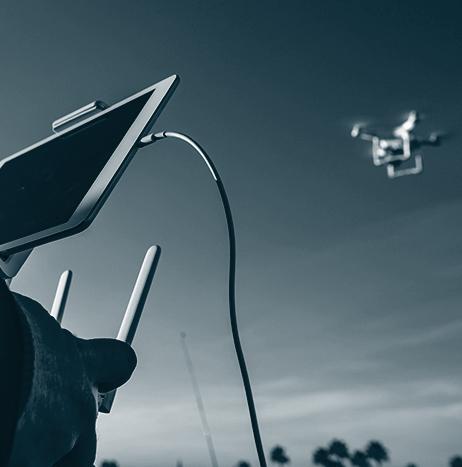
Lockheed Martin to pair its Indago UAS with MyDefence Communication’s KNOX Counter-UAS System
Under a new development agreement, Lockheed Martin will pair its Indago quadrotor UAS with the MyDefence Communication KNOX counter-unmanned aerial system (C-UAS).
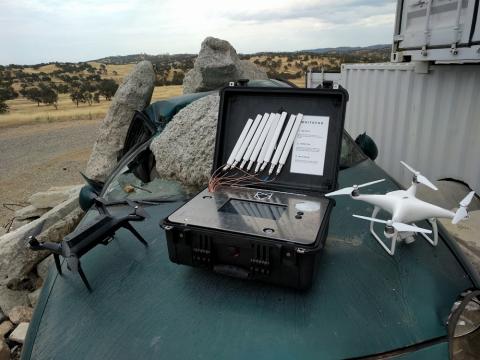
By pairing the systems together, Lockheed Martin and Denmark-based research and development company MyDefence Communication hope to achieve rapid response aerial surveillance capabilities, which will give users the ability to “quickly and effectively detect adversaries and record evidence that could be used for prosecution.”
The KNOX system is an “anti-drone alarm and protection capability paired with Indago to gather real-time information about a suspect drone and its pilot.”

Department of Homeland Security's Common Unmanned Aircraft System Site opens in Mississippi
The Department of Homeland Security's (DHS) Common Unmanned Aircraft System Site has opened in Mississippi at the Camp Shelby military post.
Acting DHS Undersecretary William Bryan says that the UAS Support facility, which cost $72 million, is the only Unmanned Aircraft Regional Flight Center in the country.
“This is a great day for Mississippi,” Bryan says through the Hattiesburg American.
According to Bryan, the site has several goals, including improving the security and safety of the country’s borders, conducting search and rescue operations, and helping during natural disasters.
Nevada UAS Test Site and Microsoft test artificial intelligence in Microsoft’s UAS
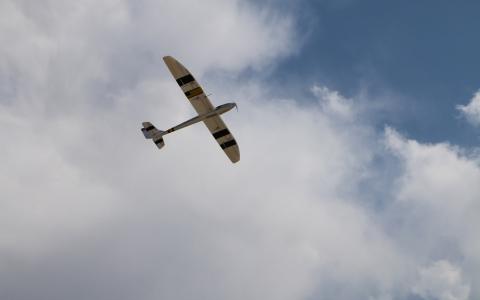
The Nevada Governor’s Office of Economic Development (GOED) and the Nevada Institute for Autonomous Systems (NIAS) have teamed up with Microsoft's UAS research team to test Artificial Intelligence (AI) in Microsoft’s sailplane.
The sailplane being tested, which is 16.5 feet and weighs 12.5 pounds, relies on a battery to “run onboard computational equipment and controls,” including the rudder, and radios to communicate with the ground.
The UAS also has a motor, which allows a pilot to take over manual operation if and when necessary.
During this set of tests though, the UAS demonstrated its ability to operate on its own, as it found and used thermals to travel without the help of the motor or a person.
White Settlement Independent School District in Texas adopts USI’ UAS curriculum
White Settlement Independent School District has become the first Texas school district to adopt the Unmanned Safety Institute’s (USI) UAS curriculum, which is made up of four college-equivalent courses, and totals more than 150 hours of instruction.
“We congratulate White Settlement ISD for leading the way in Texas with USI drone curriculum,” says Aaron Greenwald, President of Unmanned Safety Institute.
“Embracing Unmanned Safety Institute curriculum will help students access valuable education within the aviation field. White Settlement is an important component in creating a pathway for students to access this curriculum.”
WhiteFox demonstrates DroneFox technology during Joint Interagency Field Experimentation program
During the Joint Interagency Field Experimentation (JIFX) program from July 31 to August 4, WhiteFox Defense Technologies, Inc. demonstrated its DroneFox technology to a diverse group of U.S. military leaders.
UAS maintenance network Robotic Skies raises a round of venture capital financing
Robotic Skies, which is a UAS maintenance network, has raised a round of venture capital financing, which was led by Kickstart Seed Fund of Salt Lake City, Utah, and also included participation by Sun Mountain Capital of Santa Fe, New Mexico.
According to Robotic Skies, the capital will expedite the “expansion of the Robotic Skies maintenance network for high-end commercial unmanned aircraft systems.”
“We are very excited that this group of experienced investors recognizes the unique solutions that Robotic Skies brings to the emerging unmanned aerospace market and decided to join our team,” says Robotic Skies CEO Brad Hayden.
Small UAS used during aircraft crash exercises at Edwards Air Force Base
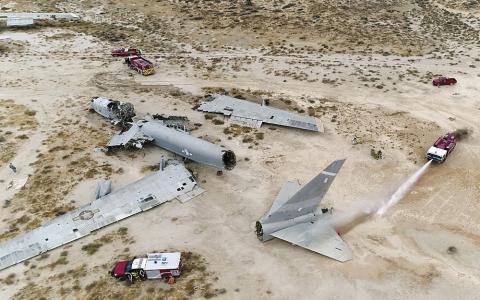
During two aircraft crash exercises on July 31 and August 3, members of the 812th Civil Engineer Squadron teamed with the Emerging Technologies Combined Test Force (ETCTF) to “increase their emergency response capabilities” using small UAS.
Through the exercise scenario, the Edwards Fire Department at Edwards Air Force Base in California, and the 812th Explosive Ordnance Disposal (EOD) Flight were able to respond to a simulated crashed B-52 Stratofortress on Rogers Dry Lake.
The exercise allowed responders to approach an actual dismantled B-52 on the lakebed, and the B-52 was also used as an “aerial photo calibration target and later a radar target.”
Mohave Community College to offer UAS degree starting in 2018
Starting in 2018, Mohave Community College in Kingman, Arizona will offer an unmanned aircraft systems degree at all of its campuses.
According to Havasu News, the degree program, which is suited for the “Xbox generation and its fascination with all things tech” according to Andra Goldberg, MCC computer information systems faculty, will prepare students to pursue a UAS Bachelor of Science degree, or to earn entry-level employment in a plethora of industries that use UAS.

AUVSI Webinar on Airspace Integration: How Commercial Drone Operations Can Play a Role and Affect Change, Aug. 21
FOR IMMEDIATE RELEASE: Aug 14, 2017
Contact: Tom McMahon, tmcmahon@auvsi.org, (571) 255-7786