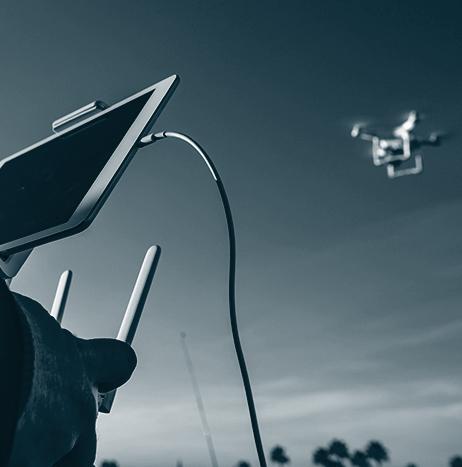
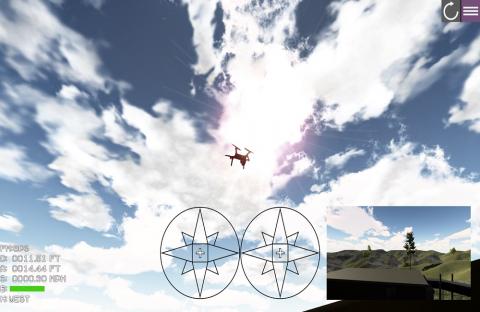
Through a new strategic partnership between Little Arms Studios and SkyOp, LLC, Little Arms Studios' Zephyr Drone Simulator will be deployed throughout the SkyOp commercial and consumer UAS training network that serves a large part of the Northeastern United States.
Zephyr’s unique Learning Management System makes it the preferred option for SkyOp instructors that want to observe the development of each student inside and outside the classroom.
Commercial
Commercial
DJI partners with South Korea’s Zanybros to provide UAS for filming and production projects
In an effort to take “video content creation to new heights,” DJI has partnered with Zanybros, which is South Korea’s top production house that specializes in music video and commercial filmmaking.
Through this strategic partnership, DJI will provide its hardware and technical support to the future filming and production projects by Zanybros.
There are also plans to work on training programs for professionals—specifically those in the music and entertainment industry—to find new and innovative ways to produce Korean-Pop (K-Pop) content.

Weekend Roundup
This Week in the Unmanned Systems and Robotics World
A startup company called May Mobility that is looking to offer its autonomous driving technology to companies with commercial fleets made its official debut on August 21 at Y Combinator’s demo day. May Mobility wants to focus on customers that have vehicle needs in areas where routes can be easily mapped and conditions are fairly predictable. This includes areas such as closed residential communities, business districts and campuses (school and corporate). (TechCrunch)
White Settlement Independent School District in Texas adopts USI’ UAS curriculum
White Settlement Independent School District has become the first Texas school district to adopt the Unmanned Safety Institute’s (USI) UAS curriculum, which is made up of four college-equivalent courses, and totals more than 150 hours of instruction.
“We congratulate White Settlement ISD for leading the way in Texas with USI drone curriculum,” says Aaron Greenwald, President of Unmanned Safety Institute.
“Embracing Unmanned Safety Institute curriculum will help students access valuable education within the aviation field. White Settlement is an important component in creating a pathway for students to access this curriculum.”
EasyMile to open U.S. headquarters in Denver
This fall, EasyMile will open its U.S. headquarters in Denver, Colorado at the Panasonic Enterprise Solutions campus, according to the Denver Post.
The office will be located in a 6,000-square-foot office and warehouse space, after that space has its renovations completed.
According to Lauren Isaac with EasyMile, the company does not have a lot of employees in North America as of right now, but there are plans in place to change that very soon.
“There are only two employees in North America now, but we do have significant growth plans for the next two years,” Isaac says.
UAS maintenance network Robotic Skies raises a round of venture capital financing
Robotic Skies, which is a UAS maintenance network, has raised a round of venture capital financing, which was led by Kickstart Seed Fund of Salt Lake City, Utah, and also included participation by Sun Mountain Capital of Santa Fe, New Mexico.
According to Robotic Skies, the capital will expedite the “expansion of the Robotic Skies maintenance network for high-end commercial unmanned aircraft systems.”
“We are very excited that this group of experienced investors recognizes the unique solutions that Robotic Skies brings to the emerging unmanned aerospace market and decided to join our team,” says Robotic Skies CEO Brad Hayden.
UK engineers planning to build a mid-mass logistics drone called the Sky Hopper
A group of engineers in the United Kingdom is planning to build a “mid-mass logistics drone” for global markets called the Sky Hopper.
Initially, the system will be aimed at remote and isolated communities, but the plan is for it to be “fully capable of near urban operations in due course.”

ALEA to become APSA at the beginning of 2018
On January 1, 2018, the Airborne Law Enforcement Association (ALEA) will change its name to the Airborne Public Safety Association (APSA).
The Association says that the new moniker, which was announced at ALEA EXPO 2017, is the result of various changes that have occurred over the last seven years, and will be “more reflective of the entirety of those involved in public safety aviation,” as well as more appealing to potential members the Association hopes to attract.
While the Association’s name will change, its mission will remain the same, as it seeks to “support, promote and advance the safe and effective utilization of aircraft by governmental agencies in support of public safety missions through training, networking, advocacy and educational programs.”
Weekend Roundup
This Week in the Unmanned Systems and Robotics World
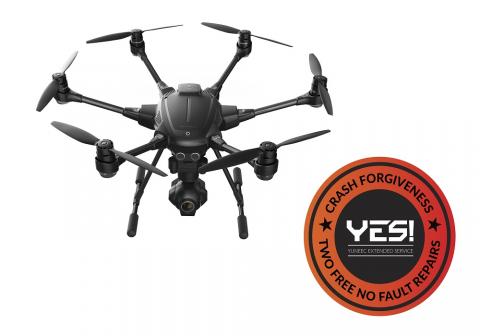
Yuneec will offer unlimited manufacturer defect repairs through its new Yuneec Extended Service (YES!) plan. YES! plans, which offer a variety of services from free shipping to non-warranty repairs, are available as a one or two-year plan for the company’s Breeze, Typhoon H and Typhoon H with Intel RealSense UAS. (sUAS News)
UTA researcher looking to reduce risks of operating UAS over populated areas
Atilla Dogan, an associate professor of aerospace engineering at The University of Texas at Arlington (UTA), is looking to minimize the risk of using UAS over populated areas.
Dogan, along with other UTA researchers, plans on doing this by using a $550,000 National Science Foundation grant to gauge the risks posed by UAS. Following this, Dogan and his team will “create algorithms to reduce those risks while the vehicles perform specific tasks.”
For Erian Armanios, chair of the Mechanical and Engineering Department in UTA’s College of Engineering, the grant is just one example of the university’s “commitment to sustainable urban communities and data-driven discovery within the University’s Strategic Plan 2020: Bold Solutions | Global Impact.”