
A team of researchers from Oklahoma State University (OSU) has been recognized with the University Leadership Initiative (ULI) Award from NASA, and will receive $5.2 million in funding over the next four years to address some of NASA’s strategic research initiatives.
Featuring faculty members and students from the College of Engineering, Architecture and Technology, the OSU team will seek to improve real-time weather forecasting of low-level winds and turbulence in both rural and urban environments, with the ultimate goal of improving safety for UAS flying in Advanced Air Mobility (AAM) operations.
Education
Education
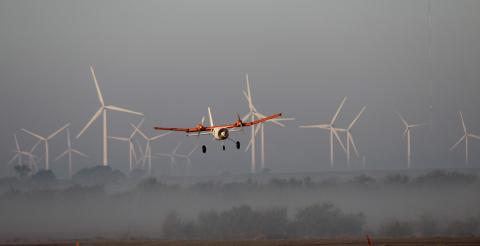
North Carolina A&T-led interdisciplinary team to develop air passenger taxis
To address traffic congestion, NASA has awarded an interdisciplinary team led by North Carolina Agricultural and Technical State University (North Carolina A&T) a four-year, $8 million award to develop, test and eventually deploy air passenger taxis as a supplemental means of transportation.
The first historically black college or university (HBCU) to lead a project for NASA’s University Leadership Initiative (ULI), North Carolina A&T notes that the grant is the second-largest award the university has received in its history.
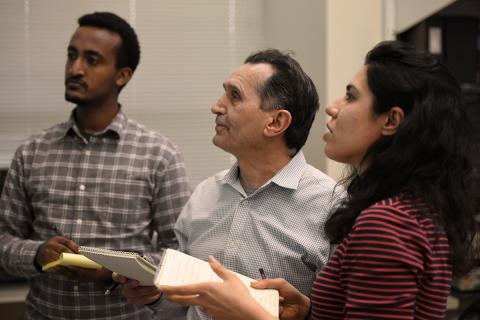
FAA awarding $2.6 million in grants to universities to advance drone ops
U.S. Transportation Secretary Elaine L. Chao recently announced that the FAA is awarding $2.6 million in research, education, and training grants to universities that make up the agency’s Air Transportation Center of Excellence (COE) for UAS, which is also known as Alliance for System Safety of UAS through Research Excellence (ASSURE).
The grants are designed to advance specific goals and projects.
“The research funded by these grants will provide valuable data as the Department leads the way to chart a course for the safe integration of drones into our national airspace,” Secretary Chao said.

UToledo awarded grant to purchase new equipment to train students in autonomous vehicle tech, robotics
Thanks to a $474,287 grant from the state of Ohio, the University of Toledo (UToledo) will purchase new state-of-the-art equipment to train students in the areas of autonomous vehicle-sensing technologies, robotics and vision-based systems for automation.
The grant is part of $975,000 in funding in the region and $8 million across the state through the Department of Higher Education’s Regionally Aligned Priorities in Delivering Skills (RAPIDS) program for universities, community colleges and technical career centers to work together to improve education and job preparedness in different fields of strategic importance for Ohio employers.
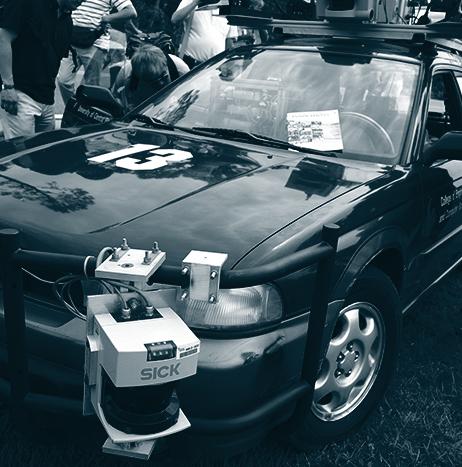
University of North Dakota's UAS degree program celebrates 10-year anniversary
The University of North Dakota’s (UND) UAS degree program is celebrating its 10-year anniversary.
According to Al Palmer, the retired director of UND’s Aerospace UAS program, UND began planning its foray into UAS in 2005. To get “ahead of the coming UAS wave,” Ben Trapnell, associate professor of aviation, was tasked with creating an education program for UND Aerospace back in 2006.
Three years later in 2009, everyone was onboard with the program, which led to the State Board of Higher Education approving the program, and UND’s John D. Odegard School of Aerospace Sciences becoming the first university to offer a degree program in UAS operations.
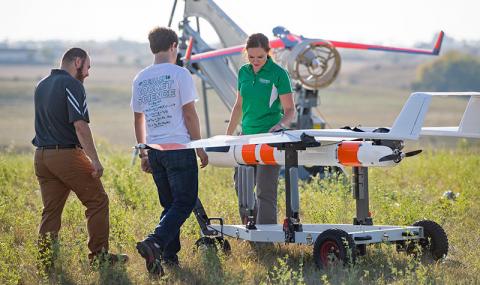
Florida Polytechnic University awarded grant to develop simulation facility for connected and autonomous vehicles
Thanks to a $350,000 grant from the National Science Foundation, Florida Polytechnic University will develop a large-scale Hardware-in-the-Loop (HiL) simulation facility for connected and autonomous vehicles (CAVs), which it expects to be operational by the beginning of the spring semester in 2020.
According to Florida Polytechnic, HiL simulation is a “robust gateway” for the development and testing of complex real-time embedded systems.
“I thank the National Science Foundation for their support of Florida Polytechnic University’s research and development of autonomous vehicle technology,” says Florida Sen. Marco Rubio.

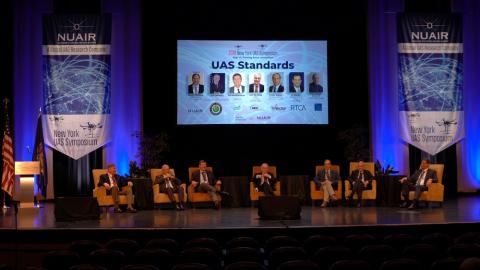
2nd annual NY UAS Symposium to highlight issues facing industry, importance of UTM
The second annual New York UAS Symposium, hosted by Northeast UAS Airspace Integration Research (NUAIR), will look to build off of a successful 2018 symposium that brought in more than 300 participants.
This year’s symposium will give attendees a chance to talk with fellow UAS industry leaders representing all sides of the industry — including from the FAA, NASA, and the New York City Fire Department (FDNY), to name a few — make new connections, and discuss key issues that the industry is facing.
According to Michael Hertzendorf, interim CEO for NUAIR Alliance, the number one challenge that the industry faces is public adoption.
MIT researchers develop technique for driverless cars and robots to spot objects amid clutter
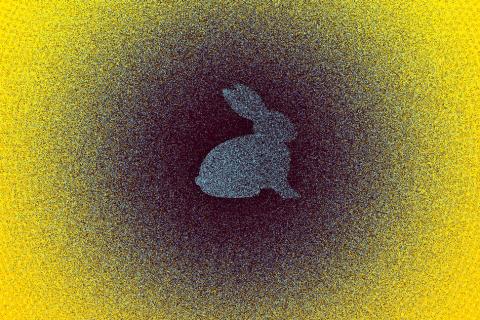
Researchers at MIT say that they have developed a technique that allows robots to quickly identify objects hidden in a three-dimensional cloud of data.
According to the researchers, sensors that collect and translate a visual scene into a matrix of dots help robots “see” their environment. The researchers note, though, that conventional techniques that try to pick out objects from such clouds of dots, or point clouds, can do so with either speed or accuracy, but not both.
Carnegie Mellon University, Argo AI establish center for autonomous vehicle research
Carnegie Mellon University (CMU) and Argo AI have announced a five-year, $15 million sponsored research partnership that will result in Argo AI funding research into advanced perception and next-generation decision-making algorithms for autonomous vehicles.
CMU and Argo AI will establish the Carnegie Mellon University Argo AI Center for autonomous vehicle research. Through advanced research projects, the center will seek to help overcome the hurdles associated with enabling self-driving vehicles to operate in various real-world conditions.
“We are thrilled to deepen our partnership with Argo AI to shape the future of self-driving technologies,” says CMU President Farnam Jahanian.