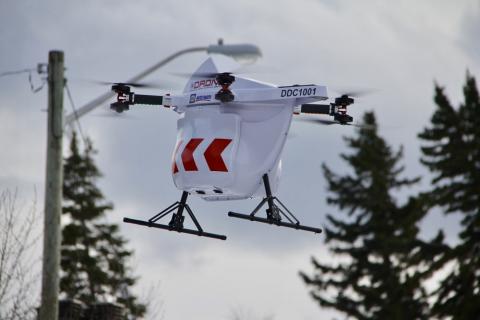
With the assistance of Air Canada and the Pontiac Group, Drone Delivery Canada (DDC) has entered into a commercial agreement with The David McAntony Gibson Foundation (operating as GlobalMedic) to use its drone delivery technology to provide service to the Beausoleil First Nation Community (BFN) in Ontario.
A variety of donors provided funding for the project, including the OEC Group (Canada), which is a global logistics provider that services clients in all major industries including aerospace, healthcare, global retail, automotive and manufacturing.
“DDC and OEC have been looking for an opportunity to partner. When the chance popped up to help the Beausoleil First Nation community, it was an easy decision to make,” says Landon Bibeau, CMO of the OEC Group.
IHP
IHP
Drone Delivery Canada launching UAS delivery service for Ontario's Beausoleil First Nation Community
CU Boulder engineer designing artificial limbs that restore sense of touch for amputees
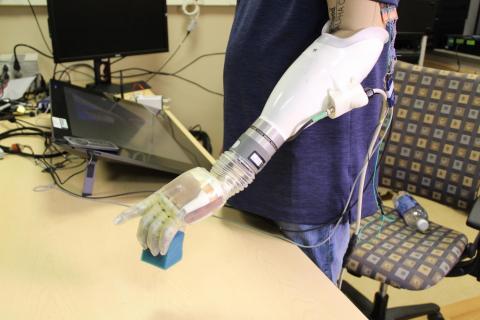
University of Colorado Boulder (CU Boulder) biomedical engineer Jacob Segil is working to restore the sense of touch for amputees, including veterans of the wars in Iraq and Afghanistan.
An instructor in the Engineering Plus Program and program director for the Center for Translational Research at CU Boulder, Segil is designing artificial limbs that may one day allow amputees to feel the world around them through electronic sensors.
“In my field, we have a gold standard, which is the physiological hand,” Segil says. “We’re trying to recreate it, and we’re still so far off.”
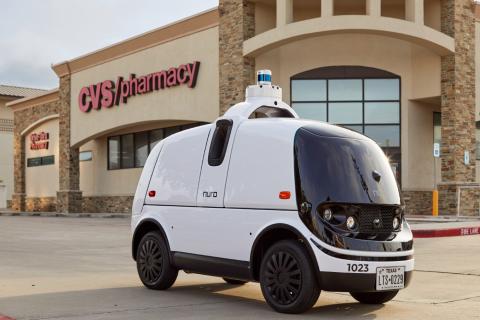
Nuro to deliver prescriptions and essential items using autonomous vehicles in Houston
Nuro has officially entered into the health space with its announced partnership with CVS Pharmacy.
Starting in June, Nuro’s fleet of autonomous vehicles will be used to deliver prescriptions and essentials across three zip codes in Houston, Texas.
“We see this moment as an important stepping stone toward delivering all kinds of goods, beyond food and groceries,” Nuro says.
“It is progress towards building a future where through moving goods instead of people, we can lessen the need for unnecessary trips, save time, and create a safer and more convenient way of getting the things we need.”
Novant Health, Zipline delivering PPE and medical supplies to frontline medical teams in NC
Novant Health Inc., a not-for-profit, integrated healthcare system headquartered in North Carolina, has partnered with Zipline to launch America’s first emergency drone logistics operation by a hospital for its pandemic response.
Novant Health, which operates 15 hospitals and nearly 700 locations in the southeastern United States, was granted a part 107 waiver from the FAA to begin operation under the North Carolina Department of Transportation’s (NCDOT) UAS Integration Pilot Program (UAS IPP). The operation will provide contactless distribution of personal protective equipment (PPE) and critical medical supplies to Novant Health frontline medical teams in the Charlotte, North Carolina metro area.
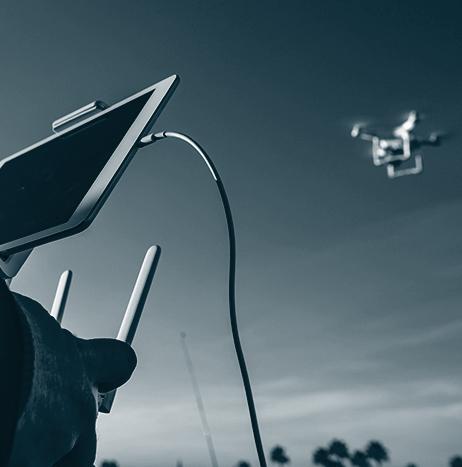
Kongsberg Geospatial, partners to use AI and UAS to improve search and rescue ops in Canada
Public Safety Canada has selected Kongsberg Geospatial, Larus Technologies, and the Civil Air Search and Rescue Association of Canada (CASARA) to help develop new methods for using drones in search and rescue operations in remote communities in Canada using geospatial software, artificial intelligence, and machine vision software.
Dubbed OVERSEE—an acronym for Optical Vision Enhancement and Refinement of Sensor Exploitation Effectiveness—the project will seek to address the unique challenges of conducting search and rescue operations using UAS platforms in remote areas such as indigenous communities in the Arctic and their immediate surrounding area.
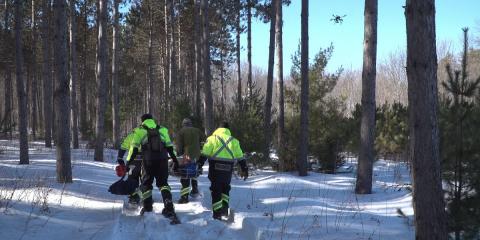
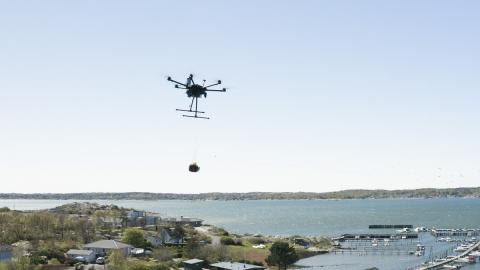
Everdrone using UAS to deliver defibrillators to the scene of cardiac arrests
In Sweden, autonomous drone technology company Everdrone has announced that it is now using UAS to deliver Automated External Defibrillators (AEDs) to the scene of cardiac arrests, which will allow bystanders to initiate life-saving measures while they wait for professional medical care.
Everdrone notes that each year, out-of-hospital cardiac arrests affect approximately 275,000 individuals in Europe. The survival rate in these instances is about 10 percent, but that number could increase to as much as 70 percent when CPR and early defibrillation is initiated within the first few minutes, according to research.
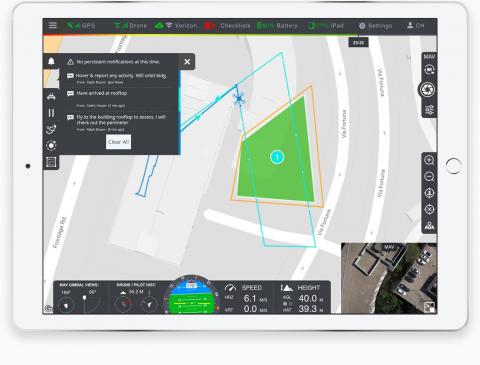
Parrot, DroneSense partner to enhance UAS capabilities of public safety UAS teams
Parrot has announced a partnership with software company DroneSense. Using DroneSense's comprehensive drone management platform, public safety organizations can build, manage, and scale their UAS programs.
Through the partnership between Parrot and DroneSense, public safety UAS teams will be able use the full suite of DroneSense capabilities tailor-made for the needs of first responders with their ANAFI aircraft.
“It’s our mission at DroneSense to enable first responders to build and scale fully operational drone programs that harness the value of the latest drone technology safely and effectively,” says DroneSense CEO, Christopher Eyhorn.
Elbit Systems introduces lifesaving capability to its Hermes 900 Maritime Patrol UAS
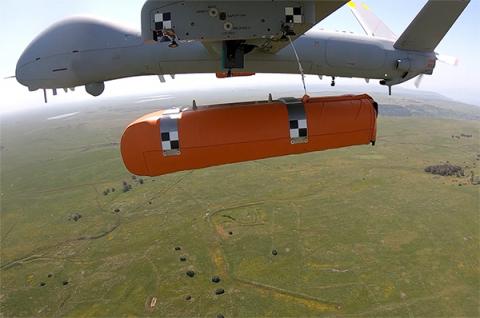
Elbit Systems has introduced a lifesaving capability to its Hermes 900 Maritime Patrol UAS.
The Hermes 900 Maritime Patrol UAS can now perform long-range maritime Search and Rescue (SaR) missions thanks to the integration of detection and identification capabilities, onboard inflated life-rafts, and a precision dispatch capability.
A version of this UAS with these configurations was recently delivered to an undisclosed customer in South-East Asia.
PIT becomes first U.S. airport to deploy autonomous robotic cleaners equipped with ultraviolet lights
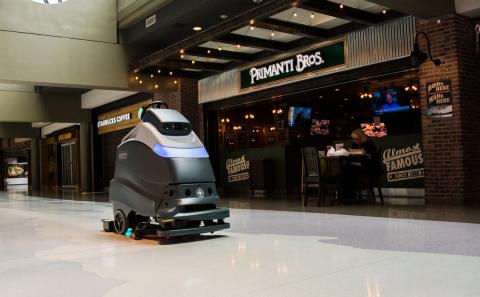
Pittsburgh International Airport (PIT) has become the first airport in the United States to deploy autonomous robotic cleaners equipped with ultraviolet (UV) lights that augment their traditional cleaning tools.
PIT and Pittsburgh-based Carnegie Robotics have partnered to deploy a pair of autonomous floor scrubbers that clean floors in an ultra-efficient manner.
According to Katherine Karolick, senior vice president of Information Technology for Pittsburgh International Airport, using UV is part of a strategic airport-wide approach to cleaning as airport officials look to incorporate UV disinfecting technology in other ways such as on handrails of escalators and moving walkways, elevator buttons and other high-touch areas.