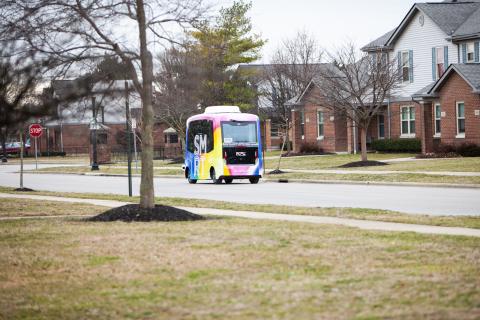
A one-year self-driving shuttle pilot program is set to launch in Columbus, Ohio.
Known as the Linden LEAP (Linden Empowers All People), the pilot program, which is being funded by Columbus’ win of the U.S. Department of Transportation’s Smart City Challenge, will service destinations around the South Linden neighborhood of Columbus from 6 a.m. to 8 p.m. daily, with stops in service during school arrival and dismissal times.
Linden LEAP is being described as the nation’s first public self-driving shuttle in a residential area.
IHP
IHP
Self-driving shuttles to connect residents to community resources in Linden neighborhood of Columbus
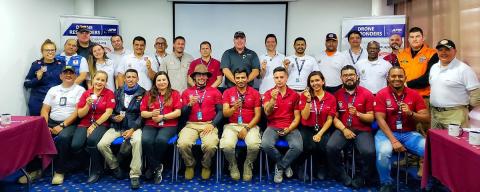
Airborne Incident Response Team, APD Humanitario launch Latin America rendition of DroneResponders
During a week-long workshop for emergency services professionals that took place from January 21-25 in Bogota, Colombia, Airborne Incident Response Team (AIRT) and APD Humanitario officially unveiled DroneResponders Latin America, a Spanish language-based initiative to facilitate UAS for good.
Representatives from Colombia’s premier emergency services organizations were present during the official launch of DroneResponders in Colombia, including Civil Defense Colombia, Firefighters Colombia, and The Colombian Red Cross.
UK's Maritime & Coastguard Agency to explore how UAS can help make lifesaving missions safer
A new project in the United Kingdom will explore if UAS could “boost missions” by visiting rescue sites ahead of air, sea or land based recovery teams, and provide a full picture of the situation to help develop the appropriate response.
The project, which was announced by the Maritime & Coastguard Agency (MCA), will also examine how current regulation can be developed to unlock the potential of UAS, and help those in distress on the UK’s coastline by making rescues safer and more efficient.

UC San Diego Health and partners to deliver medical products between hospitals and laboratories using UAS
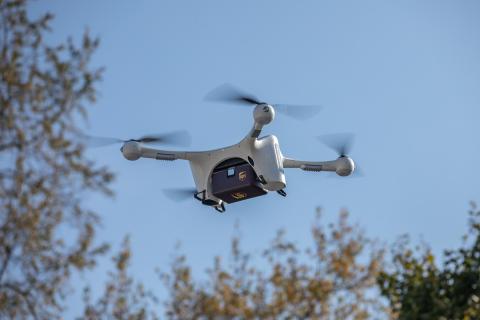
To speed up the delivery of services and patient care currently managed through ground transport, UC San Diego Health will launch a pilot project in February to test using UAS to transport medical samples, supplies and documents between Jacobs Medical Center and Moores Cancer Center and the Center for Advanced Laboratory Medicine (CALM).
A collaboration with UPS and Matternet, the program builds off the UPS and Matternet drone project that is currently taking place at WakeMed Health and Hospitals in Raleigh, North Carolina.
Deloitte, Rady Children's Institute for Genomic Medicine examining benefits of using UAS to deliver medical samples
Deloitte and Rady Children's Institute for Genomic Medicine (RCIGM) have announced that they are looking into how drone technology can help cut the time it takes to get medical samples to the laboratory.
The plan would be for UAS to fly genomic testing specimens to the lab to get results back to acutely ill babies and children in a quicker fashion.
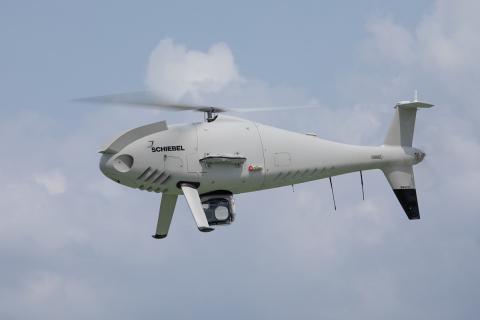
Schiebel's Camcopter S-100 UAS provides situational information during toxic pollution crisis in Malaysia
During the Kim Kim river toxic pollution crisis in Malaysia last year, Schiebel’s Camcopter S-100 UAS was used to provide critical situational information, the company has announced.
Last March, more than two tons of illegal chemical waste were dumped in the Kim Kim river, which is located near Johor Malaysia, the largest industrial area in the South of Malaysia. This resulted in toxic fumes being released throughout the adjoining area, which impacted more than 6,000 people, resulting in many being hospitalized, and several schools being closed.

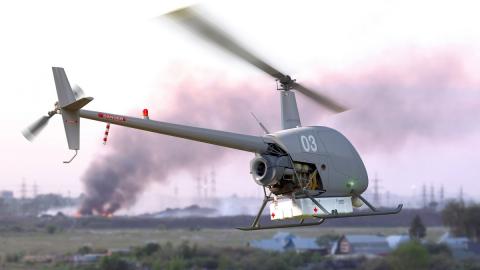
UAVOS' R-22 unmanned helicopter designed for humanitarian and disaster relief missions
UAVOS has converted the Robinson manned helicopter into an unmanned helicopter known as R-22.
Designed for cargo delivery, as well as humanitarian and disaster relief applications, the UAS has several features that make it ideal for these operations, including a range of up to 1,020 kilometers, a payload capacity of 400 pounds, and an endurance capability of six hours.
“The cargo companies only make money when that cargo gets to its destination, and our R-22 is their “guarantee” at any time, and any weather conditions, which makes it a very attractive prospect for any cargo company,” says UAVOS’s CEO Aliaksei Stratsilatau.
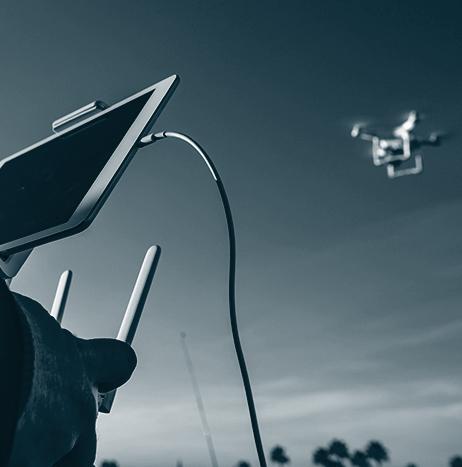
Industry now responding to proposed remote ID rule for drones
The Federal Aviation Administration's proposed rule for the remote identification of drones has now been printed in the Federal Register, giving interested parties 60 days to respond.
AUVSI is reviewing the rules and will be responding, but in the meantime President and CEO Brian Wynne said he welcomes the move.
“The importance of remote ID regulations cannot be overstated, as they are necessary to enable advanced and expanded operations such as flights over people and beyond line of sight," Wynne said.
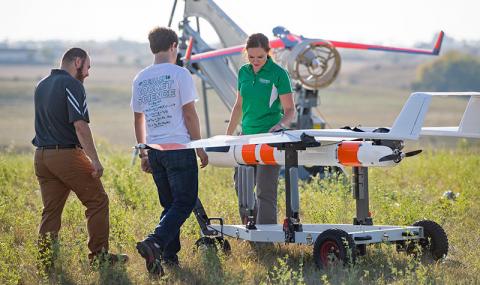
University of North Dakota's UAS degree program celebrates 10-year anniversary
The University of North Dakota’s (UND) UAS degree program is celebrating its 10-year anniversary.
According to Al Palmer, the retired director of UND’s Aerospace UAS program, UND began planning its foray into UAS in 2005. To get “ahead of the coming UAS wave,” Ben Trapnell, associate professor of aviation, was tasked with creating an education program for UND Aerospace back in 2006.
Three years later in 2009, everyone was onboard with the program, which led to the State Board of Higher Education approving the program, and UND’s John D. Odegard School of Aerospace Sciences becoming the first university to offer a degree program in UAS operations.