
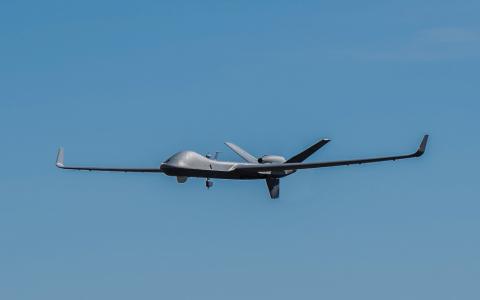
In support of the firefighting efforts in Northern California by CAL FIRE, General Atomics Aeronautical Systems, Inc.’s (GA-ASI) MQ-9 UAS is being used by the California Air National Guard’s 163d Attack Wing operating out of March Air Reserve Base.
The UAS has full-motion video (optical and infra-red), as well as ground imaging Synthetic Aperture Radar (SAR) capability, which provides clear sight through both clouds and smoke.
“The 163d Attack Wing supports citizens during the fires by operating two missions under approval from the Secretary of Defense and the Federal Aviation Administration,” says Brigadier General Dana A. Hessheimer.
Sensors
Sensors
EasyMile's autonomous shuttle bus to be tested in Minnesota starting in November
The Minnesota Department of Transportation (MnDOT) has selected EasyMile to lead its autonomous shuttle bus pilot project.
Testing, which will start in November and go through February 2018, will examine how the shuttle operates in a variety of conditions, including in low temperatures, in snow and ice conditions, and on roads where salt is used.
While EasyMile has conducted cold weather tests in Finland and Norway using its driverless technology, this will be the company’s first time conducting cold weather tests in the United States.
The shuttle will initially be tested at MnDOT’s pavement test facility, which is known as MnROAD.

From Unmanned Systems Magazine: ISIS, CHINa, rUSSIa FUeL NeW GrOWTH IN UaS SeNSOrS aNd TeCHNOLOGIeS
In this first of two articles, we will look at the 10-year future for the military unmanned aircraft sensor market, focusing on U.S. systems and programs, including international markets for U.S. systems.
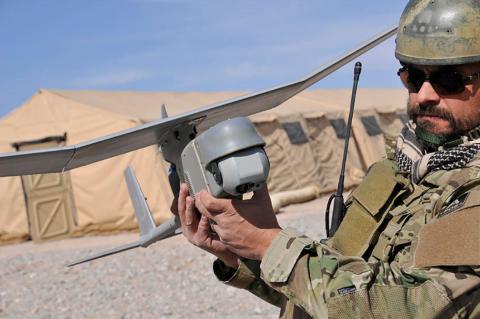
UAS have primarily served as sensor trucks, and will largely continue to do so despite the growth of armed drones. Although Teal Group Corp. sees combat UAVs (UCAVs) as a major growth area, these and other UAS will continue to serve as vehicles for bringing ISR and other sensors to bear on an area or target — targeting sensors will just be more sophisticated and expensive.
FlightWave introduces hydrogen-powered Jupiter-H2 UAS
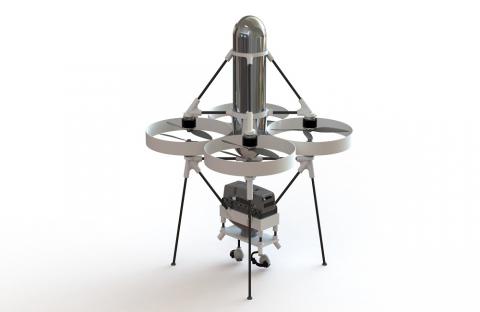
A few weeks after introducing its FlightWave Edge UAS, FlightWave Aerospace Systems, Inc. has now introduced its hydrogen-powered Jupiter-H2 UAS, which is the company’s second offering to the UAS community.
Thanks to a partnership with a UK-based fuel cell company called Intelligent Energy, FlightWave was able to equip the Jupiter-H2 UAS with the hydrogen fuel cell technology that powers the aircraft.
The hydrogen fuel cell technology gives the UAS, which uses a “narrow-profile 70 cm airframe, with a high-thrust power plant consisting of eight motors driving cross-flowing fan blades,” several distinct features, such as its heavy-lifting capability. FlightWave notes that extra energy and lighter energy means more power to lift and carry the respective sensors of a user.
EasyMile to open U.S. headquarters in Denver
This fall, EasyMile will open its U.S. headquarters in Denver, Colorado at the Panasonic Enterprise Solutions campus, according to the Denver Post.
The office will be located in a 6,000-square-foot office and warehouse space, after that space has its renovations completed.
According to Lauren Isaac with EasyMile, the company does not have a lot of employees in North America as of right now, but there are plans in place to change that very soon.
“There are only two employees in North America now, but we do have significant growth plans for the next two years,” Isaac says.
Michigan’s Willow Run facility could be ready for autonomous car testing by December
According to the Detroit News, the American Center for Mobility (ACM) expects the Willow Run facility in Michigan to be ready for testing autonomous cars by December, after construction for the nonprofit operation began in June.
Test tracks at the facility could be available for use by December 1, giving automakers, Tier One suppliers and technology companies a place to test their autonomous vehicle technologies.
India’s Flux Auto looking to create affordable self-driving technology for trucks
According to TechCrunch, a startup company in India called Flux Auto is looking to make autonomous driving technology “more widely available” for truck operators, especially those outside of the United States, by significantly lowering the cost of the technology.
Based in Bangalore, India, the 16-person startup would like to democratize autonomous systems, as it is working on technology that, when finished, could allow any kind of truck to be retrofitted with self-driving technology at a much lower price.
Self-driving car to be tested in Atlanta in September
According to Atlanta Magazine, a self-driving car will hit the streets of Atlanta on September 14, just a few months after Georgia Governor Nathan Deal approved a law that allows self-driving cars on public streets.
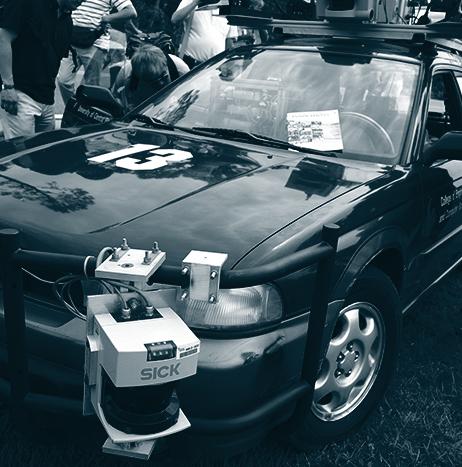
The car, which is a part of a joint pilot project by Georgia Tech, City Hall and others, will drive itself from the campus of Georgia Tech to the Ponce City Market. It will follow the rules of the road and avoid obstacles during its journey using a combination of technologies, including a network of sensors, transmitters, Wi-Fi hotspots, and GPS receivers, to name a few.
Driverless bus trial launching in Sydney, Australia
The New South Wales (NSW) state government will officially launch a two-year trial of autonomous vehicles when the first stage of the trial begins later this month.
During the first stage of the trial, a driverless shuttle bus, which will run autonomously on a pre-programmed route, will undergo tests and safety checks in an off-road environment at Newington Armoury, which is located near the former Olympic village.
Next year, the trial will be extended to roads at Sydney Olympic Park, giving office workers and other members of the public the opportunity to ride in the vehicle.
For Transport Minister Andrew Constance, this trial is all about finding out how this technology can benefit NSW.