
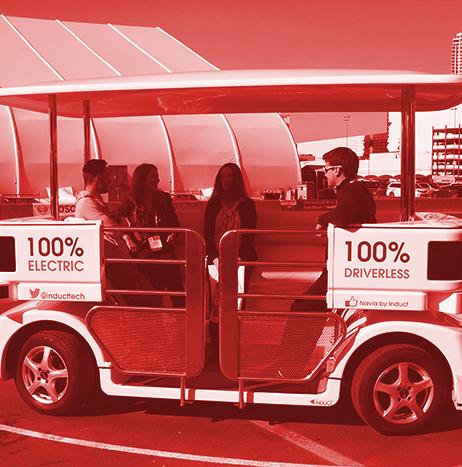
On Thursday, Oct. 31, the Jacksonville Transportation Authority (JTA) tested what it is calling the first Americans with Disabilities Act (ADA) accessible autonomous vehicle in the United States.
JTA has made ADA accessibility a requirement for the Ultimate Urban Circulator (U2C) autonomous vehicle program, which is a multi-phased program that will convert and expand Skyway monorail cars into an autonomous vehicle network.
“It needs to be something that all of our customers and citizens can easily utilize,” JTA CEO Nathaniel P. Ford Sr. said via WJCT.org.
Testing
Testing
Toyota Research Institute to test its P4 automated driving test vehicle in Tokyo next summer
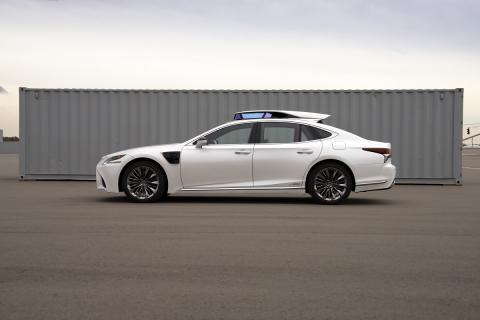
Next summer, Toyota Research Institute’s (TRI) Platform 4 (P4) automated driving test vehicle will be tested on public roads in Tokyo, offering select individuals the chance to experience the technology first hand.
Based on the fifth-generation Lexus LS sedan, the P4 test vehicle, which will have a safety driver present in the vehicle at all times, will operate in a waterfront subcenter called Odaiba district, which is described as “busy and often congested.” TRI says that Odaiba presents a “complex environment” with a variety of challenges that make it ideal for demonstrating the capabilities of Toyota’s automated driving technology.
COMSUBPAC, University of Hawaii use UAS to deliver supplies to submarine
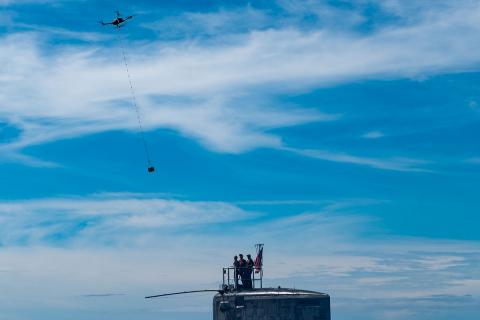
On Oct. 10, Commander, Submarine Force, U.S. Pacific Fleet (COMSUBPAC) and the University of Hawaii used a UAS to deliver supplies onto a submarine off the coast of Oahu, a U.S. island in the Central Pacific.
Carrying a five-pound payload that included circuit cards, medical supplies, and food, the UAS took the payload to Virginia-class fast-attack submarine USS Hawaii (SSN 776) while it was underway.
“What started as an innovative idea has come to fruition as a potentially radical new submarine logistics delivery capability,” says Lt. Cmdr. Christopher Keithley, assigned to COMSUBPAC.
NUAIR hosts first New York UAS Public Safety Fly-In for public safety officials
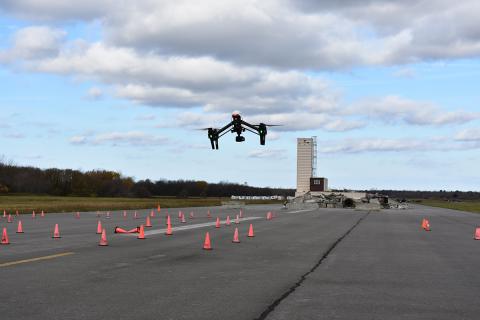
NUAIR hosted its first New York UAS Public Safety Fly-In on Tuesday, Oct. 29.
During the event, which brought together more than 100 public safety officials from across New York State to the State Preparedness Training Center (SPTC) in Oriskany, New York, participants got the chance to learn about and fly UAS in a variety of emergency scenarios that were set up throughout the SPTC.
“Unmanned Aerial Systems have rapidly become a critical component of emergency response operations, making it essential first responders have the training they need to utilize these devices in the field,” explains New York State Homeland Security and Emergency Services Commissioner Patrick A. Murphy.
Perrone Robotics, Albemarle County successfully conclude autonomous shuttle trial in Virginia
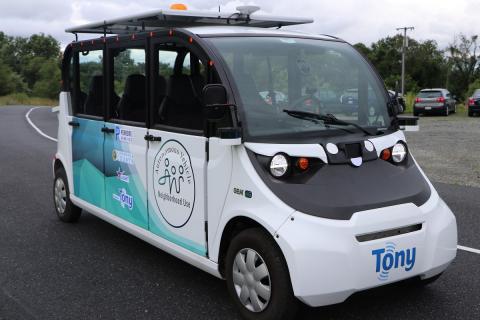
Perrone Robotics Inc. (PRI) and Albemarle County, Virginia recently wrapped up a three-month trial period of free public demonstration rides on the Autonomous Vehicle, Neighborhood Use (AVNU) shuttle.
During the trial, the AVNU shuttle drove fully autonomously—with a safety monitor onboard—on public roads in Crozet, Virginia, navigating a variety of real-world conditions including vehicle, bike, and pedestrian traffic through intersections and roundabouts. The shuttle drove more than 530 miles and carried 750 passengers with no interventions required.
Zipline demonstrates medical drone delivery technology during multinational military forces exercises
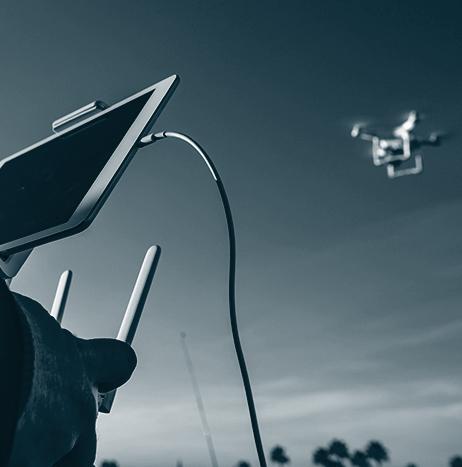
During multinational forces exercises with the United States Marine Corps (USMC) and the Australian Defense Force (ADF), Zipline successfully forward-deployed to Australia to pilot its life-saving UAS technology.
According to Zipline, the deployment sought to showcase how its logistics network of autonomous delivery UAS could help transform emergency medicine and critical care in conflict, as well as in humanitarian and disaster relief scenarios.
Autonomous shuttles seek to improve transportation options for people with disabilities at Western Michigan University
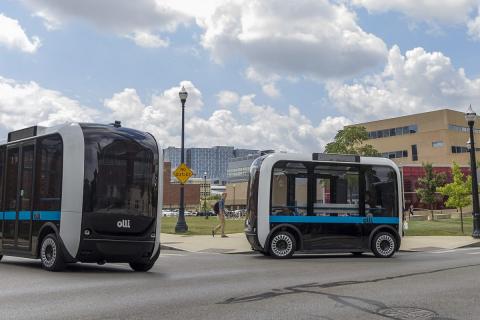
In an effort to improve transportation options for people with disabilities, autonomous shuttles are being tested on the campus of Western Michigan University (WMU).
Led by Pratt & Miller Engineering, the project is being coordinated and carried out by WMU graduate students Nick Goberville, a mechanical engineering doctoral student, and Johan Rojas, a mechanical engineering master's student.
“We're working on the modeling simulation of the autonomous vehicles,” Rojas says.
“We helped with the mapping, the cost value analysis and with everything needed to make the pilot possible here at Western.”

Local Motors' Olli autonomous shuttle seeks to solve 'first mile, last mile' challenge in San Francisco
To address the “first mile, last mile” challenge that commuters in the San Francisco Bay Area face every day, Local Motors, AAA Northern California and the Contra Costa Transportation Authority (CCTA) will test Local Motors’ Olli autonomous shuttle to see if the vehicle is a possible solution to this problem.
Featuring cognitive response technology and sensors, as well as an obstacle avoidance system, Olli will be tested at GoMentum Station in Contra Costa County, with future plans to deploy the technology near transit stations around Northern California.
UAVOS develops test bed to ensure reliable operations of its UAS
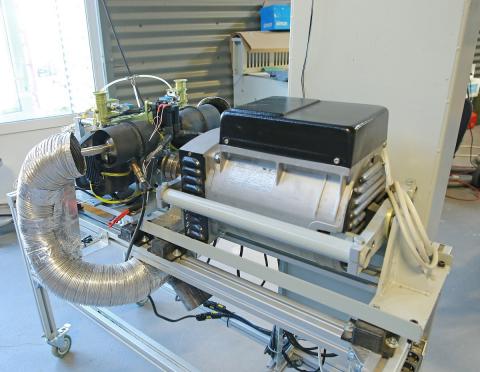
UAVOS has developed a test bed to test and conduct trial runs of internal combustion engines with a maximum power of up to 25hp, to ensure that its UAS operate reliably.
The test bed is designed to take into account the specifics of the operation of engines in UAS.
All critical engine parameters such as torque, power and engine temperature are displayed on a computer monitor. According to UAVOS, some of the capabilities of a multi cylinder engine test bed with remote control include being able to measure the maximum torque and maximum power, being able to analyze part load torque and nominal loads, and being able to determine the optimum ignition timing angle.
Yandex's self-driving cars reach one million autonomous miles driven on public roads
Less than two years after it began operating on public roads, Yandex has announced that its self-driving cars have driven one million autonomous miles on public roads.