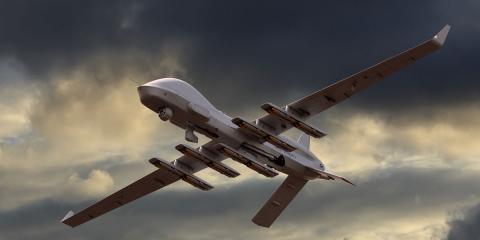
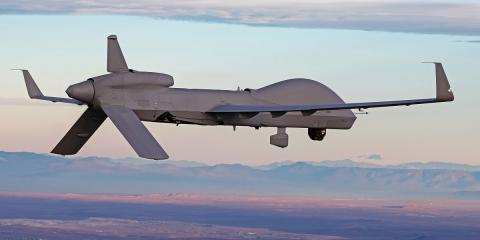
During flight operations at Yuma Proving Grounds, General Atomics Aeronautical Systems Inc. (GA-ASI) showcased a suite of long range sensors on its Gray Eagle Extended Range (GE-ER) UAS during the second demonstration in a series of Multi-Domain Operations (MDO) demonstrations.
GA-ASI worked with industry for the Jan. 30 demo to equip the GE-ER UAS with best-of-breed long-range ISR payloads and Air Launch Effects (ALEs). The UAS showed a persistent stand-off capability with up to 40 hours of endurance, which can be used by commanders to orchestrate forces in the MDO environment.
Testing
Testing
Daimler Trucks, Torc Robotics expanding testing of automated truck technology to new public routes in the U.S.
After completing initial mapping of additional routes, Daimler Trucks and Torc Robotics have announced plans to expand their testing of automated truck technology to new public routes in the U.S.

Self-driving shuttles to connect residents to community resources in Linden neighborhood of Columbus
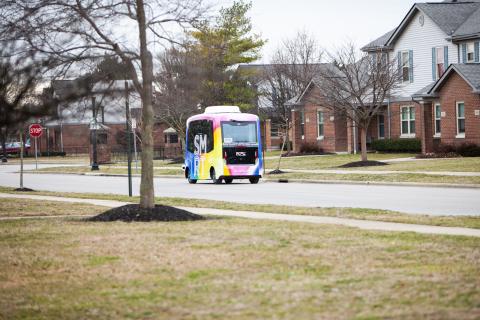
A one-year self-driving shuttle pilot program is set to launch in Columbus, Ohio.
Known as the Linden LEAP (Linden Empowers All People), the pilot program, which is being funded by Columbus’ win of the U.S. Department of Transportation’s Smart City Challenge, will service destinations around the South Linden neighborhood of Columbus from 6 a.m. to 8 p.m. daily, with stops in service during school arrival and dismissal times.
Linden LEAP is being described as the nation’s first public self-driving shuttle in a residential area.
Autonomous vehicle pilot program set to launch in Peoria, Arizona in late February
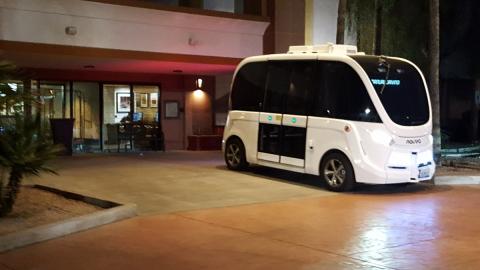
Peoria, Arizona’s city council has approved the funding for a 60-day autonomous vehicle pilot program with Beep, an autonomous mobility technologies company based in Florida.
The program will result in Arizona’s first shared-ride, autonomous shuttle operating on a public street.
“This transportation pilot is a unique experiment for our community,” says Mayor Cathy Carlat.
“We see this as an important step as we seek to understand some of the innovative solutions that exist around the world, and how they bring value to Peoria residents.”
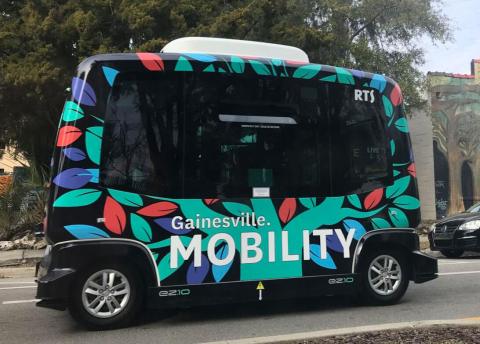
Autonomous shuttle begins offering test rides between downtown Gainesville and UF campus
An autonomous shuttle began operating between downtown Gainesville and the University of Florida (UF) campus on Monday, Feb. 3.
The Florida Department of Transportation (FDOT) funded the shuttle, and the City of Gainesville’s Regional Transit System (RTS) is operating it.
The pilot project is part of a real-world testbed called I-STREET. The testbed offers unique opportunities to test transportation technologies, and allows for the development and deployment of innovative research throughout the city and the UF roadway network. The testbed is a result of a partnership between the University of Florida Transportation Institute (UFTI), FDOT, and the City of Gainesville.
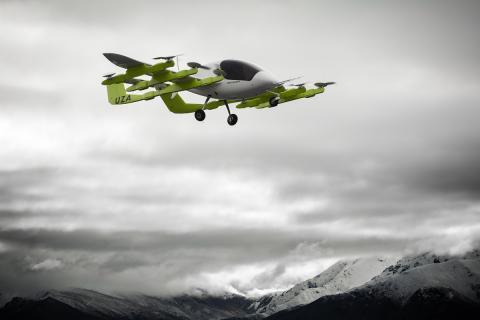
Wisk, New Zealand Government announce passenger transport trial featuring self-flying air taxi
Urban Air Mobility (UAM) company Wisk is partnering with the New Zealand Government to establish a passenger transport trial in Canterbury, New Zealand utilizing Cora, Wisk’s self-flying, all-electric air taxi.
“We are delighted to now have a signed agreement with the New Zealand Government, which will propel Cora’s entry to the air taxi market,” says Wisk CEO, Gary Gysin.
“We see this agreement as a sign of confidence in our product and abilities to develop and deliver a safe and reliable air taxi service, starting in New Zealand.”
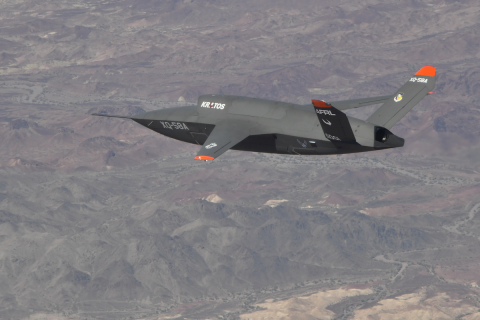
AFRL, Kratos Defense & Security Solutions complete fourth flight test of XQ-58A Valkyrie UAS
On Jan. 23, 2020, the Air Force Research Laboratory (AFRL) and its partner Kratos Defense & Security Solutions Inc. successfully completed the fourth flight test of the XQ-58A Valkyrie low-cost UAS demonstrator at Yuma Proving Ground, Arizona.
The Valkyrie demonstrator’s flight not only successfully met all of the test objectives during the flight test, but the envelope was also expanded beyond prior tests before the UAS landed safely in the Arizona desert.
Flying at a higher altitude allowed researchers to collect data in an “operational environment more representative of real-world flight conditions,” according to AFRL XQ-58A Program Manager Michael Wipperman.
Uber Advanced Technologies Group begins collecting self-driving tech data in D.C.
Uber Advanced Technologies Group (Uber ATG) has selected Washington, D.C. as its next location to collect data for its self-driving vehicles.
Uber ATG’s self-driving cars will begin operating on the roads of D.C. beginning Friday, Jan. 24, to collect data, but the vehicles will be in manual driving mode, so a Mission Specialist—a specially trained vehicle operator—will always maintain control of the vehicle.
“We are using a phased approach to develop and deploy our self-driving vehicles, taking the necessary steps to operate safely in every city,” Uber ATG says.

GA-ASI begins Multi-Domain Operations demonstrations with Gray Eagle Extended Range UAS
Using a company-owned Gray Eagle Extended Range (GE-ER) UAS, General Atomics Aeronautical Systems Inc. (GA-ASI) completed the first in a series of internally-funded Multi-Domain Operations (MDO) demonstrations on Nov. 19, 2019, the company has announced.
The flight series will continue in 2020, and is expected to showcase that a GE-ER UAS equipped with long-range sensors and Air Launched Effects (ALE) is able to Detect, Identify, Locate and Report (DILR) targetable data to support Long Range Precision Fires (LRPF) systems.
“Gray Eagle ER is a critical tool, along with the Army’s manned platforms, for operations in an MDO environment,” says David R. Alexander, president, GA-ASI.
Dynetics' X-61A Gremlins Air Vehicle completes first flight
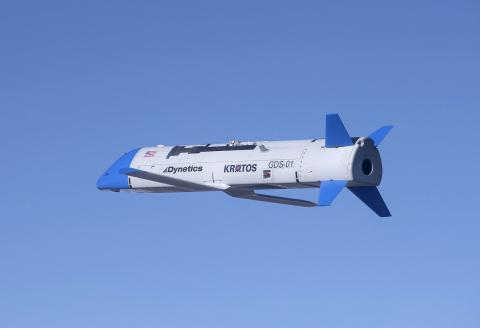
Dynetics, the performer for the Defense Advanced Research Projects Agency (DARPA) Gremlins program, has announced that in Nov. 2019, it successfully flew its X-61A Gremlins Air Vehicle (GAV) for the first time at Dugway Proving Ground near Salt Lake City, Utah.
Testing operations involved one captive-carry mission aboard a TBM Inc. C-130A and an airborne launch and free flight of the X-61A, which lasted one hour and 41 minutes.
Some of the test objectives included demonstrating a successful launch of the GAV from the C-130, collecting data on GAV subsystem operation and performance, and demonstrating the flight termination and ground (parachute) recovery of the GAV (demonstration system only - not part of the operational system).