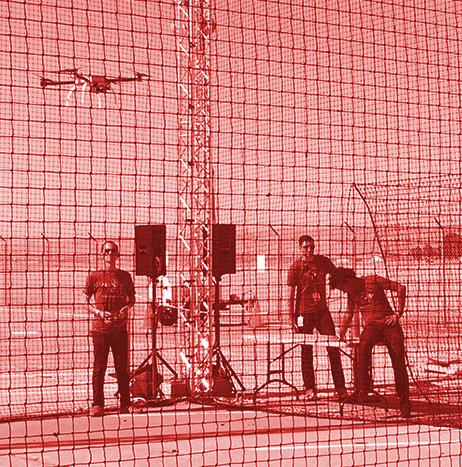
This week, the Kansas Department of Transportation (KDOT) is starting the testing phase of the UAS Integration Pilot Program (IPP).
One of KDOT’s partners for the program, Iris Automation, will focus on enabling new detect and avoid capabilities for UAS.
The winner of AUVSI’s 2018 Startup Showdown during XPONENTIAL 2018, Iris Automation will test its collision avoidance technology in the airspace above Gypsum’s farmlands. Using computer vision and artificial intelligence, the technology allows UAS to see the world the way a pilot does, which ultimately facilitates beyond visual line of sight (BVLOS) flights.
Test flights will take place throughout the week, and the technology will be evaluated through controlled UAS flights against a manned aircraft.
UAS
UAS
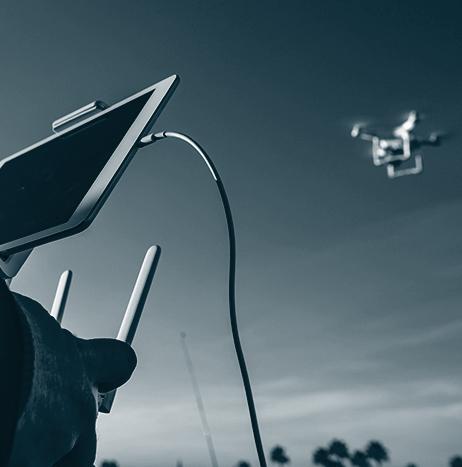
From Unmanned Systems Magazine: Drone industry expansion leads to acquisitions, partnerships
The commercial unmanned aircraft systems industry has been expanding for some years, with investments for the first time exceeding $1 billion in 2017, enabling deployment of experimental concepts in various sectors of the economy and military. However, this rapid investment of capital is shifting the industry from saturation into consolidation.
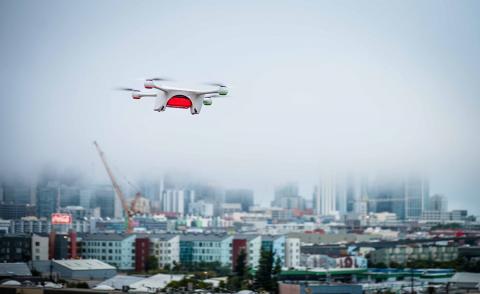
Textron prepares for Navy deployment, boosts COCO work
A new task order from the U.S. Naval Air Command (NAVAIR) will include putting the newest generation of Textron Systems’ Aerosonde unmanned aircraft on a Navy ship for up to 32 months, and increasing the percentage of Textron’s contractor owned, contractor operated (COCO) work with the U.S. military.
Textron Systems introduced the latest version of the venerable Aerosonde UAS last year and will be prepping it to serve on the USNS Hershel “Woody” Williams, an expeditionary sea base (ESB) ship aimed at supporting a variety of missions, next year, says David Phillips, senior vice president and general manager of Textron Systems.
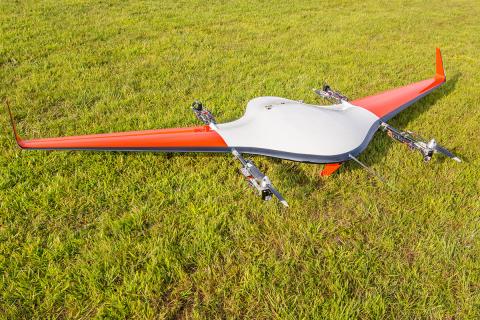
Delair acquires key assets of Airware to enhance standing in commercial UAS industry
Delair has announced that it is acquiring the “key assets” of Airware, which develops “innovative software analytics tools” for UAS-based data.
Delair says that the acquisition will result in it getting “leading edge technology assets,” including a proven software offering, a highly skilled engineering and customer success team in Paris, and an installed base of customers and dealers across the world.
Ultimately, Delair’s acquisition will not only accelerate its global growth, but it will also broaden its end-to-end technology for the commercial UAS market, according to the company.

SenseFly and IN-FLIGHT Data complete historic urban BVLOS UAS project
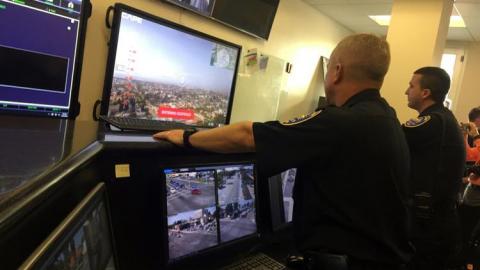
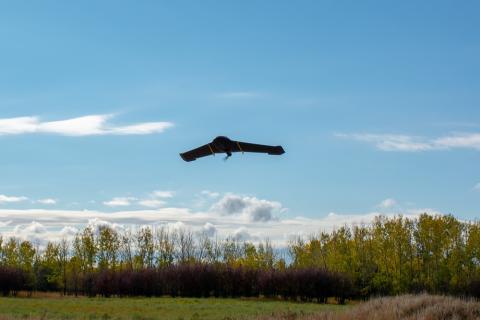
SenseFly and IN-FLIGHT Data recently completed what they are calling North America’s first urban beyond visual line of sight (BVLOS) UAS project in a major city.
Conducted in Calgary, Alberta, Canada, the project’s goal was to collect mapping data to support the development of a new graveyard site, which will be the first new cemetery in the city since 1940.
Using a senseFly eBee Plus fixed-wing UAS, the IN-FLIGHT Data team mapped the area by conducting a total of 257 miles’ worth of BVLOS operations at an average distance of 1.46 miles from the pilot.
Insitu equipping its line of UAS with Persistent Systems' Wave Relay MANET technology
Persistent Systems has entered into a five-year agreement with Insitu that will result in Insitu equipping its line of UAS with Persistent’s Wave Relay mobile ad hoc network (MANET) technology.
By incorporating Persistent’s MANET radios on its line of UAS, Insitu will now be a member of the Wave Relay Ecosystem, which is an “alliance of industry-leading companies using Wave Relay MANET radios in their products,” Persistent says.
As a member of the Wave Relay Ecosystem, Insitu’s platforms will work seamlessly with all other Wave Relay MANET-enabled products.
Insitu successfully completes first interim Type Certification Board Meeting in support of ScanEagle3 FAA type certification program
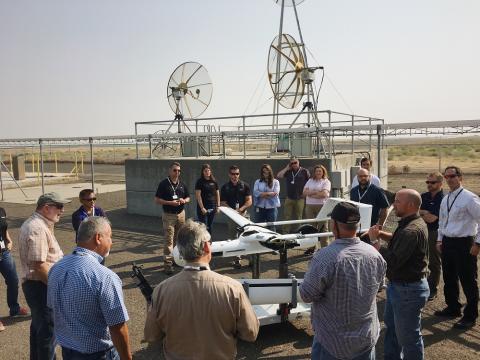
Insitu has successfully completed the first interim Type Certification Board Meeting (TCBM) in support of the ScanEagle3 FAA type certification program.
Key FAA teams including Aircraft Certification (AIR), Aircraft Flight Status (AFS), Air Traffic Organization (ATO), and Aircraft Unmanned Systems (AUS) recently came together at Insitu’s Bingen, Washington headquarters for the TCBM, which was a first for the group of FAA teams.
The FAA teams participated in an overview of Insitu’s Project Plan for Certification. During this overview, they examined Insitu’s “Detect and Avoid” (DAA) capability planning, along with its Safety Management System and proprietary model–based engineering.
DJI improving its geofencing technology to refine airspace limitations for UAS flights near airports
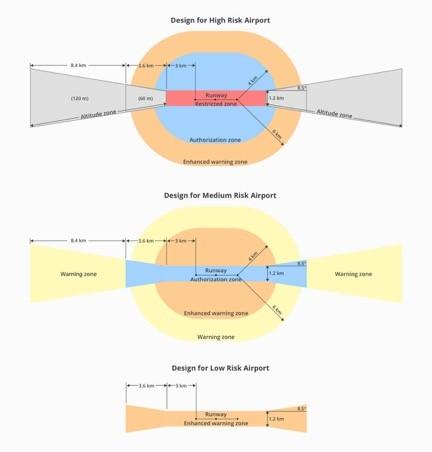
In an effort to provide smarter protection for airplanes in critical areas, DJI has announced that it is improving its geofencing technology to refine the airspace limitations for UAS flights near airports.
The updated Geospatial Environment Online (GEO) Version 2.0 will be phased in starting in November once the revised zones take effect for airspace around airports in the United States. DJI says that upgrades in other regions will follow in “due course.”
“DJI is proud to once again lead the industry in developing proactive solutions for safety and security concerns,” says Brendan Schulman, DJI Vice President of Policy & Legal Affairs.
Calgary opens Point Trotter Autonomous Systems Testing Area to test UAS and autonomous vehicle tech
On Friday, Oct. 19, Point Trotter Autonomous Systems Testing Area (Point Trotter ASTA) opened in Calgary, Alberta, Canada.
Point Trotter ASTA will offer businesses, industry and researchers in Calgary a “low cost and accessible” place to test a variety of innovative technologies, including UAS and autonomous vehicles.
“Point Trotter Autonomous Systems Testing Area is a great example of how the The City of Calgary is working with our community partners to support innovation and allow entrepreneurs to bring their big ideas to fruition,” says Mayor Nenshi.