
Even though unmanned aircraft are proving useful to virtually every industry, it might not be expected for them to have any role in mining — digging deep into the earth for coal and other natural resources. Once you get beneath the surface, however, it’s clear that drones have a growing role to play in this field.
For a coal mining operation, what’s above the ground is just as important as what’s below it. That process starts with surveying the land and planning the complex operation known as a mining site.
Kespry, a drone-based aerial intelligence solution provider based in Menlo Park, California, has developed an aerial intelligence platform tailored for use in areas such as construction, insurance claims and coal mining.
UAS
UAS
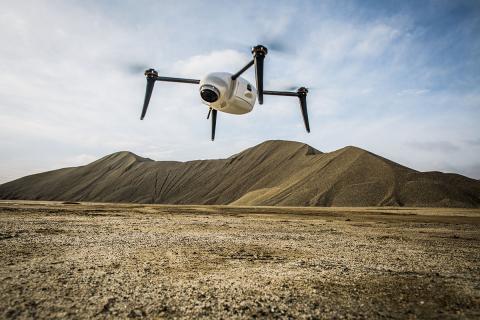
Ohio's Franklin County Sheriff's Office uses UAS to locate stolen ATV
According to NBC4 Columbus, a UAS was recently used to locate a stolen ATV in Franklin County, Ohio.
After receiving a call from someone reporting that their ATV was stolen, deputies from the Franklin County Sheriff's Office deployed their UAS and followed tire tracks that led from the area to an abandoned house, where deputies found the ATV.
The ATV was reportedly a recent gift for a young boy.
“End result, one happy kid!” read a Facebook post from the sheriff's office.

Syracuse Fire Department launches UAS program
In an effort to help members of its department fight fires, the Syracuse Fire Department has launched a new UAS program.
According to Fire Capt. Timothy Gleeson, the department expects to use the technology for stubborn fires or on fires in large commercial buildings.
Thanks to the drones' thermal imaging capabilities, firefighters will be able to see hotspots in stubborn fires and identify spots where roofs or parts of buildings could collapse, notes Syracuse Fire Chief Michael Monds.
“We're aggressive. ... This is a really different type of concept,” Monds says via Syracuse.com. “To step back and get a good picture.”
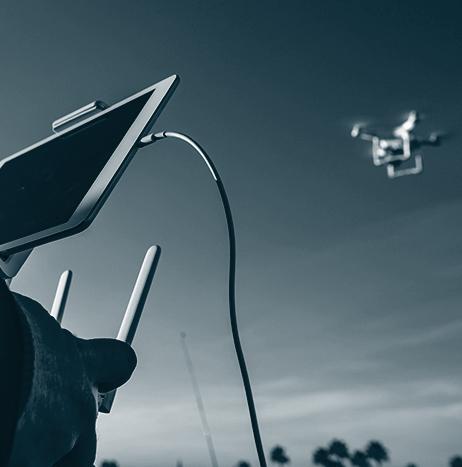
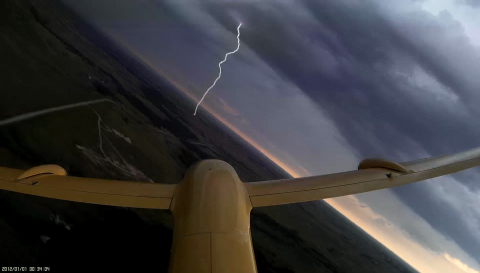
University of Colorado Boulder and others collect data on monster storm using UAS
A team of aerospace engineers from the University of Colorado Boulder (CU) recently spent the first half of June traveling across the Midwest in search of monster storms.
During this time period, the CU team, which was made up of 16 CU employees and students, encountered a storm on June 8 outside Norris, South Dakota, and used one of its three “TTwistor” UAS to fly through the dark skies to collect data from the storm.
“It is amazing to me how you're driving along for several hours and it's nice, clear, sunny skies, and all of sudden you're under these clouds and it gets dark pretty fast,” says Eric Frew, CU associate professor, via the Daily Camera.
Black Swift Technologies to develop UAS to perform upper atmospheric observations of Venus
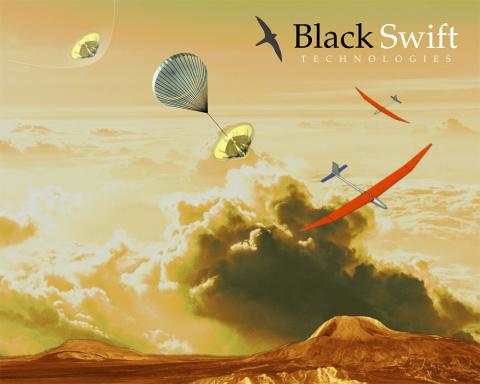
Black Swift Technologies (BST) has been awarded a NASA contract to develop a UAS to perform “upper atmospheric observations” of the planet Venus.
BST is proposing a “planetary aerial vehicle based on dynamic soaring,” which the company says is a “proven method to extract energy from atmospheric shear that has propelled the fastest small-scale aircraft in the world,” and provided the energy needed for “long-endurance low-level flights of birds across oceans.”
Weekend Roundup
This Week in the Unmanned Systems and Robotics World
During a pilot project in October, an autonomous vehicle will be tested in Edmonton, Alberta, Canada, on a segregated roadway, separated from other traffic. During the pilot project, Edmonton residents will get the chance to experience the technology for free, and provide feedback to the city. (The Star Edmonton)
Ohio's 33 Smart Mobility Corridor to study use of UAS to monitor traffic and roadway conditions
Ohio’s 33 Smart Mobility Corridor has announced plans to study the use of UAS to monitor traffic and roadway conditions from the air along the corridor.
The three-year study, which is scheduled to start on July 1, is a partnership between DriveOhio’s UAS Center and the Ohio State University College of Engineering.
“At DriveOhio, we are looking for innovative ways to integrate technology into our transportation systems,” says Jim Barna, Executive Director of DriveOhio.
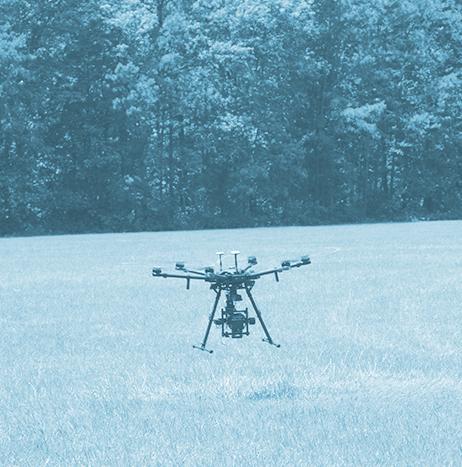
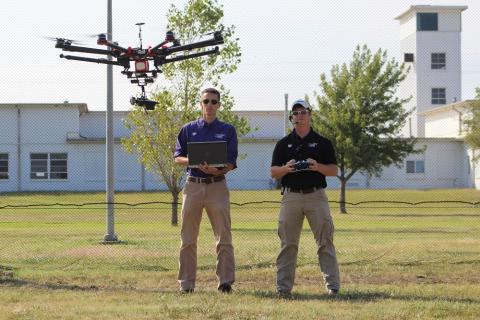
K-State Polytechnic launching graduate certificate in UAS information assurance
Come Fall 2018, Kansas State University Polytechnic Campus will launch a graduate certificate in unmanned aircraft systems information assurance.
The certificate will provide working professionals and graduate students “an educational foundation in an industry important to both military and civilian organizations,” according to K-State Polytechnic.
Enrolled students will learn important lessons regarding UAS, including how to protect UAS from cyberattacks, and understand “information assurance risk assessment principles” that apply to UAS operations on land, sea, air or satellite.
GA-ASI's Detect and Avoid avionics system helps enable UAS flight through NAS
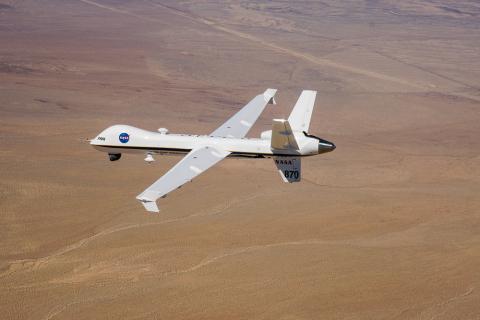
A General Atomics Aeronautical Systems Inc. (GA-ASI) developed Detect and Avoid (DAA) avionics system was the “key technology” that enabled a UAS flight through the National Airspace System (NAS) on June 12.
The DAA system, which was installed on a NASA-owned Predator B/MQ-9 UAS named Ikhana, allowed the UAS to meet the FAA’s 14 CFR 91.113(b) requirement to “see and avoid” other aircraft during its flight. The UAS took off from southern California.
“Our goal of producing UAS that can be certified to fly in non-segregated airspace took a big step forward today,” says Linden Blue, CEO, GA-ASI.
K2 Unmanned Systems and Robotic Skies partner to provide 'complete customer service experience'
K2 Unmanned Systems, which recently released what it calls the first American made Law Enforcement tactical drone, Knight Hawk, has partnered with Robotic Skies to provide its customers with a “complete customer service experience.”
Robotic Skies has a global network of more than 150 independently-owned and operated repair stations across 35 countries. Each service center in the network is equipped with the aviation expertise and factory training to ensure the mission readiness of commercial unmanned systems.
Additionally, Robotic Skies, like K2, offers its customers “turnkey field service programs designed to keep their UAS flying safely, efficiently and affordably.”