
Insitu Inc. and the University of North Dakota at Grand Forks (UND) have announced additions to UND’s UAS degree program and research enterprise.
In conjunction with its 50th Anniversary of Aviation Education and Research, UND will integrate Insitu’s INEXA Control, TacitView and Catalina UAS software into its Aviation UAS curriculum in the fall of 2019.
UND, which currently uses Insitu’s ScanEagle UAS, will also make additions to its UAS fleet, adding Insitu’s ScanEagle3 UAS, which was launched on May 1 during Xponential 2018.
UAS
UAS
Kansas State Polytechnic offering UAS training to Kansas Department of Wildlife, Parks and Tourism employees
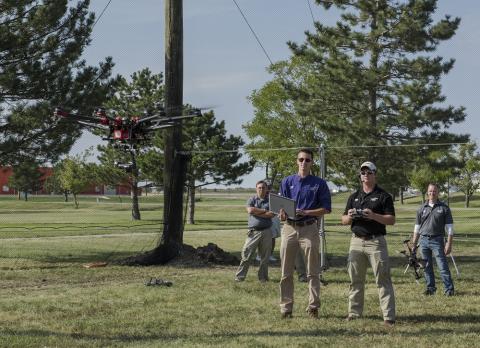
Thanks to a partnership with Kansas State University Polytechnic Campus, 30 Kansas Department of Wildlife, Parks and Tourism employees will receive UAS training from May through June.
The employees will attend small UAS (sUAS) Commercial Remote Pilot Training and then be eligible to sit for the FAA exam to become certified as remote pilots in command. 18 Department of Wildlife, Parks and Tourism staff members will complete Basic Multirotor Training, allowing them to become proficient in basic aircraft maneuvers and safety procedures.
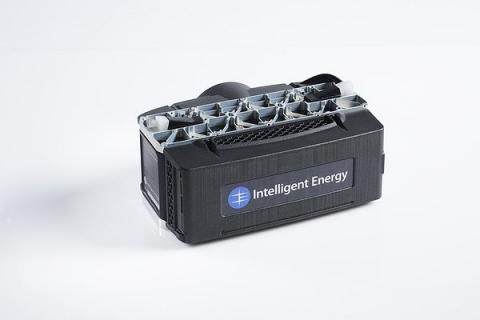
Intelligent Energy's fuel cell technology could greatly enhance flight times of UAS
During Xponential, United-Kingdom-based Intelligent Energy made its debut by showcasing its fuel cell technology, which includes its lightweight 650W Fuel Cell Power Module specifically designed for the commercial UAS market.
The company says that its lightweight 650W Fuel Cell Power Module “offers considerably longer flight time when compared to traditional batteries.”
Besides longer flight time, the module also offers additional benefits such as increased productivity, less downtime as a result of quick refueling, and increased payload capability.
Unmanned systems bring benefits, but risks must be observed, keynotes say
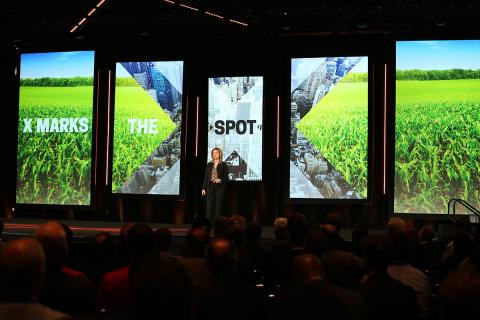
Attendees of Wednesday’s keynote addresses on “The Unmanned Lifestyle” heard calls to balance enthusiasm for all that unmanned systems can bring to humanitarian causes and public safety with caution regarding the risks of turning over too much decision-making control to intelligent machines — and those who might hack them.
Opening speaker Zeynep Tufekci, a techno-sociologist based at the University of North Carolina, emphasized the importance of acknowledging the potential for discord and destabilization during times of great transition. On balance, she said, outcomes can be overwhelmingly positive, but the progress is often painful.

AV, FlightWave team to add VTOL tech to small UAS
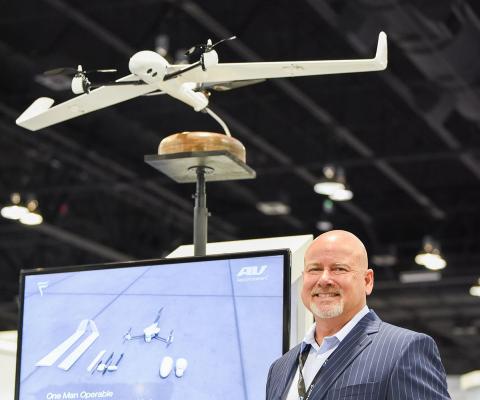
Things are looking up for AeroVironment in terms of vertical takeoff and landing capabilities planned for a new family of unmanned aircraft.
The company has teamed with FlightWave Aerospace Systems to produce Shrike 2, a new small UAS that can takeoff and land like a quadcopter but transition to forward flight as needed, using FlightWave’s patented Edge VTOL technology.
“We’ll be adding this to family of systems,” says David Sharpin, vice president of the company’s tactical UAS business unit. A small system similar to the one on display in their booth is expected by the end of the year, with two larger variations already in development.
XPO speakers see bright future, with focus on safety and jobs
As divergent as the three keynote speakers who addressed a full house at Xponential 2018 were Tuesday, they shared a common message of optimism for the future of unmanned systems.
From a business point of view, PrecisionHawk Inc., chief executive officer Michael Chasen described how his company’s work in preparation of the newly released Pathfinder Report provides a practical path toward ensuring that manned and unmanned aircraft could share the skies safely.
“There’s been tremendous growth in this industry,” Chasen said, involving everything from large corporations to garage tinkerers.
Weekend Roundup
This Week in the Unmanned Systems and Robotics World
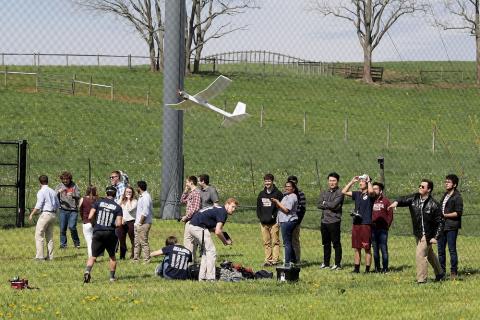
Virginia Tech has opened what it claims is the tallest drone park in the United States. The netted, football-field-sized park stands 85 feet above ground, and offers three million cubic feet of “unobstructed flight space” for student research, education, and recreation, the university says. (The Roanoke Times)
Aeryon Defense provides details on new R80D SkyRaider UAS
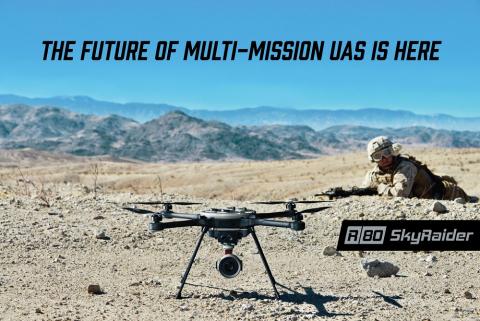
Aeryon Defense USA has released details on the R80D SkyRaider, which is the company's new multi-mission Defense and Federal Government Group 1 vertical takeoff and landing (VTOL) small UAS.
Aeryon Defense calls the SkyRaider its “most advanced military-grade sUAS,” as it delivers “a range of versatile Group 2-3 payload capabilities with the agility and single-operator deployment footprint of a proven Group 1 VTOL aircraft.” Some of the SkyRaider's core capabilities include Tactical Intelligence Surveillance and Reconnaissance (ISR), Persistent Overwatch and payload delivery.
Virginia Tech offers insight into its role in NASA's UTM research program
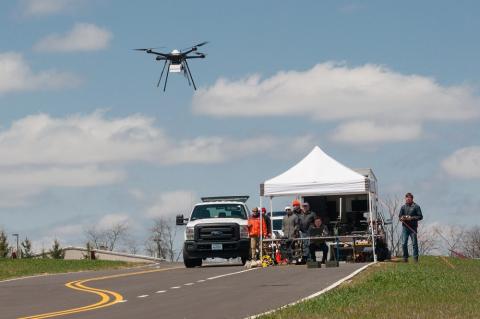
The Virginia Tech Mid-Atlantic Aviation Partnership and the Virginia Tech Transportation Institute recently participated in the latest iteration of NASA’s Unmanned Aircraft System (UAS) Traffic Management (UTM) research program.
A series of research flights conducted during the research program focused on how to enable unmanned vehicles to detect and avoid each other, which is one of the most complex issues in unmanned traffic management, and in the UAS industry in general.
Arctic UAV adopts Kongsberg Geospatial IRIS UAS situational awareness application to enhance its BVLOS operations
In an effort to enhance its beyond visual line-of-sight (BVLOS) operations, Arctic UAV has adopted the Kongsberg Geospatial IRIS UAS situational awareness application, which will provide “situational awareness safety” for Arctic UAV’s BVLOS flight operations within Canada’s Arctic.
Multiple UAS can be monitored simultaneously by a single operator using the Kongsberg Geospatial IRIS display technology. The technology also provides real-time calculation of aircraft separation and communications line-of-sight to enable BVLOS operations.
IRIS will provide the flight range with real-time 2D and 3D visualization of airborne track and weather data, as well as geo-fencing capabilities.