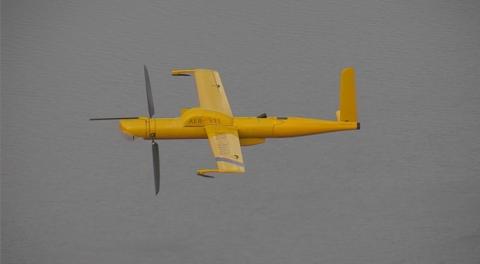
AUVSI’s NOVUS Unmanned, held in conjunction with Investorfest, will bring together carefully curated companies with innovative technology and investors who are helping drive the unmanned systems industry.
“What we are seeing now is that automated and unmanned vehicles are migrating from government and military to the mainstream, so a lot of innovation is happening,” says Gopan Madathil, an entrepreneurial marketer and fund-raising coach who is president of Investorfest.
The industry has now reached the point where it needs support services, such as traffic management or detection services, Madathil says, and NOVUS Unmanned plans to present a variety of companies with promising technology to present them to investors.
UAS
UAS

CNN granted Part 107 waiver to fly small UAS over people
The FAA has granted CNN a “first-of-its-kind Part 107 waiver” that allows the media organization to fly a small UAS over people.
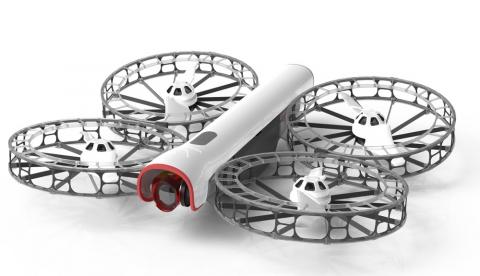
Considered an industry milestone, this waiver, for the first time, permits real-world UAS operations over people, giving CNN the ability to fly its 1.37-pound Snap UAS in a variety of environments, up to an altitude of 150 feet above ground level (AGL).
“We are delighted that the FAA has granted CNN a waiver that has a meaningful and practical application to our newsgathering operations,” says Greg Agvent, Senior Director of National Newsgathering Technology and CNN AIR.
Skyward to give commercial UAS operators instant access to controlled airspace with LAANC
Skyward, which is a Verizon company, has received approval to give commercial UAS operators instant access to controlled airspace with the Low Altitude Authorization and Notification Capability (LAANC) services from the FAA.
Airspace that previously required the submission of a manual request for authorization will now be accessible for businesses through the LAANC. The approval process will be automated, which will significantly reduce the wait time from months to seconds.
UAVOS improves algorithms of GPS spoofing identification
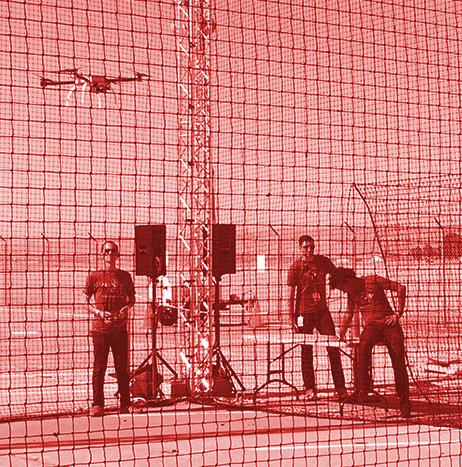
UAVOS Inc. has announced that it has “improved the algorithms of GPS spoofing identification while jamming with the most advanced EW systems.”
During test flights conducted “under conditions of electronic attacks,” UAS equipped with a UAVOS-manufactured automatic control system managed to regularly resist “attempts to interfere with the operation of the on-board GPS autopilot.”
Thanks to “newly updated technical solutions” for electronic protection equipment and UAVOS’ automated control system, effective countermeasures against the latest GPS spoofing was provided.
This prevented the enemy from re-routing a UAS or destabilizing the operation of its on-board navigation system.
WiBotic unveils its autonomous wireless charging pad for UAS
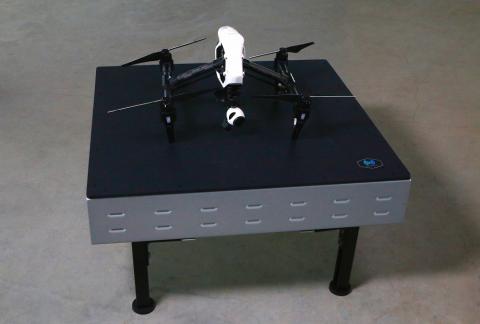
WiBotic has unveiled its “completely integrated wireless charging pad” for UAS, WiBotic PowerPad, which is designed for UAS operators who don’t want to develop their own wireless charging pad.
In one ready-to-go unit, the wireless charging pad includes the WiBotic transmitter circuit, transmitter antenna and power supply. The current version of the charging pad, which is three feet by three feet, can support a wide variety of today’s UAS, from smaller commercial and enterprise UAS, to large industrial UAS.
WiBotic PowerPad can be easily mounted on a variety of things, including rooftops and inside warehouses and factories. Those that use UAS for security, oil and gas, and in warehouses, could find WiBotic PowerPad extremely beneficial.
Media Advisory: Webinar on UAS Integration into Government and Military Operations, Oct. 18, 2017
FOR IMMEDIATE RELEASE: Oct. 18, 2017
Contact: Tom McMahon, tmcmahon@auvsi.org, (571) 255-7786
University of California, Riverside receives grant to develop AI for UAS
The University of California, Riverside (UC Riverside) will develop artificial intelligence (AI) for UAS, using a $1 million grant from the National Science Foundation.
AI in UAS would one day allow the robots to conduct “far-reaching reconnaissance missions”— such as search and rescue missions, and environmental and security monitoring—without direct human control.
Amit Roy-Chowdhury, professor of electrical and computer engineering, and the principal investigator in the grant, would like to create programs that allow UAS to act on their own, such as by zooming in on a certain object.
GA-ASI's MQ-9 UAS being used to help with firefighting efforts in Northern California
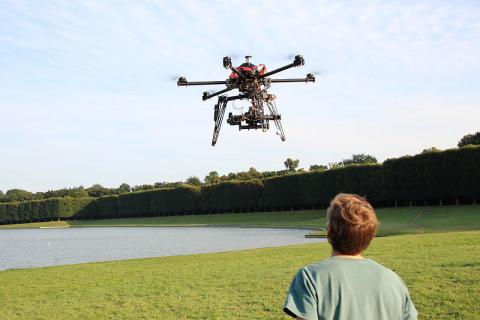
In support of the firefighting efforts in Northern California by CAL FIRE, General Atomics Aeronautical Systems, Inc.’s (GA-ASI) MQ-9 UAS is being used by the California Air National Guard’s 163d Attack Wing operating out of March Air Reserve Base.
The UAS has full-motion video (optical and infra-red), as well as ground imaging Synthetic Aperture Radar (SAR) capability, which provides clear sight through both clouds and smoke.
“The 163d Attack Wing supports citizens during the fires by operating two missions under approval from the Secretary of Defense and the Federal Aviation Administration,” says Brigadier General Dana A. Hessheimer.
Empirical Systems Aerospace to develop UAS at new manufacturing facility
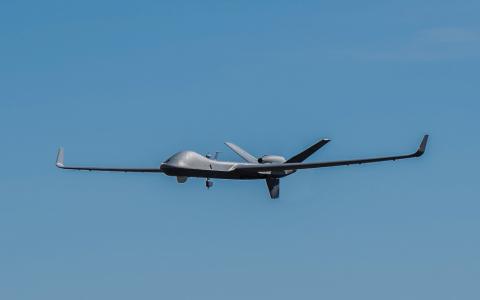
Aerospace engineering design and manufacturing company Empirical Systems Aerospace, Inc. (ESAero) has opened a new manufacturing facility in San Luis Obispo, California. More than 70 skilled professionals in engineering, production and quality control are expected to work at the new facility, with approximately 40 new jobs being created in the process.
The facility, which includes flexible manufacturing lines, a clean room environment, laboratories, computer centers, test cells and office and conference space, will be used to “design, produce test, and certify” electric and hybrid aircraft, including unmanned aircraft.
Aerovel's unmanned Flexrotor sets VTOL endurance record
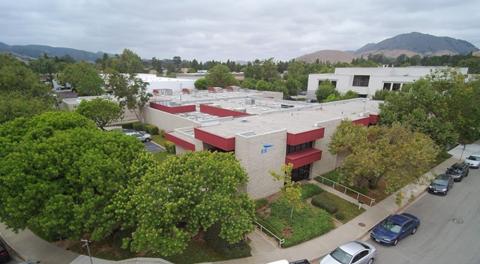
Aerovel has announced that its unmanned Flexrotor, named Actaea, set a VTOL endurance record, as it flew just over 32 hours.
During its flight, Actaea, which is a unique miniature tailsitter, transitioned from hover to wing-borne flight, and conducted its journey through a “showery day, a blustery night, and then another day in the breezy and unsettled air behind a cold front.”
The UAS transitioned back to hover as dusk fell, and “dropped gently down onto a 12-foot square helideck underway at 8 kt.”
The UAS flew for a total of 32 hours and eight minutes, and had more than three hours’ worth of gasoline left in its tank upon landing. When it took off, the UAS had 7.5 kg of fuel onboard.