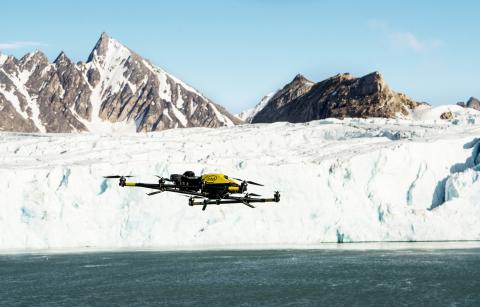
The NUAIR Alliance has opened the evaluation and selection process of vendor(s) for the design and installation of Phase II of its BVLOS Unmanned Traffic Management (UTM) test corridor.
Building off of the recently launched Phase I of the corridor around Griffiss International Airport in Rome, New York, the second phase will complete the corridor, which will facilitate testing of UAS platforms and sensors in the airspace between Rome and Syracuse, New York.
UAS
UAS
Michael Baker International purchases Altavian Nova UAS
A global leader in engineering, planning and consulting services, Michael Baker International has announced that it has expanded its growing UAS fleet with the purchase of an Altavian Nova fixed-wing UAS.
The company says that the UAS, which can fly up to 90 minutes and cover 600-800 acres in a single flight, will be used to conduct “aerial inspections and mapping of large sites or during inclement weather conditions.”

Weekend Roundup
This Week in the Unmanned Systems and Robotics World
NBA superstar LeBron James is headlining a broadcast and digital ad campaign that seeks to build trust in autonomous vehicles. Produced by Intel, the first ad shows James expressing hesitation about riding in a self-driving car. After being convinced to take a ride in the vehicle, James gives his approval of the technology at the end of his ride, saying “hey yo, I’m keeping this,” by the end of the ad. (The Verge)

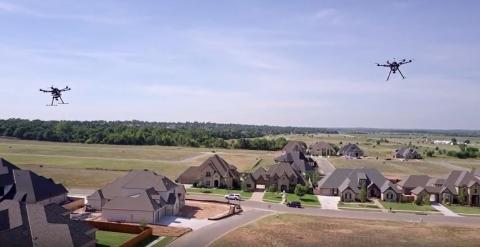
Rajant and AlarmTransfer show UAS can reduce the time it takes for authorities to respond to a verified home alarm
If alarm companies use UAS to supplement their current infrastructure, the amount of time it takes for authorities to respond to a verified home alarm can be significantly lowered, according to a Malvern, Pennsylvania company called Rajant, which provides private wireless networks, and Norman, Oklahoma’s AlarmTransfer.
The national average time it takes for authorities to respond to a verified home alarm is seven minutes. Through their tests using UAS, Rajant and AlarmTransfer showed a home alarm company can get aerial surveillance on the scene as quickly as 30 seconds.
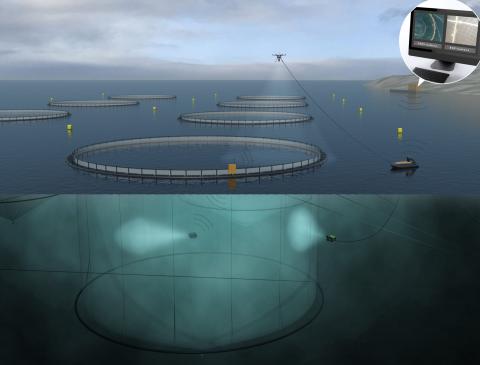
SINTEF, NTNU and others developing robotic systems that could handle tasks at fish farm facilities
In the future, autonomous and remotely operated systems could play a major role in conducting different tasks at fish farm facilities, being that the industry is “planning to locate facilities in more open waters where weather and sea conditions are harsher,” which would make certain operations more demanding.
Day-to-day tasks on fish farm facilities, such as fish welfare monitoring, facility inspections, control of feed rationing and lice counting, are currently conducted by several crew on board service vessels.
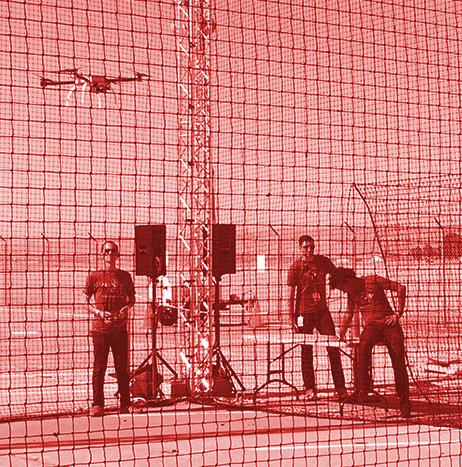
Insitu opens new facility in Starkville, Mississippi
According to the Starkville Daily News, Insitu opened its new office in Starkville, Mississippi on Tuesday, Oct. 10.
Headquartered in Bingen, Washington, Insitu will use its new facility, which is located at Mississippi State University's (MSU) Thad Cochran Research, Technology and Economic Development Park, to “work toward flight certification of its vehicles,” with assistance from the MSU Raspet Flight Research Laboratory and the FAA Alliance for System Safety of UAS through Research Excellence (ASSURE), which MSU manages.
“We’re focused on aircraft certifications within the National Airspace System within the U.S.,” says Insitu President and CEO Ryan Hartman.
Canada's Morinville Fire Department launches UAS program
Thanks to a new partnership and collaboration with Transport Canada certified Canadian UAV company A3UAV, the Morinville Fire Department in Morinville, Alberta, Canada will begin using the Aeryon SkyRanger UAS to assist in several of its operations.
The UAS, which will be ready for deployment 24 hours a day, will be used as an additional resource for the fire department, thanks to fire department pilots and A3UAV spending the last few months taking courses, training, and conducting hours of flight time.
According to Fire Chief Brad Boddez, the idea behind using UAS in firefighting operations originated a little over two years ago after the department responded to a large condo fire.
UAS used to map damage done to Holiday Beach, Texas by Hurricane Harvey
In the aftermath of Hurricane Harvey, Texas A&M University-Corpus Christi—commonly known as the Island University—used UAS to map Holiday Beach, Texas.
The map, also known as an “ultra-high resolution ortho-mosaic image,” was created using the data collected by the UAS, and it is available on the school's website.
“Disaster sites are not easily accessible due to debris and other obstacles, so we’re hoping that collecting ultra-high-resolution aerial maps from UAS can significantly help,” says Dr. Jinha Jung of the Island University's Department of Engineering and Computing Sciences.
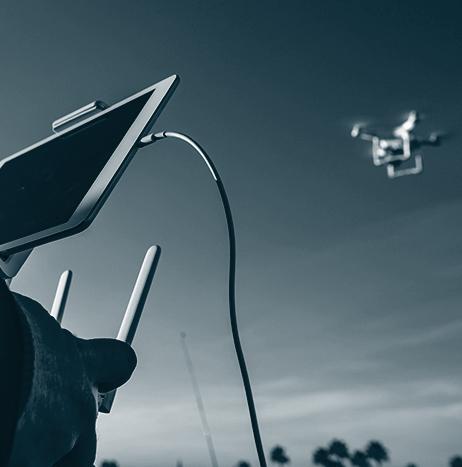
Washington State Patrol using UAS to fly over crash scenes
The Washington State Patrol (WSP) is crediting its UAS with helping to ease backups that are caused by crashes on the road.
Since the start of WSP’s pilot program back in July, UAS have been used to fly over 20 crash scenes.
According to Washington State Patrol Detective Eric Gunderson, one of the UAS named ‘Ice Man’ recently flew over a rollover crash that was blocking two lanes of traffic on Interstate-5 in Tacoma, Washington.
Gunderson says that using the UAS, he was able to capture more than 200 digital photos, which allowed him to document the scene in just over 20 minutes. It would have taken three to four hours to document the scene without the UAS, according to Gunderson.
Weekend Roundup
This Week in the Unmanned Systems and Robotics World
On the same day as World Animal Day, Oct. 4, Intel announced that it successfully used its artificial intelligence (AI) and UAS technologies for two wildlife research expeditions; one which focused on polar bear exploration, and the other on whale exploration. The expeditions were conducted through two separate collaborations with a wildlife photographer and conservationist, and also with Parley for the Oceans, which addresses major threats towards the world’s oceans. (Intel)