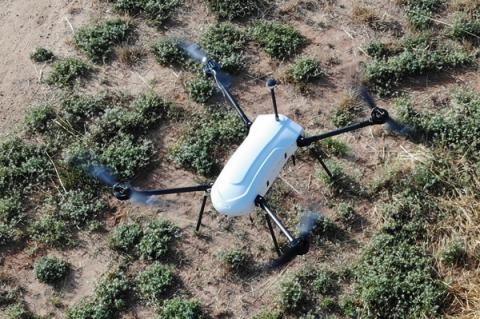
Speedbird Aero, a Latin American drone delivery company, has become the first company in Latin America to win regulatory approval for a drone delivery operation, as the company has received regulatory approval from Brazil's National Civil Aviation Agency, also known as ANAC, to operate two experimental drone delivery routes in Brazil.
UAS
UAS
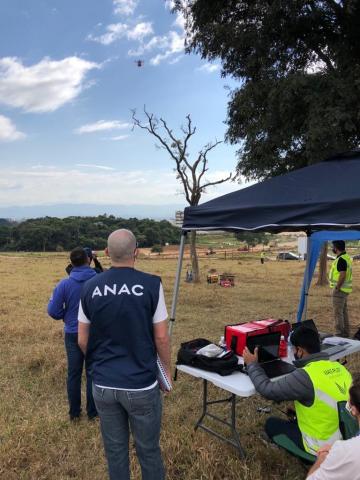
Parrot selected to participate in Blue sUAS program
Parrot has been selected to participate in the Blue sUAS (small UAS) program by the U.S. Army and the Defense Innovation Unit (DIU).
The Blue sUAS program is a spin-off of the Short-Range Reconnaissance (SRR) program launched by the Army and DIU in April 2019. The drone development effort under the Blue sUAS was organized in response to increased government-wide demand for secure and ultraportable drones that could be used for various military and federal applications.
Parrot is currently one of two finalists of the SRR project. A production-ready SRR drone is scheduled to be delivered by the end of this year.
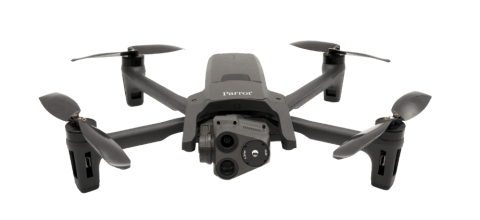
New York UAS Test Site selected to participate in Phase 2 of UPP program
The FAA has selected the New York UAS Test Site at Griffiss International Airport in Rome, New York and the Virginia Tech Mid-Atlantic Aviation Partnership in Blacksburg, Virginia to participate in phase two of the unmanned aircraft traffic management pilot program (UPP).
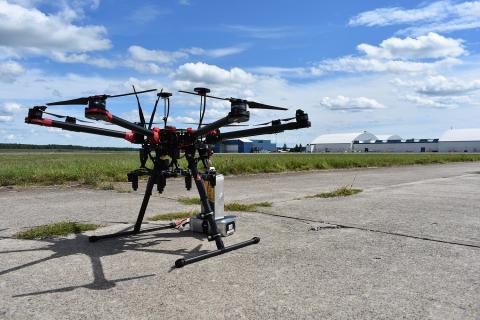
Dynetics successfully tests second X-61A Gremlins Air Vehicle
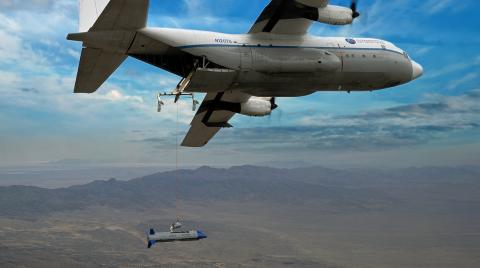
Dynetics Inc. has announced that in July, the company successfully tested a second X-61A Gremlins Air Vehicle (GAV), as well as the Gremlins airborne recovery system, at Dugway Proving Ground in Utah for the Defense Advanced Research Projects Agency (DARPA).
In preparation for an airborne recovery test later this year, the series of tests focused on risk reduction, as well as system and subsystem performance verification. The goal of the Gremlins Program, which is managed by DARPA's Tactical Technology Office, is to demonstrate aerial launch and recovery of multiple low-cost reusable UAS.
Weekend Roundup: August 28, 2020
This Week (and last week) in the Unmanned Systems and Robotics World
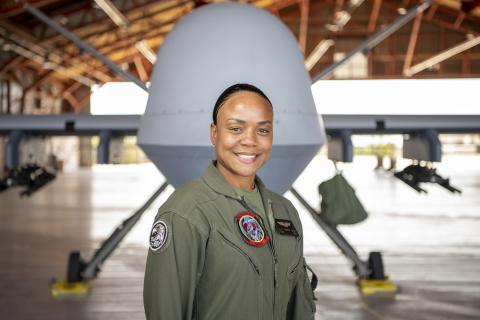
On Aug. 18, U.S. Marine Corps Capt. Shaneka Shaw, Unmanned Aerial Vehicle Squadron-1 (VMU-1), a weapons and tactics instructor (WTI), graduated from the MQ-9 Basic and Requalification/Transition Course 2 class 20-03, and became the first Black female Marine qualified to fly MQ-9 Reapers at Holloman Air Force Base, New Mexico. Shaw spent 55 training days learning to fly the MQ-9 at Holloman. (Air Education and Training Command)
Ascent AeroSystems completes final delivery of all Spirit drones to Dynetics
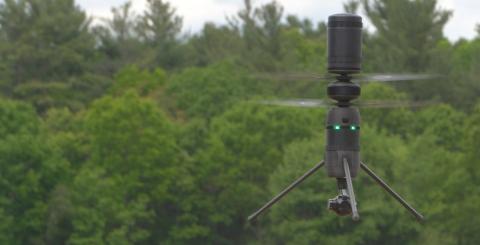
Ascent AeroSystems has completed the final delivery of all “Spirit” dual-rotor coaxial drones to launch customer Dynetics, which is a wholly owned subsidiary of Leidos.
“Ascent AeroSystems is pleased to announce that we have completed the delivery of all Spirits to our launch customer, Dynetics,” says Ascent AeroSystems founder and CEO Peter Fuchs.
“This represents a critical milestone for Ascent AeroSystems as a company and an important step in our valued partnership with Dynetics.”
Iris Automation selected as exclusive airborne detect-and-avoid provider to Avidrone Aerospace
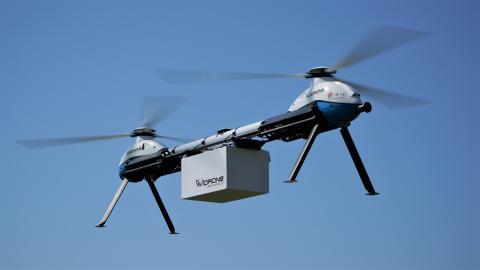
Avidrone Aerospace, a manufacturer of long-range, cargo delivery and sensor payload aircraft and autopilot systems, has selected Iris Automation as its exclusive airborne detect-and-avoid (DAA) provider.
As a result of the partnership, Avidrone customers will be able to conduct Beyond-Visual-Line-of-Sight (BVLOS) flights for commercial delivery operations.
Iris Automation’s Casia is the first onboard DAA platform to enable commercial BVLOS operations for UAS. Using the system, UAS can see and react to the aviation environment around the aircraft.
Speakers tout success of UAS IPP program during Episode II of FAA UAS Symposium
With the current iteration of the UAS Integration Pilot Program (IPP) set to conclude in October, speakers during Episode II of the 5th annual FAA UAS Symposium – Remotely Piloted Edition reflected on the success of the program, and the immense value that it has provided over the last three years.
“It is spectacular to be seeing this IPP coming to a successful…I don’t want to call it an ending because it’s a continuing journey, but we are coming to the final report here and we have learned a tremendous amount,” said Earl Lawrence, executive director, Aircraft Certification Service, FAA.
As Lawrence noted, the IPP itself as we know it may be concluding, but the operations that began under the program will continue, and the FAA will continue supporting those operations.

FIRST iZ, KnackForge partner to create control systems hardware and software for UAS tech
A patent-pending UAS that allows drones to be dispatched autonomously by 911 operators called FIRST iZ has announced a partnership with KnackForge to create control systems hardware and software for its FIRST Port drone port, as well as its launch ecosystem.
Founded in 2011, KnackForge employs development teams across the world. Through this strategic partnership, KnackForge handles the details involved with safely and successfully launching a UAS from a smart hangar, or port, that keeps the UAS charged and ready to fly within seconds of a known need. This involves bringing together power and control hardware with software to remotely manage all scenarios that may occur.

Elbit Systems' THOR UAS completes series of environmental qualification tests
Last October, it was announced that Elbit Systems was awarded a $153 million contract to provide a networked, multi-layered UAS array to an army in Southeast Asia, including more than 1,000 THOR Vertical Take-off and Landing (VTOL) mini-UAS.
Ahead of the delivery of this technology to the army in Southeast Asia, THOR has successfully completed a series of environmental qualification tests, Elbit Systems has announced.