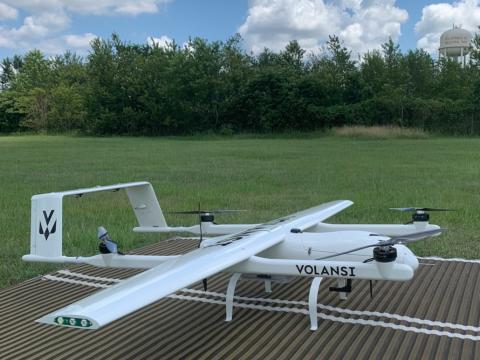
The FAA has granted Kansas State University Polytechnic Campus’ Applied Aviation Research Center a new waiver that permits K-State Polytechnic to fly UAS beyond visual line of sight (BVLOS), in all Class G airspace nationwide.
A majority of UAS flights take place in Class G airspace, which will allow K-State Polytechnic and the Applied Aviation Research Center to enhance research, education and training opportunities.
The new waiver also permits the remote pilot in command to fly from a mobile command center, providing a controlled environment that is distraction-free and out of the elements. This environment also allows a pilot to monitor the live UAS feed as well as the weather, manned traffic, telemetry feed and more.
UAS
UAS
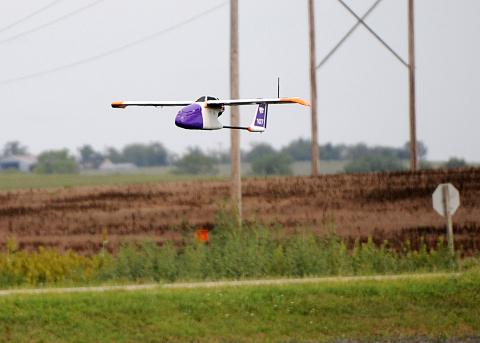
Weekend Roundup: August 14, 2020
This Week in the Unmanned Systems and Robotics World
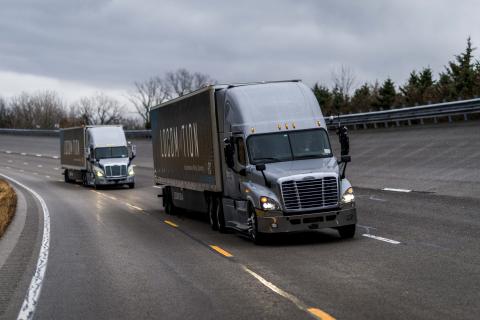
Autonomous trucking startup Locomation announced this week that it has successfully completed its first on-road pilot transporting commercial freight. In partnership with Aon, a risk management consultancy, and Wilson Logistics, a transportation logistics company, Locomation deployed two trucks hauling trailers in a driverless convoy on a 420-mile-long route stretching from Portland to Nampa, Idaho along I-84. (VentureBeat)
Oneida County, New York awarded task order for Advanced Air Mobility development
Through a NASA contract with its UAS Test Site at Griffiss International Airport, Oneida County, New York has been awarded an $897,000 task order for Advanced Air Mobility development.
To support high-density vertiport operations that allow for vertical take-off and landing aircraft, the county’s UAS test site, which is one of just seven sanctioned UAS test sites by the FAA in the U.S., will conduct research in automation technology for NASA.
“Oneida County’s long-standing partnership with NASA has proven to be a productive one,” says Executive Anthony J. Picente Jr., who announced the award.
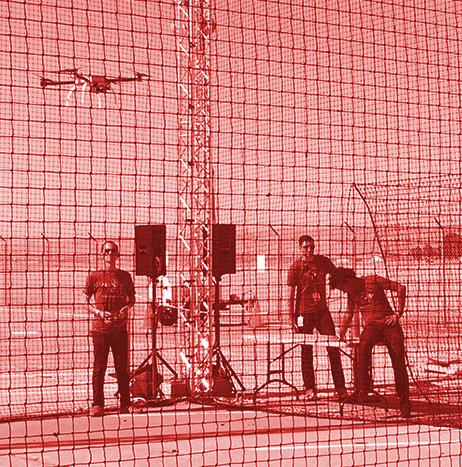
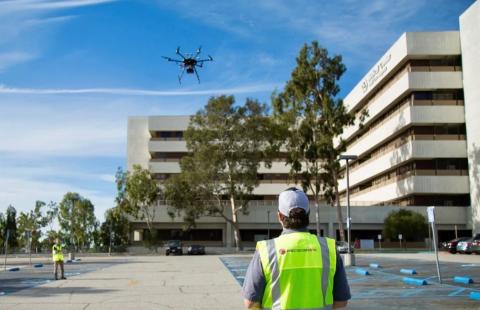
PrecisionHawk awarded two patents for its UTM technologies
PrecisionHawk has been awarded two patents for technologies it has developed for UAS traffic management (UTM).
Known as the ‘Automated Unmanned Air Traffic Control System,’ the patents are designed to enable collision avoidance between drones and manned aircraft, which is achieved by transmitting real-time flight data from drones to a UTM server prior to and while in-flight.
AeroVironment introduces enhancement options for its Puma UAS product line
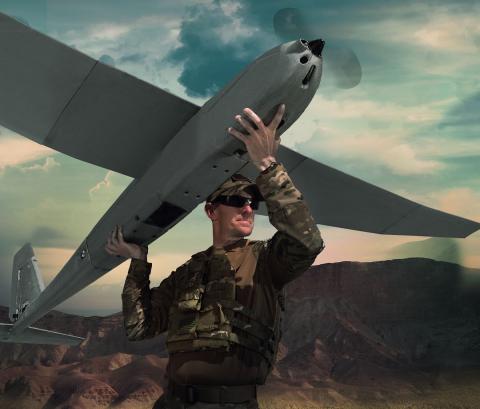
AeroVironment has launched two new Puma product line enhancement options that improve and expand the operational capabilities of its family of tactical UAS.
AeroVironment worked with front-line users to develop the product enhancement options, which the company says “enable customers to proceed with certainty in ever-changing operational environments.”
“AeroVironment is committed to anticipating and delivering innovative solutions that are critical to tactical UAS operators downrange,” says Rick Pedigo, vice president of sales and business development for AeroVironment.
UAS used to remotely inspect runway at Cranfield Airport in England
For the first time, UAS were used to remotely inspect the runway at Cranfield Airport, which is located just outside the village of Cranfield, in Bedfordshire, England.
Utilizing ‘drone-in-a-box’ technology, the flights’ goal was to enable routine inspections using UAS that can be automatically deployed, recovered and recharged without the need for an on-site pilot.
“As a fully-functional research airport located on a university campus, this kind of technology demonstration and development exercise is very much in our DNA,” says Rob Abbott, director of Aviation Operations at Cranfield Airport.
University of Alabama awarded grant to research how UAS can be used during disasters
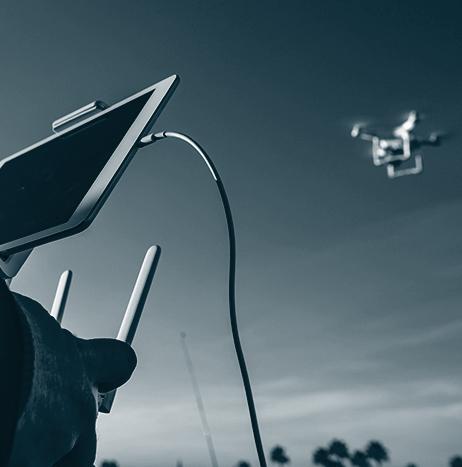
The University of Alabama in Huntsville (UAH) has announced that it will receive $1.1 million of the $3.3 million in research, education and training grants awarded to universities that make up the FAA’s Air Transportation Center of Excellence (COE) for UAS, which is also known as the Alliance for System Safety of UAS through Research Excellence (ASSURE).
UAH will serve as the lead institution for disaster preparedness and response research to provide insight into the safe integration of UAS into the disaster preparedness and response areas.
Weekend Roundup: August 7, 2020
This Week in the Unmanned Systems and Robotics World
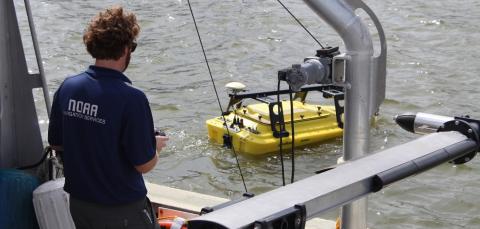
The National Oceanic and Atmospheric Administration (NOAA) and the U.S. Navy have signed a new agreement to jointly expand the development and operations of unmanned maritime systems in the nation’s coastal and world’s ocean waters. Through the agreement, NOAA will accelerate its science, service and stewardship mission by leveraging the Navy’s expertise, infrastructure, best practices and training. (NOAA)
Parrot, Dronisos expand partnership to explore new applications for drone flight automation
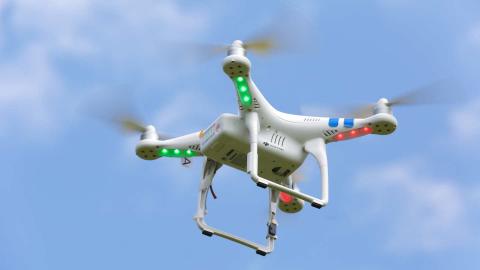
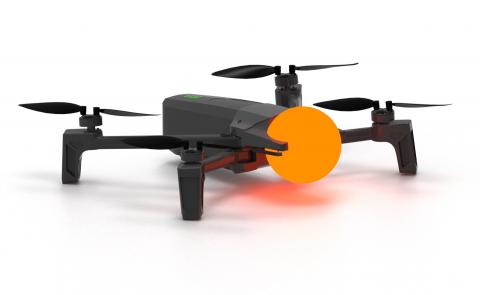
Parrot has announced that it is expanding its ongoing partnership with Dronisos, a European company that creates and produces customized drone swarm light shows. Leveraging the Parrot ANAFI drone platform, the companies will explore new applications for drone flight automation.
A combination of “sophisticated technology and artistic expression,” Dronisos’ drone swarms are designed to entertain audiences around the world with dancing drones and lights for clients such as Lancôme, Peugeot, FIFA, and Oreo. To pull these shows off, sophisticated drone flight automation is needed to synchronize up to one thousand drones to perform choreographed movements, tricks and flight patterns.
Volansi, NCDOT to begin commercial, middle-mile drone delivery projects in North Carolina
Cargo drone delivery service provider Volansi has signed a teaming agreement with the North Carolina Department of Transportation (NCDOT) to begin commercial, middle-mile drone delivery projects in North Carolina.
Volansi and NCDOT will collaborate with the FAA to gather data on drone delivery programs and how they could be incorporated long-term into the current transportation infrastructure and regulations.
“We are excited to have this opportunity to work closely with the FAA and the N.C. Department of Transportation to help shape how drones fit into our home country’s infrastructure,” says Hannan Parvizian, CEO and co-founder of Volansi.