
Volvo is showcasing its autonomous bus to specially invited guests during the Volvo Ocean Race competition in Gothenburg, Sweden.
Based on Volvo's commercially produced electric city bus, the prototype has been modified for autonomous operation.
Volvo says that at the demo event, there will be presentations to demonstrate how this technology can contribute to “safer and more comfortable travel,” as well as more efficient handling of vehicles in the depot.
Technology
Technology

Weekend Roundup
This Week in the Unmanned Systems and Robotics World
During a pilot project in October, an autonomous vehicle will be tested in Edmonton, Alberta, Canada, on a segregated roadway, separated from other traffic. During the pilot project, Edmonton residents will get the chance to experience the technology for free, and provide feedback to the city. (The Star Edmonton)

Ohio's 33 Smart Mobility Corridor to study use of UAS to monitor traffic and roadway conditions
Ohio’s 33 Smart Mobility Corridor has announced plans to study the use of UAS to monitor traffic and roadway conditions from the air along the corridor.
The three-year study, which is scheduled to start on July 1, is a partnership between DriveOhio’s UAS Center and the Ohio State University College of Engineering.
“At DriveOhio, we are looking for innovative ways to integrate technology into our transportation systems,” says Jim Barna, Executive Director of DriveOhio.
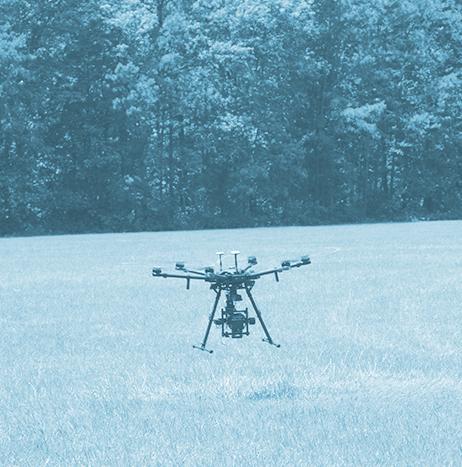
K-State Polytechnic launching graduate certificate in UAS information assurance
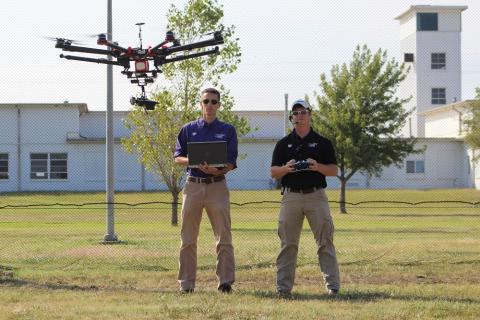
Come Fall 2018, Kansas State University Polytechnic Campus will launch a graduate certificate in unmanned aircraft systems information assurance.
The certificate will provide working professionals and graduate students “an educational foundation in an industry important to both military and civilian organizations,” according to K-State Polytechnic.
Enrolled students will learn important lessons regarding UAS, including how to protect UAS from cyberattacks, and understand “information assurance risk assessment principles” that apply to UAS operations on land, sea, air or satellite.
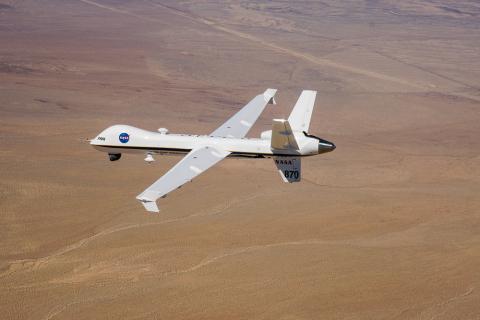
GA-ASI's Detect and Avoid avionics system helps enable UAS flight through NAS
A General Atomics Aeronautical Systems Inc. (GA-ASI) developed Detect and Avoid (DAA) avionics system was the “key technology” that enabled a UAS flight through the National Airspace System (NAS) on June 12.
The DAA system, which was installed on a NASA-owned Predator B/MQ-9 UAS named Ikhana, allowed the UAS to meet the FAA’s 14 CFR 91.113(b) requirement to “see and avoid” other aircraft during its flight. The UAS took off from southern California.
“Our goal of producing UAS that can be certified to fly in non-segregated airspace took a big step forward today,” says Linden Blue, CEO, GA-ASI.
Cinematic Aerospace flies UAS at JFK International Airport to film for upcoming documentary
Cinematic Aerospace has announced that on April 11, it completed the first commercial UAS flight at John F. Kennedy (JFK) International Airport in Queens, New York.
Cinematic Aerospace flew a DJI Inspire 2 UAS at the TWA Flight Center to film for an upcoming documentary on the construction of the new TWA Hotel, and the history of the airport terminal.
Five flights were performed in the span of the approved flight window by UAS Pilot-in-Command Christian Tucci and Visual Observer Kyle Hurley. The UAS reached a maximum altitude of 200 feet while operating in various arcs over the TWA terminal building.

UAS keeping citizens safe in Hampton, Virginia
Hampton, Virginia’s police and fire departments are utilizing UAS to keep citizens safe.
The city has a Joint Police/Fire Unmanned Aerial Vehicle Unit, consisting of six firefighters and six police officers. All members of the unit are cross-trained, meaning that police officers can do what the firefighters are trained to do and vice versa.
The joint unit can use its UAS for a variety of tasks, including but not limited to, fighting fires, post-disaster assessments, and locating high-risk suspects on the run.
Weekend Roundup
This Week in the Unmanned Systems and Robotics World
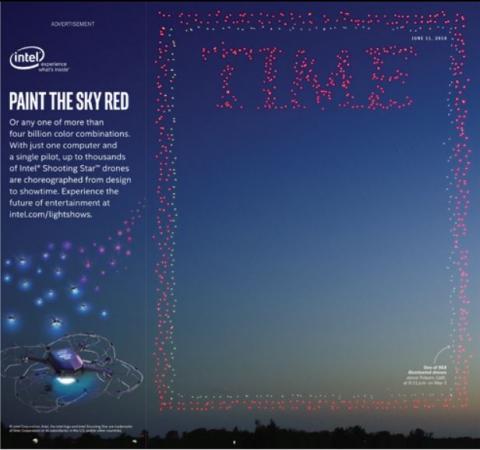
Intel’s Shooting Star UAS were recently used to create their first magazine cover as part of TIME magazine’s drone special issue. This is the first time that a TIME cover photo was shot by a UAS. (Intel)
The U.S. Army plans to purchase 61 Black Hornet III UAS. 57 of those UAS will be fielded to a yet-unidentified infantry brigade combat team by the third quarter of 2019. (Army)
AirMap, ENAIRE and everis demonstrate integrated ATM-UTM system
During the 2018 GUTMA Annual Conference, AirMap collaborated with Spain’s official Air Navigation Service Provider, ENAIRE, and an international leader in aerospace and defense, everis, to demonstrate an integrated air traffic management (ATM)-UTM system in controlled airspace and urban environment.
Hosted by ENAIRE and everis, the demonstration saw an everis UAS and a DJI UAS fly at the same time within shared airspace. Both UAS were connected to AirMap’s platform via open AirMap API integrations, which allowed for real-time sharing of the UAS’ telemetry data to publish to the AirMap platform.
Embry-Riddle students use UAS Disaster Study Away trip to help recovery efforts in Oklahoma
In support of the Oklahoma Emergency Management and Dept. of Wildlife Conservation’s efforts to survey the aftermath of large rangeland fires that spread across hundreds of thousands of acres in Oklahoma back in April, Embry-Riddle Aeronautical University, Daytona Beach students embarked on a UAS Disaster Study Away trip in May.
Led by Embry-Riddle Professors Dan Macchiarella and John Robbins, the Embry–Riddle UAS Disaster Response Team started their trip in Arlington, Texas, where they underwent Predator/Reaper UAS orientation flight training.
Following that, they went to the State Emergency Operation Center in Oklahoma City, where they received an initial briefing, and prepared to help with response and recovery efforts resulting from various severe weather events.