On June 14, Global UAV Technologies Ltd., InDro Robotics Inc., and High Eye Aerial Imaging Inc. conducted the first UAS mapping mission over a major Canadian metropolitan city, flying over the downtown core of Victoria, British Columbia, Canada.
The mission, which was a first of its kind operation, was completed for the City of Victoria’s Emergency Management Division and conducted alongside members of Transport Canada.
Technology
Technology

Persistent Systems introduces Auto-Tracking Antenna System
Persistent Systems has introduced a new portable ground-to-air antenna called the Auto-Tracking Antenna System, which operates on the Wave Relay mobile ad hoc network (MANET).
Considered a “complete, easy-to-assemble system,” the Auto-Tracking Antenna System is designed to incorporate aircraft into the MANET.
“The Auto-Tracking Antenna System represents a major step towards achieving the vision of a truly networked battlefield,” says Herb Rubens, CEO of Persistent Systems.

Grant County Sheriff's Office UAS program proving successful
In Washington state, the Grant County Sheriff’s Office UAS program will soon expand to include two more UAS that are equipped with FLIR thermal cameras.
The program currently has two UAS, which have been used for a variety of tasks including search and rescue operations, as well as collision investigations.
“We have the capability at night time or even during the day, if somebody’s lost or takes off and runs on us, we will have the ability to find the heat imagery from the person, whether they’re lost or hiding out in a field,” says Chief Deputy Darrik Gregg, who oversees the UAS program, via iFiber One News.
AeroVironment selected for small UAS sustainment under five-year IDIQ contract
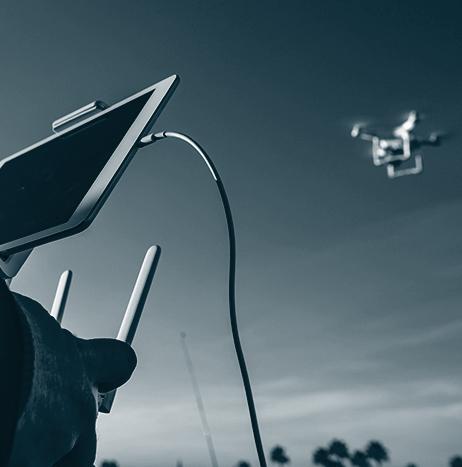
AeroVironment Inc. has announced that on April 10, the United States Army selected it, along with six other suppliers, for small UAS sustainment under a five-year Indefinite Delivery Indefinite Quantity (IDIQ) contract.
Over the duration of the contract, the seven awardees will compete for LRRS and MRM UAS, Tactical Open Architecture Controller system and spare and repair parts procurement task orders.
The maximum value of the contract is $248 million over five years.

MQ-8C Fire Scout undergoes first Initial Operational Test and Evaluation
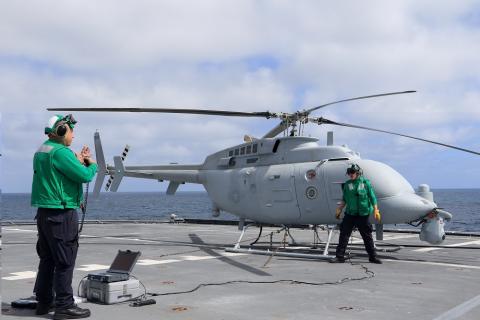
On June 29, USS Coronado (LCS 4) and Air Test and Evaluation Squadron 1 (VX-1) completed the first comprehensive Initial Operational Test and Evaluation (IOT&E) for Northrop Grumman’s MQ-8C Fire Scout UAS.
The results from the IOT&E will help decision-makers determine how best to integrate the Navy's newest unmanned helicopter with littoral combat ships (LCS), as well as other platforms.
The MQ-8C Fire Scout performed a number of mission scenarios aboard Coronado off the coast of southern California during the IOT&E. Considered an important milestone for the LCS and Fire Scout programs, these operations demonstrated “cohesion between the surface and aviation platforms.”
Asahi Power Service Co. develops drone-powered flying umbrella
A Japanese company called Asahi Power Service Co. has developed a drone-powered flying umbrella called “Free Parasol.” The umbrella is meant to free people’s hands, and protect them from the sun in the future.
Equipped with an artificial intelligence (AI) camera, the UAS can hover above the user’s head, and by tracking the real-time position of the user, it can follow their steps as they walk or move.
The umbrella is based on the idea that “it's bothersome to open an umbrella when your hands are full,” the company says. It is expected to enter the market by next year at a retail price of $273 dollars. Additionally, the umbrella could be put into use as early as the 2020 Tokyo Olympics and Paralympics.
From Unmanned Systems magazine: Military objectives could advance driving systems to full autonomy
Semi-autonomous vehicles traveling in convoys, or platoons, have the potential to save lives and transport material more efficiently and safely than manned vehicles, but the technology has a way to go before it can be touted as fully autonomous.
In the commercial sector, the rush to full autonomy is limited by fuel cost efficiencies already achievable with semi-autonomous systems, but the need to protect soldiers on the ground and in war zones may drive the U.S. military to advance the technology into full automation sooner rather than later.

Drone use in construction industry skyrocketing
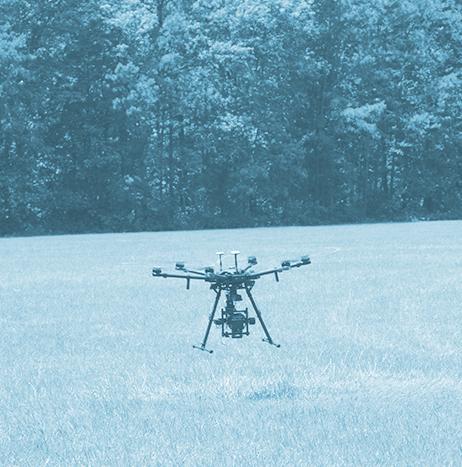
Ryan Moret, Field Solutions Manager at McCarthy Building Companies Inc., is part of a new generation of construction workers utilizing UAS in the construction industry.
A recent report on commercial drone trends by DroneDeploy shows that drone use has risen exponentially across a variety of fields; most notably, in the construction industry, where the use of this technology has skyrocketed by 239 percent year over year.
“The cost of the tool is low enough the quality of data we’re receiving is just intrinsically valuable when we see it,” Moret says via CNBC.
Daimler obtains road test license for highly automated driving research vehicles in Beijing
Daimler has become the first international automaker to receive a road test license for “highly automated driving research vehicles (level 4)” in Beijing, China.
With this road test license, Mercedes-Benz test vehicles will now undergo real road tests to “further perfect the technology” in Beijing, which Daimler describes as a “metropolis with unique and complex urban traffic situations.”

Integrated fuel tank maximizes fuel load for MQ-25
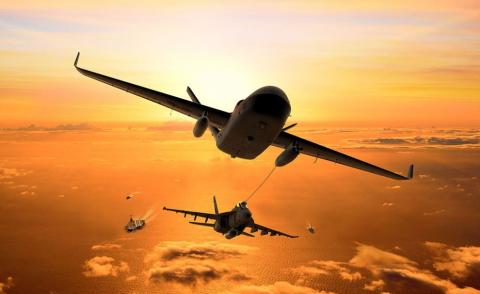
In an effort to maximize fuel offload for the proposed MQ-25 unmanned aerial refueling aircraft for the U.S. Navy, General Atomics Aeronautical Systems Inc. (GA-ASI) has announced that it is using an integrated fuel tank structure.
Using its knowledge of advanced composite aircraft structures, GA-ASI developed integrated fuel tanks in a “large-scale wing box test article and a full-scale wing skin pre-production validation article.”
Last November, the wing box tested to failure via wing bending at GA-ASI’s structural test facility in Adelanto, California. In April, GA-ASI verified the production readiness of the co-cured wing and tail components, using both non-destructive and destructive inspections.