
This Week in the Unmanned Systems and Robotics World
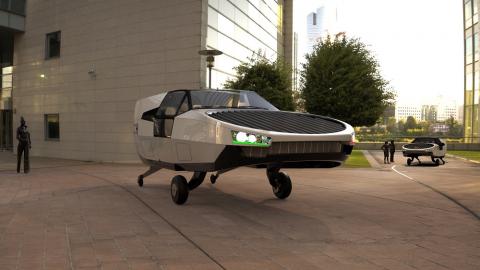
Urban Aeronautics has announced the launch of Full Scale Development for the CityHawk hybrid-power, eVTOL Flying Car. The company says that the pre-production 'configuration freeze’ for CityHawk is the result of having successfully completed a series of customer demonstrations of Cormorant, the company's unmanned variant. (Urban Aeronautics)
Technology
Technology
Capital Metro begins testing driverless vehicles in Austin, Texas
On Monday, July 23, driverless vehicles for Capital Metro’s pilot shuttle program that is scheduled to launch in the fall began testing in downtown Austin, Texas.
According to Mariette Hummel, a spokeswoman for Capital Metro, Capital Metro officials are spending this week completing the mapping portion of the testing to help the vehicles learn the route, as well as where the signals and signs are located.
“It’s putting information into the vehicle and it is learning about the route and the traffic situations,” Hummel says via Community Impact Newspaper.

Coconino County Sheriff's Office Search and Rescue Unit hoping to expand its UAS capabilities
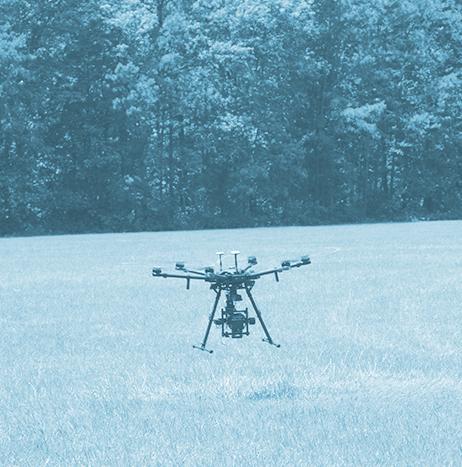
In Flagstaff, Arizona, the Coconino County Sheriff’s Office Search and Rescue Unit's UAS program is approximately two years old.
The agency started its program after purchasing consumer UAS such as the DJI Phantom 4, and currently, there are four people trained to fly UAS, with each having earned a standard FAA Part 107 Drone Pilot License.
Right now, the UAS are mainly used to search for missing people, as they can be deployed to efficiently search open meadows and stretches of desert, which not only saves boots on the ground, but also allows search and rescue supervisors to better use volunteers searching places that are not ideal for UAS, such as under tree canopies.
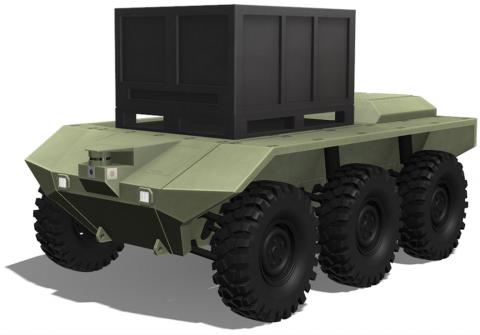
Horiba Mira to develop 'end-to-end logistics resupply capability' using its VIKING UGV
Horiba Mira has been awarded a £700,000 cross-government collaborative program contract for the second phase of the Autonomous Last Mile Resupply (ALMRS).
Through the Defence and Security Accelerator (DASA), the UK Ministry of Defence (MOD), along with the Department for International Development (DFID) and UK Research and Innovation (UKRI), are collaborating to deliver advanced designs for UAS and robots, which could cause a massive change in how humanitarian aid or supplies for front-line troops are delivered.
“Defence makes an unrivalled investment in science and technology, creating thousands of highly-skilled jobs and brilliant career opportunities, generating billions for the UK economy,” says Gavin Williamson, Secretary of State for Defence.
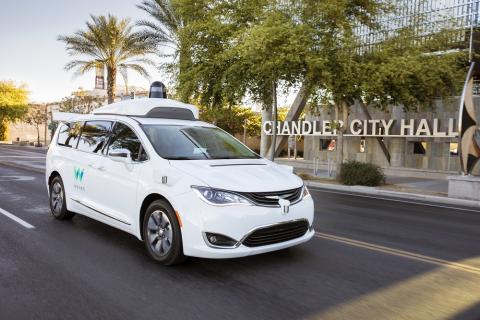
Waymo's self-driving cars reach eight million miles driven on public roads
During the National Governors Association conference on Friday, July 20, Waymo’s CEO John Krafcik announced that the company’s self-driving cars have reached eight million miles driven on public roads, translating into roughly 25,000 miles driven every day.
Last November, Waymo announced that it had driven four million miles on public roads, meaning that the company has doubled that number in just eight months.
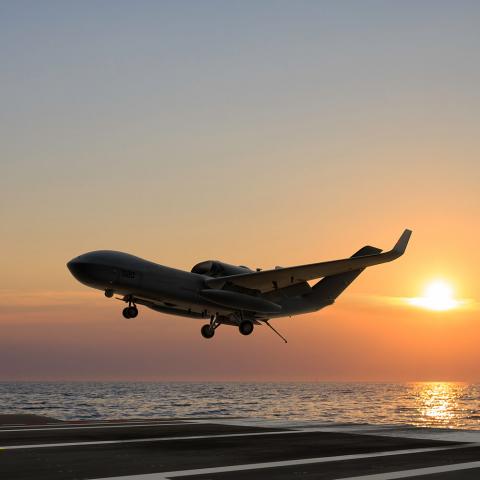
GA-ASI completes testing of arresting hook Hold Down Damper for MQ-25 UAS
General Atomics Aeronautical Systems Inc. (GA-ASI) has finished performance testing of the arresting hook Hold Down Damper (HDD) for its proposed MQ-25 unmanned aerial refueling aircraft for the U.S. Navy.
GA-ASI worked with a team from GKN Aerospace’s Fokker business unit in Helmond, Netherlands. Fokker is scheduled to supply the arresting hook for GA-ASI's bid.
“The tests successfully validated the dynamic simulation model for our HDD for MQ-25,” says David R. Alexander, president, Aircraft Systems, GA-ASI.
Weekend Roundup
This Week in the Unmanned Systems and Robotics World
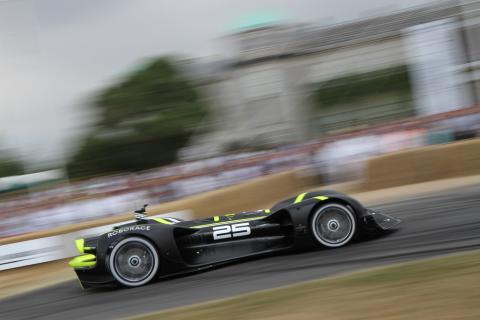
On July 13, Roborace’s Robocar became the first fully driverless race car to successfully complete the Hillclimb at the Goodwood Festival of Speed. Robocar’s run was the first in the history of Goodwood to be completed by a race car that didn’t have a human driver in the car. (Goodwood Festival of Speed)
Intel celebrates 50th anniversary with record-setting drone light show
On July 18, Intel flew 2,018 Intel Shooting Star drones over its Folsom, California facility in celebration of its 50th anniversary.
The company’s latest drone light show set a new Guinness World Records title for the most unmanned aerial vehicles airborne simultaneously.
“Several years ago, we had an idea of flying drones forming the Intel logo over our corporate headquarters, and here we are doing just that,” says Anil Nanduri, vice president and general manager, Intel Drone Group.
“It really speaks to the innovative spirit that Intel was founded on 50 years ago.”

Aeronyde and Unifly to provide emergency responders with advanced UAS technology
Aeronyde and Unifly have announced a partnership to bring advanced UAS technology to emergency responders.
The companies will create an “efficient self-flying system” for police and fire departments by integrating Unifly’s Unmanned Traffic Management services, along with Aeronyde’s system for Autonomous flight.
“Whenever I visit a new city, I look up and see endless possibility,” says Edgar Munoz, CEO of Aeronyde.
Coast Autonomous demonstrates self-driving vehicle in Times Square
A company called Coast Autonomous has developed a self-driving vehicle that could ease traffic woes in places such as New York.
The company demonstrated its concept in Times Square on July 17.
“Driverless vehicles, once they get fully deployed, are gonna be a lower coast because you don’t have the expense of a driver,” explains Rick Baker, head of urban development for Coast Autonomous, via CBS New York.
Coast Autonomous’ vehicles are considered ideal for short distance shuttle trips at a variety of locations including airports, college campuses, theme parks and low speed, highly congested areas in New York City.