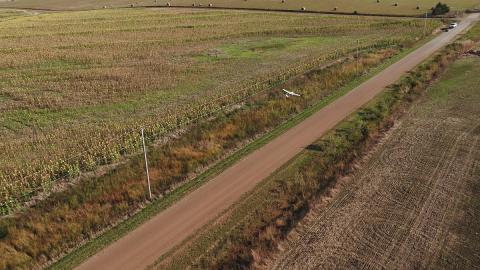
The Kansas Department of Transportation’s (KDOT) UAS Integration Pilot Program (IPP) recently successfully completed the first beyond visual line of sight (BVLOS) UAS flight that utilized only onboard detect-and-avoid systems.
This was the first time under Part 107 that the FAA has authorized a UAS to fly BVLOS without a requirement for visual observers or a ground-based radar, as the flight instead utilized Iris Automation’s detect-and-avoid system known as Casia, which provides commercial drones with automated collision avoidance maneuvers.
Technology
Technology
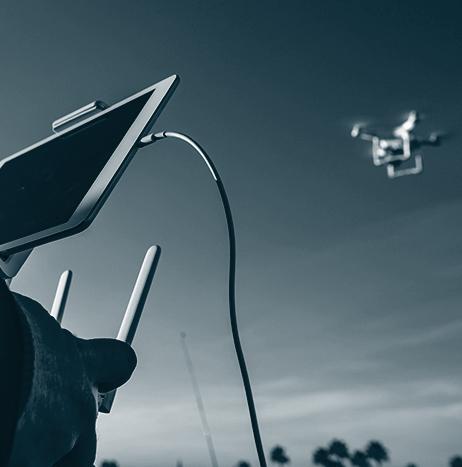
Virginia establishes itself as a place to be for all things unmanned
Virginia is for lovers, but it is also the place to be for innovation when it comes to all things unmanned, according to speakers during the Northern Virginia Technology Council (NVTC) Autonomous Technology Summit on Thursday, Nov. 7, in Fairfax.
“I absolutely believe the potential for autonomous vehicles, whether in air, on land, in sea … could be as much of a revolution as wireless was,” said Virginia Sen. Mark Warner, an early investor in the cellular telephone business and cofounder of the company that would become Nextel.

New York UAS Test Site receives FAA approval to conduct BVLOS ops within first segment of 50-Mile UAS Corridor
The FAA has granted the New York UAS Test Site at Griffiss International Airport in Rome, New York approval to fly UAS beyond visual line of sight (BVLOS) within the first segment of New York's 50-Mile Unmanned Aircraft System Corridor, which is currently under development.
Considered the first “true” BVLOS authority granted to the FAA-designated test site, the approval will allow UAS testing to be conducted without the need for ground-based observers.

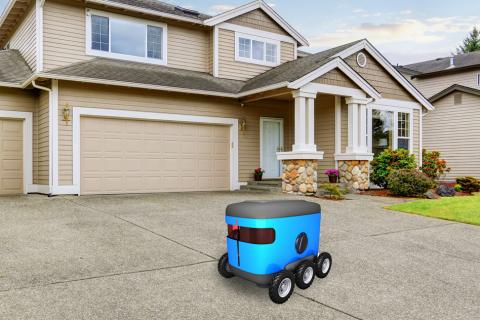
MIT engineers develop technique that allows robots to find front door without having to map an area in advance
MIT engineers have developed a navigation method that helps last-mile delivery vehicles find the front door without having to map an area in advance.
With the approach developed by MIT engineers, a robot would use clues in its environment to plan out a route to its destination, which wouldn't be described as coordinates on a map, but instead could be described in general semantic terms such as “front door” or “garage.”
So in instances where a robot is charged with the task of delivering a package to someone's front door, it wouldn’t take the robot long to explore the property before identifying its target. The robot also wouldn’t have to rely on maps of specific residences.
UPS, CVS complete first revenue-generating drone deliveries of medicine in North Carolina
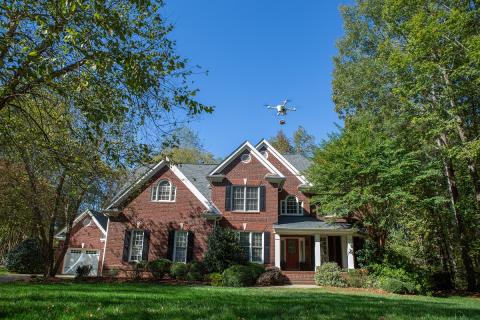
On Friday, Nov. 1, UPS Flight Forward Inc. (UPSFF) and CVS Pharmacy Inc. successfully completed the first revenue-generating, residential drone deliveries of medical prescriptions from a CVS pharmacy to customers in Cary, North Carolina.
One of the people on the receiving end of these landmark deliveries was a CVS customer with limited mobility, which makes it hard for them to make the trip to the store to pick up their prescription.
“We now have an opportunity to offer different drone delivery solutions, tailored to meet customer needs for speed and convenience,” says Scott Price, UPS chief strategy and transformation officer.
University of Wisconsin-Madison launching autonomous delivery robot service
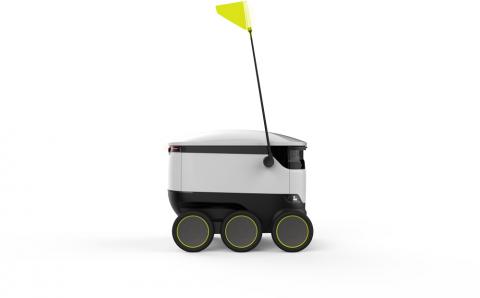
The University of Wisconsin-Madison’s University Housing Dining & Culinary Services is launching a new food delivery service utilizing Starship Technologies’ autonomous delivery robots.
“Our students are juggling more than they ever have before and we are always looking for inventive ways to support their campus dining needs,” says Peter Testory, director of University Housing Dining & Culinary Services.
“This delivery service allows us to reach them in a whole new way with made-from-scratch meals we offer from our dining markets. This added convenience and flexibility of dining for students allows us to provide an affordable option for those on campus.”
UAVOS completes test flight of modified ApusDuo solar-powered high-altitude platform system
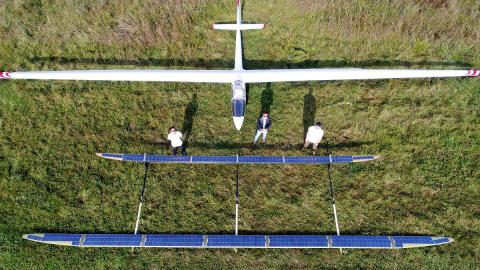
UAVOS has successfully completed a test flight of the new modification of its ApusDuo solar-powered high-altitude platform system (HAPS), which has a wingspan of 14 meters.
The reliability of HAPS increased while the aircraft’s overall structural weight decreased thanks to the modifications to the design of the main elements of the aircraft.
“UAVOS demonstrated a flight of ApusDuo aircraft with a wingspan of 9000m in August 2018,” says UAVOS CEO Aliaksei Stratsilatau.
“Following lower-altitude test flights and other preoperational activities, currently we coordinate with the Air Traffic control getting permit to perform stratospheric test flights.”
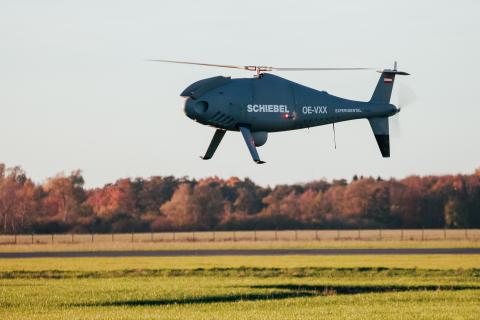
Schiebel to deliver Camcopter S-100 UAS to Royal Thai Navy
Schiebel has won a competitive tender to equip the Royal Thai Navy (RTN) with its Camcopter S-100 UAS.
The UAS will be deployed next year to the Pakphanang District, in the province of Nakhon Si Thammarat in Thailand, and will provide the RTN frigate fleet with land and sea based Intelligence, Surveillance and Reconnaissance (ISR) capabilities.
According to Schiebel, this is the first time that RTN will use Vertical Take Off and Landing (VTOL) UAS for maritime operations.
“With the Royal Thai Navy, we have another major maritime contract to add to our growing list of customers,” says Hans Georg Schiebel, chairman of the Schiebel Group.