On Thursday, Oct. 31, the Jacksonville Transportation Authority (JTA) tested what it is calling the first Americans with Disabilities Act (ADA) accessible autonomous vehicle in the United States.
JTA has made ADA accessibility a requirement for the Ultimate Urban Circulator (U2C) autonomous vehicle program, which is a multi-phased program that will convert and expand Skyway monorail cars into an autonomous vehicle network.
“It needs to be something that all of our customers and citizens can easily utilize,” JTA CEO Nathaniel P. Ford Sr. said via WJCT.org.
Technology
Technology

Toyota Research Institute to test its P4 automated driving test vehicle in Tokyo next summer
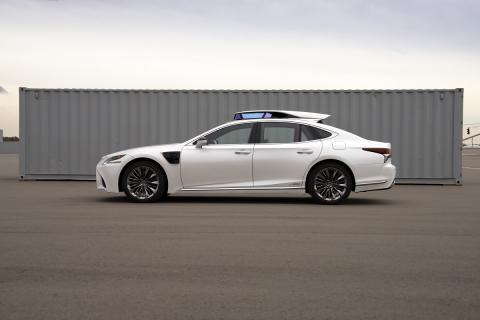
Next summer, Toyota Research Institute’s (TRI) Platform 4 (P4) automated driving test vehicle will be tested on public roads in Tokyo, offering select individuals the chance to experience the technology first hand.
Based on the fifth-generation Lexus LS sedan, the P4 test vehicle, which will have a safety driver present in the vehicle at all times, will operate in a waterfront subcenter called Odaiba district, which is described as “busy and often congested.” TRI says that Odaiba presents a “complex environment” with a variety of challenges that make it ideal for demonstrating the capabilities of Toyota’s automated driving technology.
GEODIS using Vecna Robotics' robots to transport pallets within distribution center
Autonomous technology developer Vecna Robotics has partnered with supply chain operator GEODIS to equip a GEODIS distribution center in Dallas, Texas with autonomous platforms.
The distribution center in Dallas is currently using Vecna robots and workflow technology to automate the horizontal transport of inbound pallets from a staging area to put-away storage within the 150,000 square foot distribution center. The pallets were previously picked up, delivered and put away using human labor and manual trucks.

Drone Amplified looks to use drones to fight fire with fire
A University of Nebraska–Lincoln startup company called Drone Amplified has taken a unique approach to fight fires.
The company has developed drone-mounted technology that carries chemical spheres the size of pingpong balls, which drop and ignite at the press of a button to intentionally spark small fires that burn vegetation and starve incoming wildfires of potential fuel.
“Our product fills a niche in the market between a helicopter, which is expensive, and hand lighting, where people have to walk or take a four-wheeler,” explains Jim Higgins, chief engineer and Nebraska alumnus.
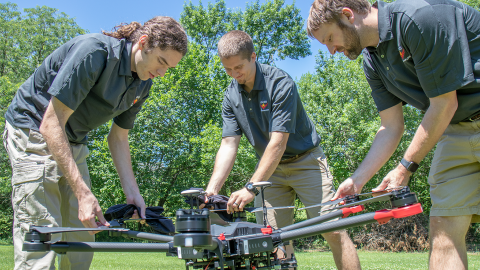
Webinar: Friday, November 8, 2019 from 3PM - 4PM, How Drones are Being Used in Education and STEM Programs
The importance of STEM programs in education continues to increase - and drones have become a growing piece of these programs. This webinar will discuss how various institutions have implemented drones into their STEM education, and will look at the response, struggles and successes of these programs.
UAVOS, Polynesian Navigation team up to develop long-distance autonomous UAS for 3D mapping
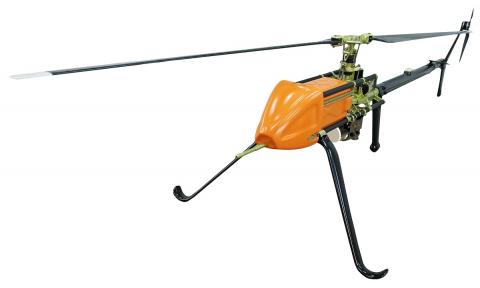
UAVOS and Polynesian Navigation Inc. have collaborated to develop a long-distance autonomous UAS for 3D mapping.
Powered by UAVOS's autopilot, the UVH -25EL unmanned helicopter has increased performance with a carrying capacity, a flying range, and an extended temperature range. A number of its functions are conducted automatically, including take-off and landing, and the actual missions themselves.
“We have been extending into UAV service market to meet its goal of offering state-of-the-art systems that are easy to use and offer excellent cost/performance value to our customers,” says UAVOS CEO Aliaksei Stratsilatau.
Volocopter unveils heavy-lift VoloDrone
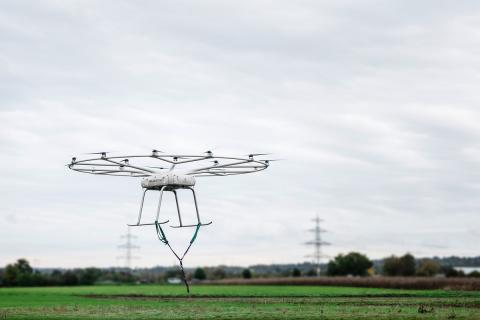
Urban Air Mobility company Volocopter has unveiled the demonstrator of its heavy-lift VoloDrone.
The fully electric utility UAS can carry a payload of up to 440 pounds up to 25 miles. With a standardized payload attachment, the UAS can transport a variety of objects including boxes, equipment and liquids.
“Since the very beginning, we have worked with strategic partners across different industries to develop a product that will provide significant value in their specific use cases,” says Christophe Hommet, chief engineer VoloDrone.
From Unmanned Systems Magazine: Drones, software provide farmers with extra tools to manage complex data
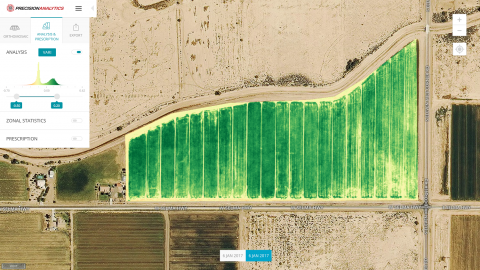
Precision agriculture using drones has become much less about the novelty of having an eye in the sky and much more about fusing data from a variety of sources and platforms — including drones, satellites, ground sensors and others — to enable farmers to make informed decisions.
One company that has become a major player within the farming industry is Toulouse, France-based Delair, which provides visual data management technologies. The company’s cloud-based platform, the Delair.ai platform, allows users to manage, process, view, analyze and collaborate around aerial data.
Drone Delivery Canada to establish drone delivery hub at Edmonton International Airport
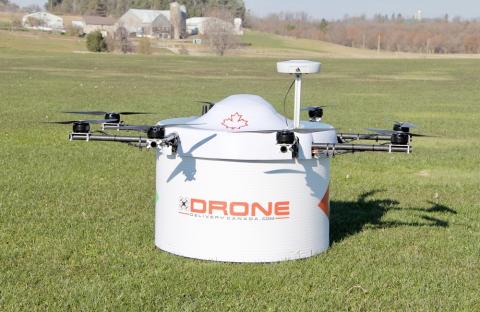
Drone Delivery Canada (DDC) will establish the
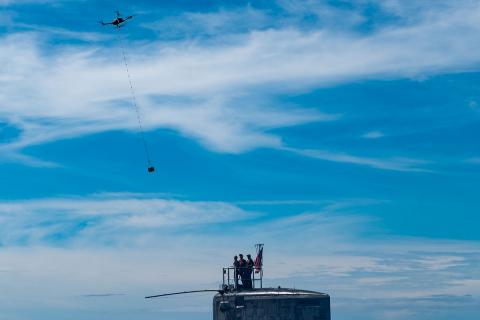
COMSUBPAC, University of Hawaii use UAS to deliver supplies to submarine
On Oct. 10, Commander, Submarine Force, U.S. Pacific Fleet (COMSUBPAC) and the University of Hawaii used a UAS to deliver supplies onto a submarine off the coast of Oahu, a U.S. island in the Central Pacific.
Carrying a five-pound payload that included circuit cards, medical supplies, and food, the UAS took the payload to Virginia-class fast-attack submarine USS Hawaii (SSN 776) while it was underway.
“What started as an innovative idea has come to fruition as a potentially radical new submarine logistics delivery capability,” says Lt. Cmdr. Christopher Keithley, assigned to COMSUBPAC.