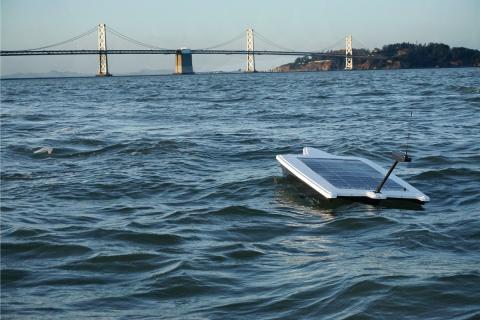
Ocean drone and sensor manufacturer Sofar Ocean Technologies has unveiled its new autonomous surface vehicle (ASV), Strider, which is designed to make ocean data collection more accessible.
Built to operate in coastal, near-shore and inland waters, the Sofar Strider can operate autonomously or remote-controlled through the internet—while integrating with a variety of sensors—thanks to the combination of autonomous navigation, solar power, and a modular design.
The ASV supports customizable payloads, and it is capable of collecting real-time video from above and below the waterline.
Technology
Technology
NUAIR hosts first New York UAS Public Safety Fly-In for public safety officials
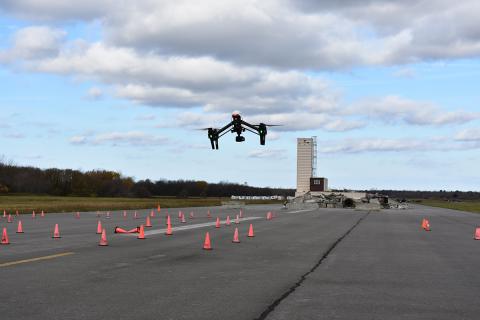
NUAIR hosted its first New York UAS Public Safety Fly-In on Tuesday, Oct. 29.
During the event, which brought together more than 100 public safety officials from across New York State to the State Preparedness Training Center (SPTC) in Oriskany, New York, participants got the chance to learn about and fly UAS in a variety of emergency scenarios that were set up throughout the SPTC.
“Unmanned Aerial Systems have rapidly become a critical component of emergency response operations, making it essential first responders have the training they need to utilize these devices in the field,” explains New York State Homeland Security and Emergency Services Commissioner Patrick A. Murphy.
FlightWave Aerospace's new Jupiter tricopter UAS reminiscent of a 'tough-as-nails pickup truck'
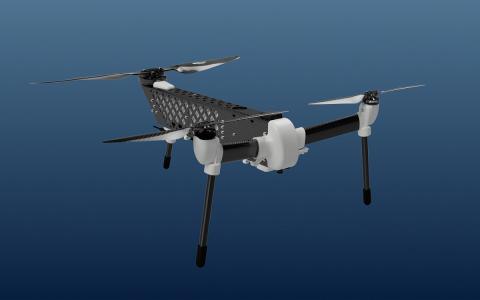
FlightWave Aerospace has launched its new Jupiter tricopter UAS.
Air Data Solutions uses SimActive software to determine financial assistance following Hurricane Dorian
In the aftermath of Hurricane Dorian, Air Data Solutions (ADS) in Florida used SimActive’s Correlator3D software to determine financial assistance.
Before the storm, aerial imagery was collected for pre-hurricane assessment, and following the storm, aerial imagery was collected for damage analysis.
“We have been impressed by the accuracy and speed of Correlator3D to support such a time-critical mission,” says Don Cummins, president of ADS.
“Combined with a high-end aerial sensor, SimActive provides the best tool for emergency response.”

Perrone Robotics, Albemarle County successfully conclude autonomous shuttle trial in Virginia
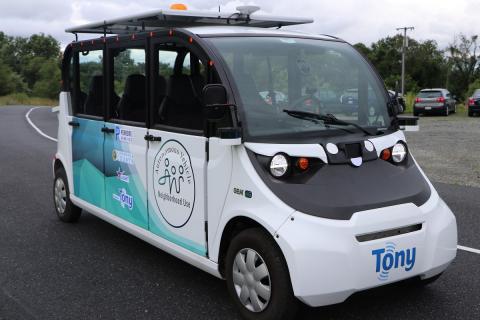
Perrone Robotics Inc. (PRI) and Albemarle County, Virginia recently wrapped up a three-month trial period of free public demonstration rides on the Autonomous Vehicle, Neighborhood Use (AVNU) shuttle.
During the trial, the AVNU shuttle drove fully autonomously—with a safety monitor onboard—on public roads in Crozet, Virginia, navigating a variety of real-world conditions including vehicle, bike, and pedestrian traffic through intersections and roundabouts. The shuttle drove more than 530 miles and carried 750 passengers with no interventions required.
MIT helps automated vehicles see around corners
MIT researchers have developed a system that can sense tiny changes in shadows on the ground to help autonomous systems determine if a moving object is coming around a corner.
This work, funded by the Toyota Research Institute, could one day help keep self-driving cars from hitting other cars or pedestrians or help guide robots through hospital hallways as they deliver medicine or supplies.
MIT researchers conducted experiments with an autonomous vehicle driving around a parking garage and a self-driving wheelchair moving through hallways. in a paper presented at the International Conference on Intelligent Robots and Systems, they said the new system bested traditional lidar systems by more than half a second — not a lot, but enough to forestall accidents.

Drone makes long-distance Norwegian coastal flight through civilian airspaces
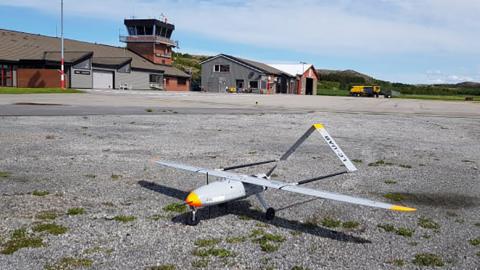
Norway's Maritime Robotics announced that a Penguin B drone owned by the Norwegian Defence Research Establishment concluded a 200 kilometer flight in June, passing through several different types of controlled civil airspace.
The flight demonstrated a new wireless data link technology using phased array antennas from Radionor Communications, as well as a lightweight transponder on the aircraft, all of which was integrated by Maritime Robotics.
The Penguin B took off from Frøya, on Norway's midwestern coast, and flew north to Rørvik, where its landing was assisted by a crew from the Norwegian University of Technology and Science. The flight took two hours and 12 minutes.
Zipline demonstrates medical drone delivery technology during multinational military forces exercises
During multinational forces exercises with the United States Marine Corps (USMC) and the Australian Defense Force (ADF), Zipline successfully forward-deployed to Australia to pilot its life-saving UAS technology.
According to Zipline, the deployment sought to showcase how its logistics network of autonomous delivery UAS could help transform emergency medicine and critical care in conflict, as well as in humanitarian and disaster relief scenarios.
Autonomous shuttles seek to improve transportation options for people with disabilities at Western Michigan University
In an effort to improve transportation options for people with disabilities, autonomous shuttles are being tested on the campus of Western Michigan University (WMU).
Led by Pratt & Miller Engineering, the project is being coordinated and carried out by WMU graduate students Nick Goberville, a mechanical engineering doctoral student, and Johan Rojas, a mechanical engineering master's student.
“We're working on the modeling simulation of the autonomous vehicles,” Rojas says.
“We helped with the mapping, the cost value analysis and with everything needed to make the pilot possible here at Western.”

From Unmanned Systems Magazine: The present and future of Commercial unmanned maritime systems
Autonomous and unmanned maritime systems are being used for a plethora of operations commercially.
Unmanned Systems takes a look at some of the companies creating these platforms and the technologies that power them and gets perspectives from industry leaders on how to inspire the next generation of robotic maritime innovators.
Conveying action
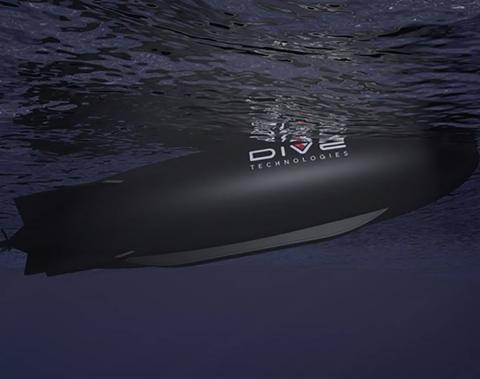
Formed in 2018 by a group of engineers working in the AUV industry, Dive Technologies was launched with the intent of developing a low-cost, large-displacement AUV that could support the emerging needs of commercial and defense customers by being rapidly configured with different payloads and sensors.