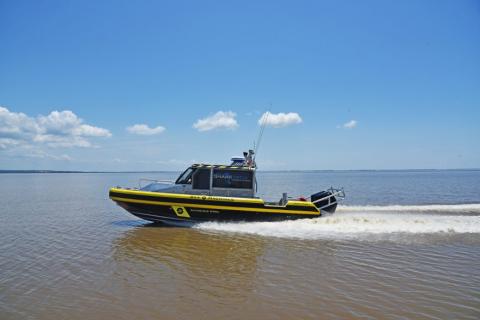
Sea Machines and shipbuilder Metal Shark have introduced a new 29-foot autonomous vessel, the Sharktech 29 Defiant welded-aluminum monohull pilothouse vessel, which is being offered through Metal Shark’s “Sharktech” autonomous division.
The Sharktech 29 Defiant is equipped with OEM-integrated, Sea Machines technology that offers a full range of advanced capabilities, including active control and collision avoidance.
With Sea Machines' system onboard the vehicle, several modes of operation are possible, including traditionally manned, reduced-crew or unmanned autonomous operations to deliver “human-in-the-loop” navigation during both line-of-sight and over-the-horizon operations.
Technology
Technology
Speakers highlight importance of Remote ID rulemaking, safe operations during Hill Day
One of the biggest topics of discussion during AUVSI’s annual Hill Day on Wednesday, Sept. 25 was remote identification and the progress, or lack thereof, on this rulemaking.
“This is one issue we’re not going to let up on,” said Rep. Daniel Lipinski.
Like many in the UAS community, Lipinski, who co-chairs the House UAS Caucus, believes the FAA is moving too slow on the rules for remote ID. These sentiments were echoed by Rep. Sam Graves, the ranking member of the House Transportation and Infrastructure Committee.
“I think that has a lot to do with the simple fact that I don’t think they really know which direction they’re going,” Graves said.

FLIR Systems introduces multi-gas detector for UAS
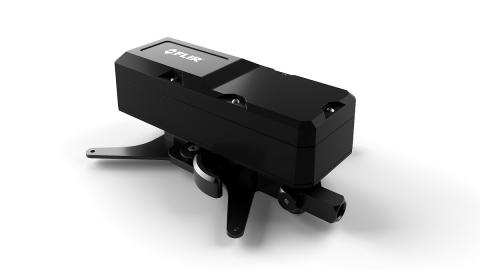
FLIR Systems has introduced the FLIR MUVE C360, which the company describes as the industry’s first multi-gas detector built specifically for UAS.
Currently compatible with the DJI Matrice 210 UAS platform, the MUVE C360 is designed to change the approach of emergency response teams when they are dealing with chemical, industrial, or environmental incidents by providing a new level of safety, significantly reducing time to action, and delivering a more complete assessment in situations where time is of the essence.
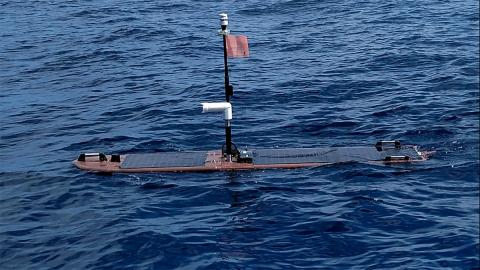
AUVSI's Unmanned Systems and Robotics Database: An overview of commercial unmanned maritime vehicles
Unmanned vehicles operating in the maritime domain can be grouped into three main categories: Autonomous Underwater Vehicles (AUVs), Remotely Operated Vehicles (ROVs), and Unmanned Surface Vehicles (USVs). Each vehicle type offers unique capabilities which support a wide range of commercial applications.

HiDRON stratospheric glider completes record-setting stratospheric flight
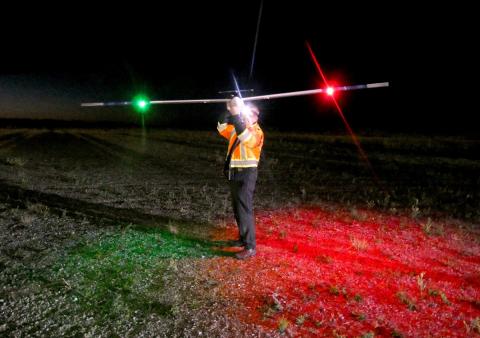
UAVOS and Stratodynamics have announced that their HiDRON stratospheric glider has completed a record-setting stratospheric flight.
Released from a Canadian Space Agency scientific gondola at an altitude of 111,434 feet, the glider performed a four hour controlled flight, eventually landing at Iroquois Falls Airport, which is about 80 kilometers from the Timmins, Ontario launch site.
Oceans Unmanned, DARTDrones train NOAA personnel on UAS operations
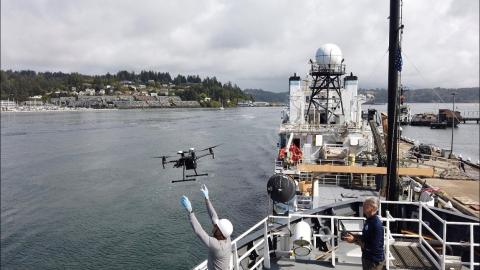
Seven NOAA ship officers and Navigation Response Team members recently received training on UAS operations from Oceans Unmanned and DARTDrones at the NOAA Marine Operations Center in Newport, Oregon.
Conducted over the course of two days, training included classroom instruction, as well as hands-on flights that focused on research and mapping missions conducted from vessels. Students also practiced launch and recovery procedures, and programmed mapping missions from the deck of the NOAA Ship Hi‘ialakai while alongside the marine facility.
DroneResponders launches DroneResponders International Advisory Council
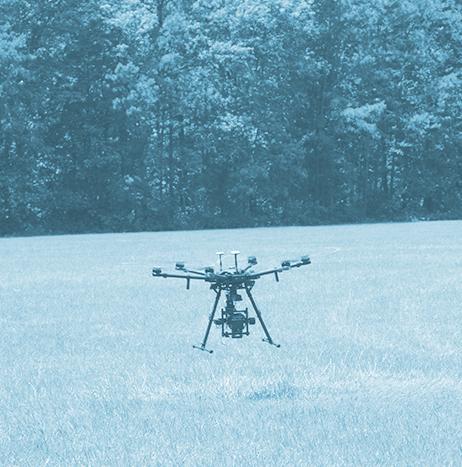
To serve the “rapidly expanding constituency of international members joining the DroneResponders movement,” the DroneResponders Public Safety Alliance has created the DroneResponders International Advisory Council (DIAC).
According to DroneResponders Director Charles Werner, the DIAC’s primary mission is to help formalize the plan for how DroneResponders can best serve members that represent a wide range of regions, languages, and cultural traits, with an ultimate goal of “building bridges facilitating information sharing and interoperability across borders.”
Right now, the DIAC is having conversations with several international members that have expressed interest in serving in a leadership capacity for the organization.
Schiebel's Camcopter S-100 UAS completes maritime surveillance demonstration in Finland
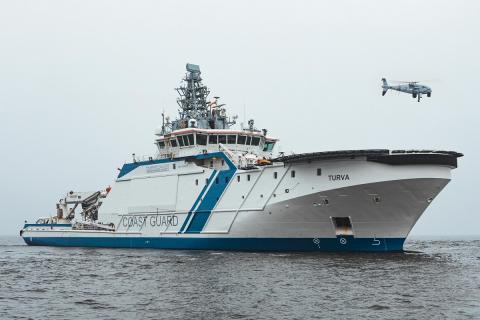
Schiebel has announced that in late August, its Camcopter S-100 UAS performed a five-day maritime surveillance demonstration aboard Offshore Patrol Vessel (OPV) Turva in the Gulf of Finland, as part of test trials by the Border and Coast Guard Division of the Finnish Border Guard.
Flying both during the day and at night, the UAS completed a variety of tasks including searching, locating and recognizing objects, as well as surveillance for maximum situational awareness.
The test was part of the ongoing Valvonta2 -project (Surveillance2), which is being led by Finnish Border Guard, and funded by European Maritime and Fisheries Fund (EMFF).
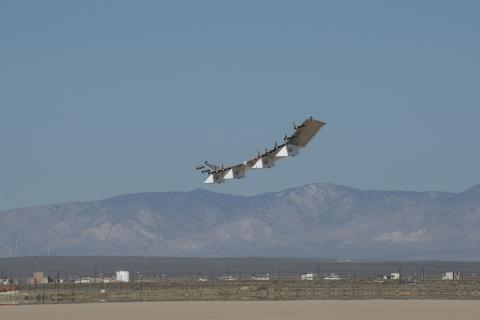
HAWK30 solar HAPS UAS successfully completes first flight
AeroVironment has announced that on Sept. 11, the HAWK30 solar HAPS UAS successfully completed its first flight at the NASA Armstrong Flight Research Center in California.
Funding for the design development and demonstration of the UAS comes from HAPSMobile Inc., which is a joint venture created by AeroVironment and SoftBank Corp.
“The first flight of HAWK30 builds on more than two decades of pioneering HAPS technology development and demonstration by the AeroVironment team, and comes only two years since SoftBank joined us in this endeavor,” says Wahid Nawabi, AeroVironment president and chief executive officer.