
The FAA has granted the Kansas Department of Transportation (KDOT) Division of Aviation authorization to conduct UAS test flights at Wichita Dwight D. Eisenhower National Airport in Wichita, Kansas beginning Monday, Sept. 16.
Several inspection missions are planned, including foreign object detection, wildlife hazard management and airfield emergency response. Operations will be conducted as part of the UAS Integration Pilot Program (IPP).
“This FAA approval will significantly improve airport efficiency and safety,” says KDOT Director of Aviation Bob Brock.
Technology
Technology
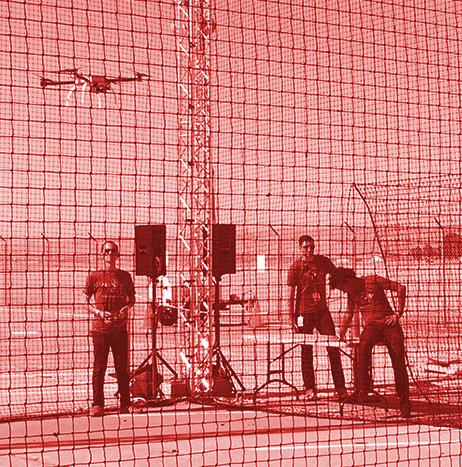
From Unmanned Systems Magazine: FAA developing a menu of new rules to oversee the booming unmanned aviation sector
The FAA’s efforts to oversee commercial and recreational unmanned aircraft systems seem to be growing almost as quickly as the industry itself.
With more than 1.4 million UAS now registered with the FAA, a statistic that did not even exist until a few years ago, the agency is pursuing several regulatory and other initiatives to manage the increasing traffic to ensure safe and efficient operations.
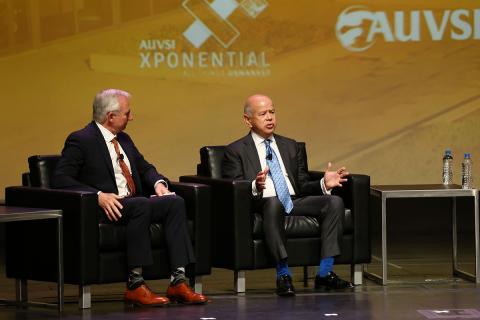
“This is a fast-moving industry, and we’re doing our level best to keep up,” then-acting FAA Administrator Daniel Elwell said in a June speech. “The trick is to mitigate safety risks without putting the cuffs on technological and operational advances.”
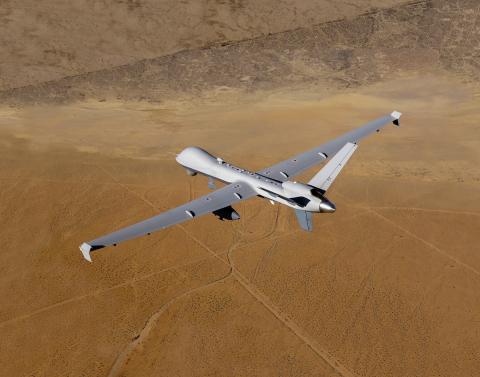
U.S. Marine Corps successfully utilizes MQ-9A Reaper UAS during year of accomplishments
The U.S. Marine Corps’ (USMC) Marine Unmanned Aerial Vehicle Squadron 1 (VMU-1) has spent the last year completing a series of firsts thanks in large part to its use of GA-ASI's MQ-9A Reaper UAS.
The winner of the 2018 Marine Corps Aviation Association Unmanned Aircraft Squadron of the Year, VMU-1 relied heavily the MQ-9A Reaper UAS to complete many of its accomplishments. Over a 12 month period, the UAS has flown more than 4,800 flight hours of direct support reconnaissance.
Equipped with multi-sensor reconnaissance, the MQ-9A provided USMC’s forward operations critical support on the battlefield, while also serving as a proof of concept for the Deputy Commandant’s Marine Aviation Plan.

Verizon's 5G Ultra Wideband network now live at University of Michigan's autonomous vehicle test facility
Verizon has announced that its 5G Ultra Wideband network is now live at the University of Michigan’s test bed for driverless cars, the Mcity Test Facility.

Lockheed Martin, Raytheon successfully fire Javelin missiles from remote launcher mounted on UGV
The Javelin Joint Venture team, which is a partnership between Lockheed Martin and Raytheon, has announced that it successfully fired Javelin missiles from a Kongsberg remote launcher mounted on a Titan UGV during demonstrations at the U.S. Army Redstone Test Center, Alabama.
The Javelin Joint Venture team describes Javelin as a “versatile one-man-portable and platform-employed anti-tank and multi-target precision weapon system.”
“Javelin is ready to support emerging military robotic vehicle requirements,” says Sam Deneke, Raytheon Land Warfare Systems vice president. “Remotely operated technology like this protects soldiers in battle.”

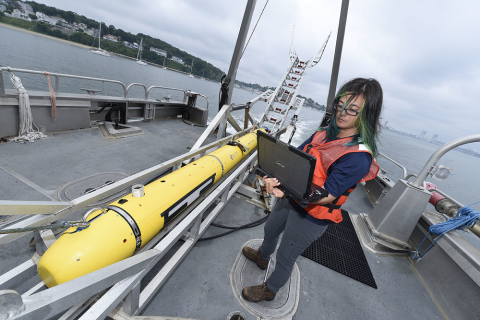
General Dynamics Mission Systems introduces new Bluefin-12 autonomous UUV
During Defense and Security Equipment International (DSEI) 2019, General Dynamics Mission Systems introduced its new Bluefin-12 autonomous UUV.
Building off of the Bluefin autonomy, the Bluefin-12 is capable of completing long endurance, high-consequence and changing missions for users by leveraging shared Bluefin Robotics' core capabilities, increased mission modularity and embedded intelligence.
AIRT uses UAS to perform damage assessment operations in the Bahamas following Hurricane Dorian
Members of the Airborne International Response Team (AIRT) formed a joint-reconnaissance team with members of the Southeast Florida Region 7 All-Hazards Incident Management Team (SEFL-R7 AHIMT) to survey damage across the hardest hit areas of the Grand Bahama and the Abaco Islands in the Northern Bahamas following Hurricane Dorian.
Using UAS, the team conduced damage assessment operations at the University of the Bahamas – Northern Campus, and nearby neighborhoods that were hit hard by the deadly hurricane.
“We saw first-hand the damage that this hurricane leveled upon the Bahamas,” says Nigel Baker, team coordinator and incident commander of SEFL-R7 AHIMT.

Trillium Engineering successfully tests new video processor for tactical UAS
Trillium Engineering, a developer of gimbaled camera systems for small UAS, has announced that it has successfully conducted a test flight of a new video processor that it says will “dramatically improve” the operation of Group 2 UAS.
According to Trillium, tactical UAS typically use full-motion video camera systems that rely on an H.264 video compression codec standard, which results in a picture that is “good enough” for close targets. When the UAS operates at long ranges from the ground station, though, the bit rate to the operator is reduced, resulting in important details in the imagery being fuzzy.
Black Swift Technologies unveils Automated Emergency Safe Landing functionality for UAS
Black Swift Technologies (BST) has announced its Automated Emergency Safe Landing (AESL) functionality for UAS.
When equipped with the functionality, Black Swift’s S2 UAS is able to capture and classify images, at altitude, which allows UAS to autonomously identify a safe landing area in the event that something goes wrong, which the company notes is extremely important for safe beyond line of sight (BLOS) flights.
BST adds that this functionality processes large amounts of data quickly and efficiently, allowing objects and terrain to be identified to be avoided in order to land the aircraft without harm to people or property.