A company called Loveland Innovations has announced the launch of the beta version of IMGING Detect, a “deep learning engine built specifically for drone-based inspections.”
Deep learning is an “advanced approach to artificial intelligence (A.I.) that allows IMGING to “learn” as it gathers more data,” Loveland explains, which makes IMGING “more sophisticated and accurate each time it’s used.”
Loveland says that this capability has “vast implications” for a variety of applications such as, but not limited to, damage detection and object and materials detection. Loveland adds that IMGING’s proprietary damage detection algorithms are the “most advanced currently available” to the UAS-based roof, building and property inspection space.
Artificial Intelligence
Artificial Intelligence
Artificial Intelligence, trust in unmanned systems among the focuses of Day 2 of USDPS
Trust in unmanned systems – particularly autonomous ones – was among the hot topics for the second day of Unmanned Systems Defense. Protection. Security, which was delayed due to icy weather but soon warmed up with some hot topics.
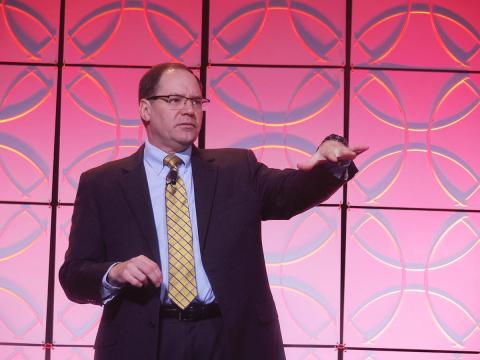
“Change is coming faster than we think,” said keynote speaker Army Lt. Gen Edward C. Cardon, director of the Office of Business Transformation in the Office of the Under Secretary of the Army. “The combination of all of these technologies is going to have a huge impact on the operations for not just the joint force, but for the entire Army.”
Connecting Cars, Connecting Users: Challenges and Opportunities Offered by Automated Vehicles
Recently a range of diverse companies have launched high-profile automated vehicle programs and have begun describing their implementation plans. As automated vehicles gain traction and garner headlines, complex questions have arisen in the automated vehicles community, some of which were expected and others more surprising.
Innovators are exploring seemingly next-gen possibilities today. Ideas such as driverless delivery, smart roads, and AI are becoming actualities. This webinar will explore these topics and more, as industry leaders discuss their visions for future mobility and what it holds for road users.
Who Should Attend

NASA drone race pits artificial intelligence against professional human pilot
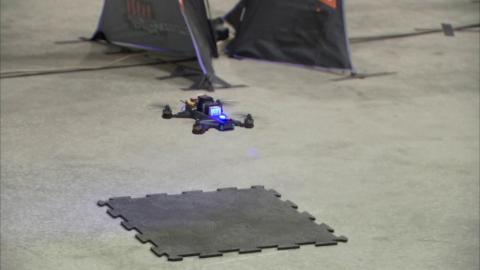
On Oct. 12, researchers at NASA's Jet Propulsion Laboratory (JPL) in Pasadena, California conducted a drone race in which they timed laps through a twisting obstacle course as they raced UAS controlled by artificial intelligence (A.I.) against a world-class drone pilot named Ken Loo.
The race capped off two years of research into UAS autonomy funded by Google. Google was interested in JPL's work with vision-based navigation for spacecraft, which are technologies that can also be utilized by UAS. To showcase the team’s progress, a timed trial between JPL’s A.I. and Loo was set up.
The Sky Guys and partners to develop UAS platform to monitor highways in Ontario
A Canadian provider of UAS technology and systems called The Sky Guys has teamed up with NVIDIA, IBM and the University of Toronto to develop an artificial intelligence (AI)-enabled UAS platform to monitor Ontario’s 400-series highways, in response to the Vehicle Occupancy Detection Problem Statement from the Small Business Innovation Challenge.
Working closely with the Ministry of Transportation of Ontario (MTO) to develop this platform, the entities will complete this application, known as the “Long-Range AI-Enabled Unmanned Aerial System for Highway Traffic Enforcement with Future Road Applications,” using a $750,000 award from Ontario Centres of Excellence (OCE), as part of the Small Business Innovation Challenge (SBIC).

Nissan tests autonomous driving technology in Tokyo
Nissan has demonstrated a prototype of its most advanced autonomous driving technology, known as ProPILOT, on the roads in Tokyo, Japan.
The technology was tested on a modified INFINITI Q50 sports sedan.
A vehicle equipped with Nissan's ProPILOT technology can operate autonomously on urban roads and freeways, starting at the beginning of the vehicle’s journey when a destination is chosen by the driver using the navigation system, until the vehicle arrives at its destination.

UAVOS improves algorithms of GPS spoofing identification
UAVOS Inc. has announced that it has “improved the algorithms of GPS spoofing identification while jamming with the most advanced EW systems.”
During test flights conducted “under conditions of electronic attacks,” UAS equipped with a UAVOS-manufactured automatic control system managed to regularly resist “attempts to interfere with the operation of the on-board GPS autopilot.”
Thanks to “newly updated technical solutions” for electronic protection equipment and UAVOS’ automated control system, effective countermeasures against the latest GPS spoofing was provided.
This prevented the enemy from re-routing a UAS or destabilizing the operation of its on-board navigation system.
University of California, Riverside receives grant to develop AI for UAS
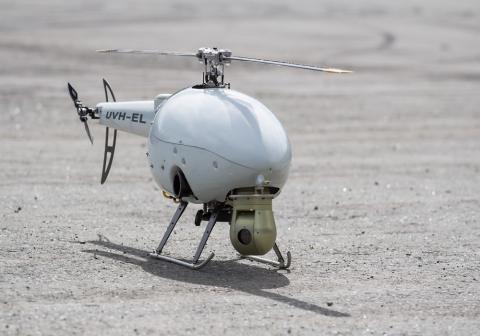
The University of California, Riverside (UC Riverside) will develop artificial intelligence (AI) for UAS, using a $1 million grant from the National Science Foundation.
AI in UAS would one day allow the robots to conduct “far-reaching reconnaissance missions”— such as search and rescue missions, and environmental and security monitoring—without direct human control.
Amit Roy-Chowdhury, professor of electrical and computer engineering, and the principal investigator in the grant, would like to create programs that allow UAS to act on their own, such as by zooming in on a certain object.
Michigan State University and ZF partner to address potential cybersecurity issues surrounding autonomous vehicles
Michigan State University (MSU) College of Engineering will work with a German auto parts maker called ZF to develop new methods to address potential cybersecurity threats that autonomous vehicles might face in the future.
In an effort to deal with automotive cybersecurity and safety issues, Betty H.C. Cheng, professor of computer science and engineering, will work with ZF to develop a cybersecurity method to help “identify, mitigate and/or prevent threats to automotive systems.”
“We’ll develop a set of reusable design patterns and quality assurance techniques that are amenable to automated analysis,” Cheng says.
NVIDIA unveils world's first AI computer designed to drive fully autonomous robotaxis
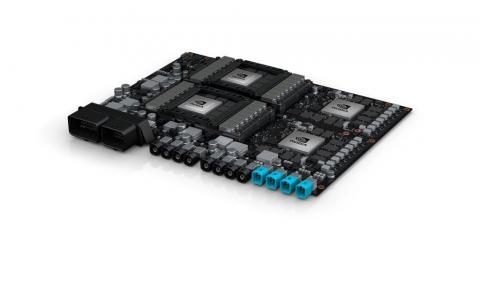
NVIDIA has unveiled the world's first artificial intelligence computer, codenamed Pegasus, which is designed to drive fully autonomous robotaxis that can transport passengers to their destinations, and provide mobility to everyone.
Designed for ASIL D certification—the industry's highest safety level—Pegasus extends the NVIDIA DRIVE PX AI computing platform to handle Level 5 driverless vehicles.
NVIDIA says that the NVIDIA DRIVE PX Pegasus will “help make possible a new class of vehicles that can operate without a driver -- fully autonomous vehicles without steering wheels, pedals or mirrors, and interiors that feel like a living room or office.”