Newly minted Deputy Secretary of Defense Kathleen Hicks has a bold vision for our nation’s military forces, and AUVSI has found many aspects of this new stance to celebrate.
A career civil servant with significant defense policy experience, she is our nation’s first female Deputy Secretary of Defense. Most important among her stated priorities include modernizing the country’s military forces, with an emphasis on autonomous systems and artificial intelligence.
Artificial Intelligence
Artificial Intelligence
Weekend Roundup: December 18, 2020
This week in the Unmanned Systems and Robotics World
Skydio has announced the general availability of a broad set of advanced AI-pilot assistance capabilities for enterprise and public sector operators called Skydio Autonomy Enterprise Foundation (AEF). According to Skydio, AEF optimizes the Skydio 2 drone for professional use in a wide range of missions, including outdoor/indoor inspections, search and rescue, emergency response, security patrol, and situational awareness. (Skydio)

Conversations with AUVSI: Miso Robotics
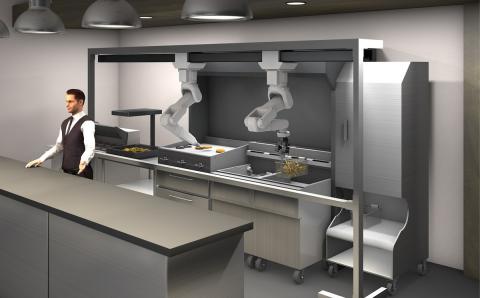
Miso Robotics is creating innovative robotics and artificial intelligence solutions designed to revolutionize the restaurant and prepared food industries. The company was founded with a mission to leverage AI technology to help chefs cook food perfectly and consistently and enable restaurants to increase labor productivity, reduce costs and drive profitability while improving the overall dining experience.
In the fourth edition of “Conversations with AUVSI,” Buck Jordan, president and chairman of Miso Robotics, took the time to answer some questions about Miso Robotics’ background, the company's robotic kitchen assistant, Flippy, and the company’s various partnerships with different restaurants and kitchens.
Dr. Cara LaPointe provides an overview of Assured Autonomy, the theme of Xponential 2021
As autonomy and artificial intelligence continue to be integrated into systems across society, making sure these systems work properly continues to be of the utmost importance.
“It’s really important to make sure these systems work like they’re supposed to, but it can be really hard,” says Dr. Cara LaPointe, co-director, Institute for Assured Autonomy, Johns Hopkins University Applied Physics Laboratory.
The goal is to reach a point of assured autonomy, where people can be confident that the autonomous systems around them are, and will, operate the way they are designed to. Reaching this point requires making sure that these systems are safe, secure, resilient and capable of operating within an ecosystem alongside humans and other technologies.

Brain Corp's manufacturing partners deploy autonomous delivery tugs across the U.S.
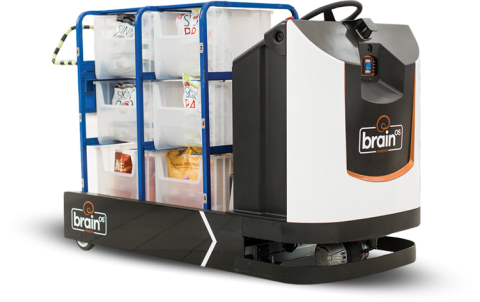
Artificial intelligence software technology company Brain Corp has announced that its manufacturing partners are involved in several pilots and initial deployments of autonomous delivery tugs powered by BrainOS, which is Brain Corp’s cloud-connected operating system for commercial autonomous robots.
According to Brain Corp, these commercial rollouts mark the industry debut of a “new robotic application that helps retailers bridge the automation gap in moving inventory from the stockroom out to store shelves.”
White Castle to equip its kitchens with Miso Robotics' Flippy autonomous grilling and frying kitchen assistant
America’s first fast-food hamburger chain, White Castle, has announced plans to pilot Miso Robotics' Robot-on-a-Rail (ROAR) autonomous grilling and frying kitchen assistant to accelerate the adoption of artificial intelligence and robotics in the restaurant industry.
ROAR, which is the new version of Flippy—the first autonomous grilling and frying kitchen assistant from Miso Robotics—will be integrated into kitchens for testing and future integration. During the deployment, autonomous frying will be put to work to enhance production speeds, improve labor allocation and provide an added layer of health and safety in the cooking process.
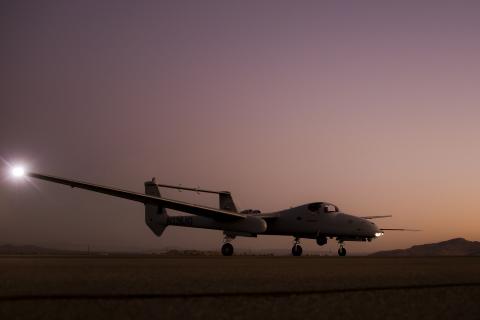
Northrop Grumman's Firebird demonstrates multi-mission capabilities during recent exercise
Northrop Grumman has announced that it recently completed a series of mission focused engagements, including integration and testing of Overwatch Imaging’s TK-9 Earthwatch sensor on its Firebird system.
A provider of automated airborne imaging systems for piloted and unmanned aircraft, Overwatch Imaging's TK-9 Earthwatch sensor is equipped with a flexible onboard AI-enabled automatic image processing engine that allows the system to quickly adapt to new roles in new environments such as natural disaster emergency management, border security patrol, or large-scale infrastructure inspection.
Mercedes-Benz, NVIDIA to create new software-defined architecture to enable autonomous driving
Mercedes-Benz and NVIDIA have announced that they will work together to create a 'revolutionary' in-vehicle computing system and artificial intelligence (AI) computing infrastructure.
Expected to be rolled out across the fleet of next-generation Mercedes-Benz vehicles starting in 2024, the technology will equip the vehicles with upgradable automated driving functions.
The new software-defined architecture will be built on the NVIDIA DRIVE platform. It will be standard in Mercedes-Benz’s next-generation fleet, enabling state-of-the-art automated driving functionalities.

Milrem Robotics, John Cockerill Defense showcase Type-X Robotic Combat Vehicle
In front of select military forces from across the globe, Milrem Robotics and John Cockerill Defense showcased the Type-X Robotic Combat Vehicle with the Cockerill Protected Weapons Station Gen. II (CPWS II).
The Type-X chassis features what the companies describe as a “revolutionary design” for a mobile modular multi-mission vehicle that provides a platform for a family of unmanned armored vehicles. According to the companies, the Type-X is the “first combat vehicle that is purposefully designed to be unmanned intended to be an integral part of mechanized units.”

BAE Systems to provide autonomy and artificial intelligence capabilities for DARPA's Squad X program
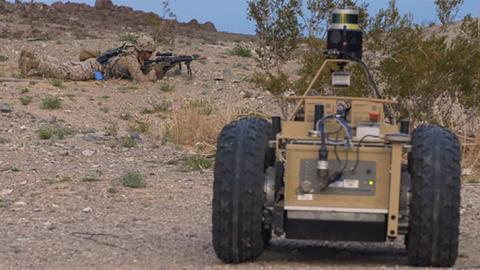
Lockheed Martin, the prime contractor for DARPA’s Squad X program, has awarded BAE Systems a $3.5 million contract to provide key autonomy and artificial intelligence capabilities that would not only advance the effectiveness of tactical robotic air and ground vehicles, but also create true partnerships between ground warfighters – Soldiers and Marines – and machines at the small-unit level.