This Week (and last week) in the Unmanned Systems and Robotics World
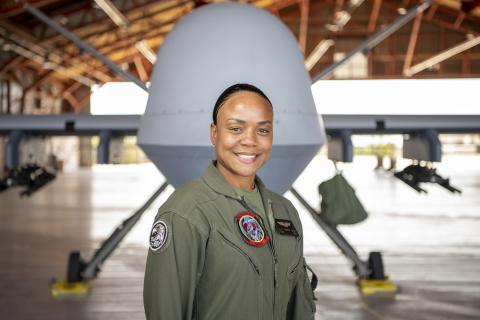
On Aug. 18, U.S. Marine Corps Capt. Shaneka Shaw, Unmanned Aerial Vehicle Squadron-1 (VMU-1), a weapons and tactics instructor (WTI), graduated from the MQ-9 Basic and Requalification/Transition Course 2 class 20-03, and became the first Black female Marine qualified to fly MQ-9 Reapers at Holloman Air Force Base, New Mexico. Shaw spent 55 training days learning to fly the MQ-9 at Holloman. (Air Education and Training Command)
Autonomous Vehicles
Autonomous Vehicles
Pony.ai, Bosch to explore future of automotive maintenance and repair for autonomous fleets
Pony.ai and Bosch have announced an agreement to explore the future of automotive maintenance and repair for autonomous fleets.
To enable the efficient and scalable operation of future commercial autonomous fleets, Pony.ai and Bosch say that their Automotive Aftermarket division in North America plans to develop and pilot “innovative fleet maintenance solutions.”
Bosch operates the Bosch Car Service network, which turns 100 next year. The network is the oldest and largest automotive repair and maintenance network with over 20,000 locations across the world.

Conversations with AUVSI: Beep
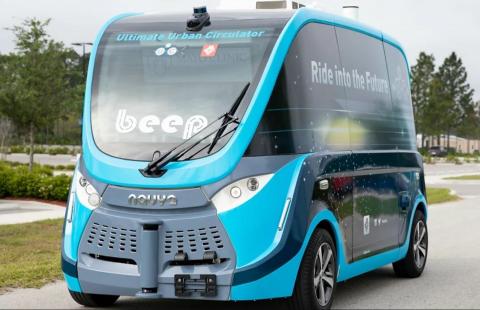
Beep is a Florida-based autonomous mobility solution company delivering the next generation of services for passenger mobility to fleet operators in planned communities and low speed environments across the public and private sector, including transportation hubs, medical and university campuses, town centers and more. From route planning to interactive managed services, Beep's offerings are designed to drive differentiation and innovation, and delight the passengers of its customers.
In the second edition of "Conversations with AUVSI," Beep CEO Joe Moye took the time to answer some questions about the company’s background, its various pilot programs, and the work it has done during the COVID-19 pandemic. This interview was conducted in mid-August.
Weekend Roundup: August 14, 2020
This Week in the Unmanned Systems and Robotics World
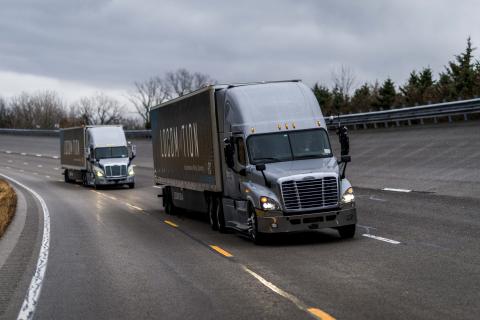
Autonomous trucking startup Locomation announced this week that it has successfully completed its first on-road pilot transporting commercial freight. In partnership with Aon, a risk management consultancy, and Wilson Logistics, a transportation logistics company, Locomation deployed two trucks hauling trailers in a driverless convoy on a 420-mile-long route stretching from Portland to Nampa, Idaho along I-84. (VentureBeat)
Weekend Roundup: August 7, 2020
This Week in the Unmanned Systems and Robotics World
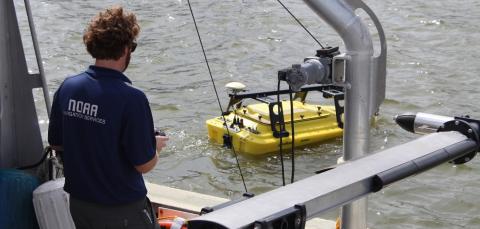
The National Oceanic and Atmospheric Administration (NOAA) and the U.S. Navy have signed a new agreement to jointly expand the development and operations of unmanned maritime systems in the nation’s coastal and world’s ocean waters. Through the agreement, NOAA will accelerate its science, service and stewardship mission by leveraging the Navy’s expertise, infrastructure, best practices and training. (NOAA)
AVS speakers emphasize importance of uniform legislation, safety for autonomous vehicles
From helping address the driver shortage currently plaguing the trucking industry to transporting passengers to and from their destinations, autonomous vehicles (AV) have no shortage of potential use cases for the present and beyond.
“As autonomous technology comes to market, it’ll have a broad and positive impact on the overall industry,” said Shawn Kerrigan, co-founder and chief operating officer of self-driving truck technology company Plus.ai, during the Automated Vehicle Symposium (AVS).
Before these vehicles can hit the roads at scale, though, there first needs to be some sort of uniform legislation to guide this technology, many speakers noted during AVS, which took place as a fully virtual show this year.

Florida Poly researchers turning disused golf cart into solar-powered autonomous vehicle
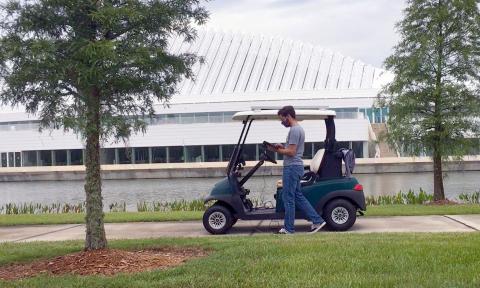
In an effort to “advance cutting-edge research for years to come,” a team of researchers at Florida Polytechnic University (Florida Poly) is turning a disused golf cart into a solar-powered autonomous vehicle.
Funded by the University’s Advanced Mobility Institute, the project will support a $350,000 National Science Foundation award to develop a large-scale Hardware-in-the-Loop simulation facility for connected and autonomous vehicles (CAV).
Weekend Roundup: July 31, 2020
This Week in the Unmanned Systems and Robotics World
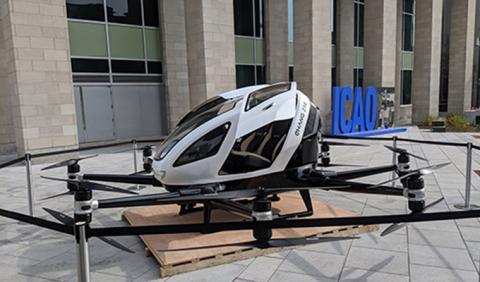
Canada’s civil aviation authority, Transport Canada Civil Aviation (TCCA), has issues a Special Flight Operations Certificate (SFOC) to EHang for its EHang 216 autonomous aerial vehicle (AAV). In addition to this announcement, EHang has also announced plans to build a new AAV production facility in Yunfu city in Guangdong, China.
Beep, Local Motors partner to expand number of AV shuttles on public and private roads
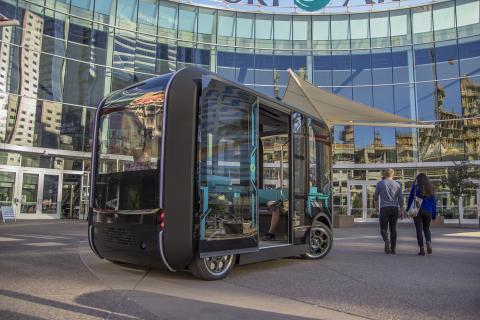
Florida-based autonomous Mobility-as-a-Service (MaaS) provider Beep and Local Motors by LM Industries have announced a strategic partnership and new reseller agreement.
Through the collaborative agreement, the companies will seek to significantly expand the number of autonomous shuttles on both public and private roads, which will not only offer more people autonomous transportation options, but also enhance the rider experience through continued testing and safe deployments.
Weekend Roundup: July 24, 2020
This Week in the Unmanned Systems and Robotics World
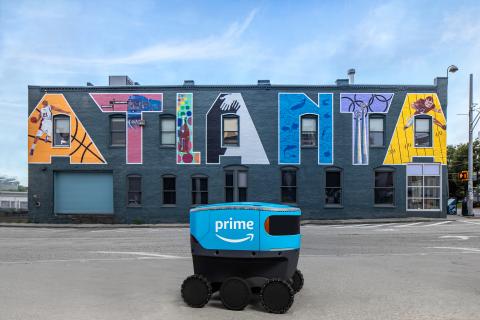
Amazon has announced that its Scout delivery robots have made their way down south and are now operating in two new locations. The robots have begun delivering packages to select customers in Atlanta, Georgia and Franklin, Tennessee. (The Amazon Blog: Day One)