Autonomous Vehicles
Autonomous Vehicles
Jacksonville Transportation Authority tests autonomous vehicle designed for those with disabilities
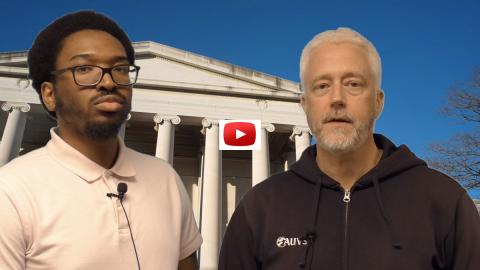
On Thursday, Oct. 31, the Jacksonville Transportation Authority (JTA) tested what it is calling the first Americans with Disabilities Act (ADA) accessible autonomous vehicle in the United States.
JTA has made ADA accessibility a requirement for the Ultimate Urban Circulator (U2C) autonomous vehicle program, which is a multi-phased program that will convert and expand Skyway monorail cars into an autonomous vehicle network.
“It needs to be something that all of our customers and citizens can easily utilize,” JTA CEO Nathaniel P. Ford Sr. said via WJCT.org.
Toyota Research Institute to test its P4 automated driving test vehicle in Tokyo next summer
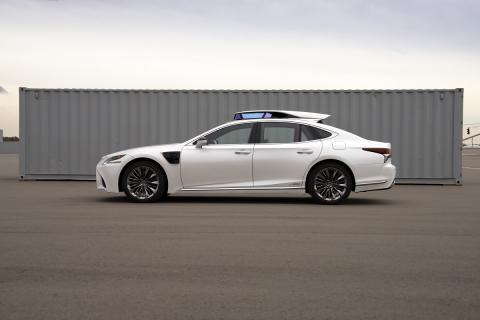
Next summer, Toyota Research Institute’s (TRI) Platform 4 (P4) automated driving test vehicle will be tested on public roads in Tokyo, offering select individuals the chance to experience the technology first hand.
Based on the fifth-generation Lexus LS sedan, the P4 test vehicle, which will have a safety driver present in the vehicle at all times, will operate in a waterfront subcenter called Odaiba district, which is described as “busy and often congested.” TRI says that Odaiba presents a “complex environment” with a variety of challenges that make it ideal for demonstrating the capabilities of Toyota’s automated driving technology.
Sofar Ocean Technologies unveils Strider ASV
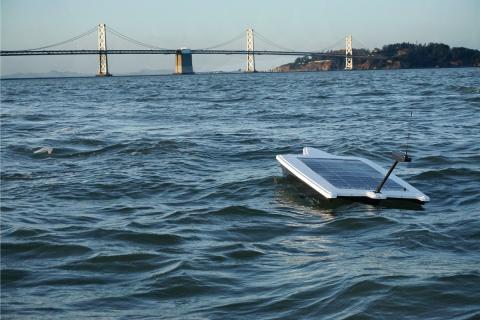
Ocean drone and sensor manufacturer Sofar Ocean Technologies has unveiled its new autonomous surface vehicle (ASV), Strider, which is designed to make ocean data collection more accessible.
Built to operate in coastal, near-shore and inland waters, the Sofar Strider can operate autonomously or remote-controlled through the internet—while integrating with a variety of sensors—thanks to the combination of autonomous navigation, solar power, and a modular design.
The ASV supports customizable payloads, and it is capable of collecting real-time video from above and below the waterline.
Perrone Robotics, Albemarle County successfully conclude autonomous shuttle trial in Virginia
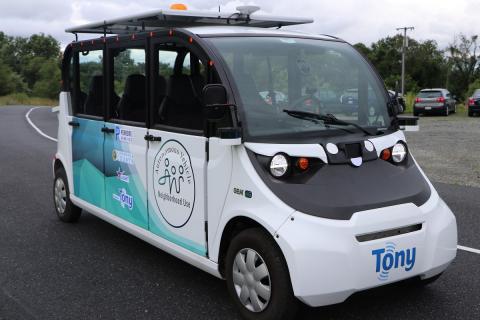
Perrone Robotics Inc. (PRI) and Albemarle County, Virginia recently wrapped up a three-month trial period of free public demonstration rides on the Autonomous Vehicle, Neighborhood Use (AVNU) shuttle.
During the trial, the AVNU shuttle drove fully autonomously—with a safety monitor onboard—on public roads in Crozet, Virginia, navigating a variety of real-world conditions including vehicle, bike, and pedestrian traffic through intersections and roundabouts. The shuttle drove more than 530 miles and carried 750 passengers with no interventions required.
MIT helps automated vehicles see around corners
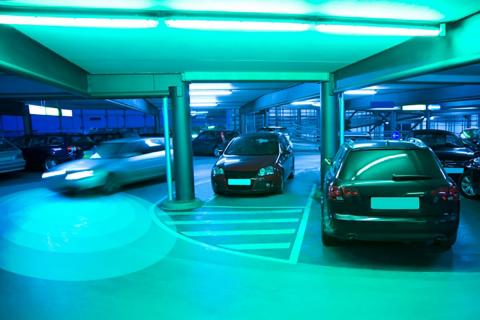
MIT researchers have developed a system that can sense tiny changes in shadows on the ground to help autonomous systems determine if a moving object is coming around a corner.
This work, funded by the Toyota Research Institute, could one day help keep self-driving cars from hitting other cars or pedestrians or help guide robots through hospital hallways as they deliver medicine or supplies.
MIT researchers conducted experiments with an autonomous vehicle driving around a parking garage and a self-driving wheelchair moving through hallways. in a paper presented at the International Conference on Intelligent Robots and Systems, they said the new system bested traditional lidar systems by more than half a second — not a lot, but enough to forestall accidents.
Autonomous shuttles seek to improve transportation options for people with disabilities at Western Michigan University
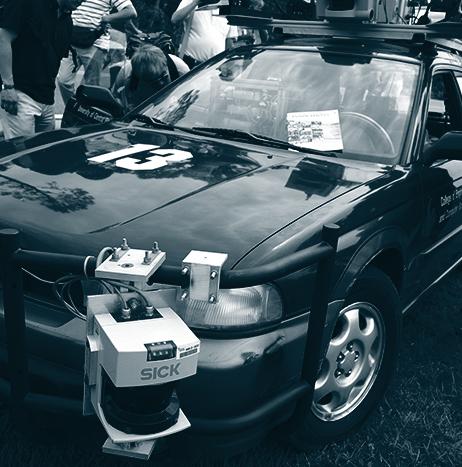
In an effort to improve transportation options for people with disabilities, autonomous shuttles are being tested on the campus of Western Michigan University (WMU).
Led by Pratt & Miller Engineering, the project is being coordinated and carried out by WMU graduate students Nick Goberville, a mechanical engineering doctoral student, and Johan Rojas, a mechanical engineering master's student.
“We're working on the modeling simulation of the autonomous vehicles,” Rojas says.
“We helped with the mapping, the cost value analysis and with everything needed to make the pilot possible here at Western.”

State Farm joins Arizona's Institute of Automated Mobility
State Farm has become the first insurance company to join the Institute of Automated Mobility (IAM), a consortium that is overseen by the Arizona Commerce Authority.
Established by executive order in October 2018 by Arizona Governor Doug Ducey, IAM is a collaborative effort involving experts from private industry, government and academia that are working together to “advance research in automated vehicle science, safety and policy.”
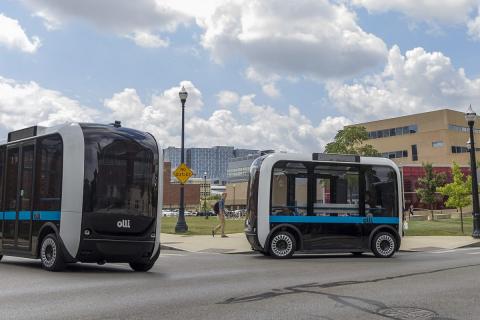
Local Motors' Olli autonomous shuttle seeks to solve 'first mile, last mile' challenge in San Francisco
To address the “first mile, last mile” challenge that commuters in the San Francisco Bay Area face every day, Local Motors, AAA Northern California and the Contra Costa Transportation Authority (CCTA) will test Local Motors’ Olli autonomous shuttle to see if the vehicle is a possible solution to this problem.
Featuring cognitive response technology and sensors, as well as an obstacle avoidance system, Olli will be tested at GoMentum Station in Contra Costa County, with future plans to deploy the technology near transit stations around Northern California.