
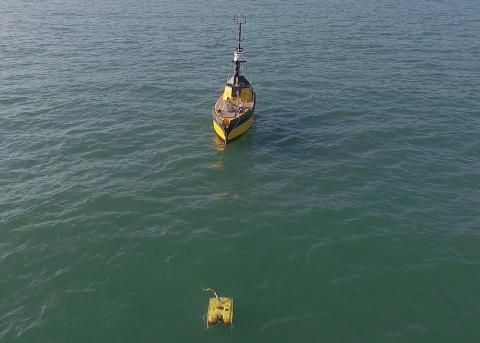
L3 Technologies has announced that the C-Worker 7 autonomous surface vessel (ASV) successfully deployed, operated and recovered an inspection-class remotely operated vehicle (ROV) for vertical and horizontal subsea inspection during a proof of concept demonstration that took place over two weeks in Cawsand Bay, Plymouth, UK.
According to L3, the system has been developed for use in hazardous offshore environments for tasks such as jacket and hull inspections, as well as pipeline and cable survey in oil and gas and renewable energy applications.
“This demonstration is a key milestone in autonomous inspection subsea technology,” says James Cowles, commercial technical sales manager for L3 Unmanned Maritime Systems UK.
Autonomous Vehicles
Autonomous Vehicles
Stanford University researchers develop system to help autonomous cars safely navigate unknown circumstances
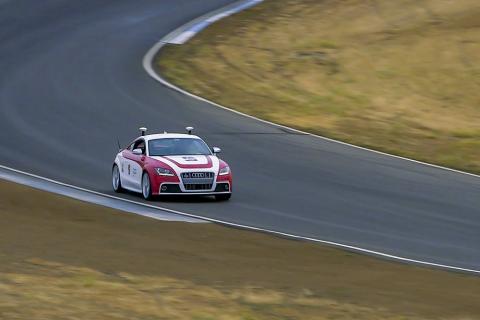
Stanford University researchers have announced that they have developed a new way of controlling autonomous cars that integrates prior driving experiences, which will help cars perform more safely in extreme and unknown circumstances.
Two of Stanford’s autonomous vehicles, Niki and Shelley, were used to test the system at the limits of friction on a racetrack. Researchers say that the system performed about as well as an existing autonomous control system and an experienced racecar driver.
Daimler Trucks acquires majority stake in Torc Robotics in an effort to commercialize highly automated trucks
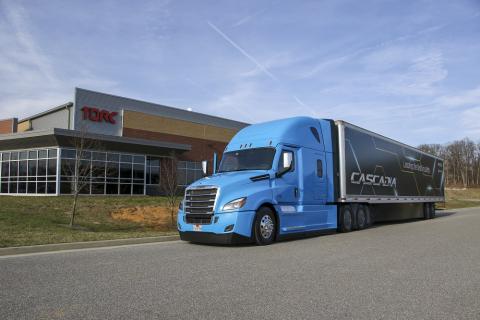
In an effort to commercialize highly automated trucks (SAE Level 4) on U.S. roads, Daimler AG’s subsidiary Daimler Trucks and Buses Holding Inc. is acquiring a majority stake in Torc Robotics.
Torc Robotics' team and Daimler Trucks’ developers, specifically the Research & Development team of Daimler Trucks North America (DTNA), will work together closely as part of the overall agreements.
Sony, NTT DOCOMO to test conceptual driverless vehicle that uses 5G mobile tech
Sony Corporation and NTT DOCOMO Inc. have announced that they will test Sony's conceptual driverless vehicle, the New Concept Cart SC-1, which utilizes 5G mobile technologies for a number of different remotely controlled functions.
The test will be conducted using the trial network in DOCOMO 5G Open Lab GUAM, providing DOCOMO-constructed test facilities and an outdoor verification environment, which will be operated by DOCOMO PACIFIC Inc., a wholly owned subsidiary of DOCOMO.

From Unmanned Systems Magazine: Simulations spur self-driving cars
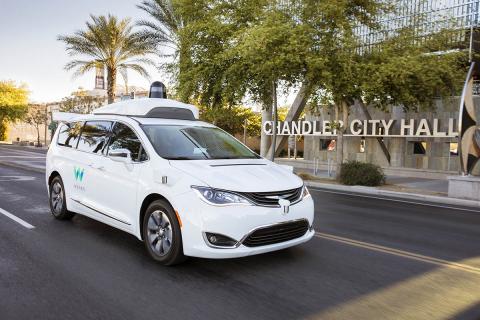
Self-driving cars often grab headlines because of their on-road activity, such as when Alphabet’s Waymo recently launched its Waymo One taxi service in the Phoenix area, or when a Volvo serving as an Uber test vehicle struck and killed a pedestrian in Tempe, Arizona, last year. But much of the effort to turn driverless cars into reality takes place out of public view, in the virtual world.
United Kingdom's first full-sized autonomous bus begins trial
Transport operator Stagecoach, bus manufacturer Alexander Dennis Limited (ADL) and technology company Fusion Processing are collaborating on a trial of the United Kingdom’s first full-sized autonomous bus.
A product of ADL, the ADL Enviro200 vehicle, which was demonstrated for the first time publicly on Monday, March 18, is being trialed in a Manchester bus depot.
During the trial, the bus will be used in autonomous mode within the depot environment to perform movements such as parking and moving into the bus wash.
“This is an exciting project to trial autonomous technology on a full-sized bus for the first time in the UK,” says Stagecoach Chief Executive Martin Griffiths.
Optimus Ride deploying self-driving vehicles in New York and California
Optimus Ride has announced plans to deploy its self-driving vehicles at the Brooklyn Navy Yard and Fairfield, California's Paradise Valley Estates. With these deployments, residents and workers at both sites will have access to efficient and convenient self-driving mobility within defined, geofenced areas, according to Optimus Ride.
The Brooklyn Navy Yard deployment, which is expected to launch in the second quarter of 2019, will be the first commercial self-driving vehicle program in the state of New York. The vehicles will operate on the Brooklyn Navy Yard’s private roads, as they provide a loop shuttle service to connect NYC Ferry passengers to Flushing Avenue outside the Yard’s perimeter.
Sea Machines Robotics opens new advanced technology center in Boston
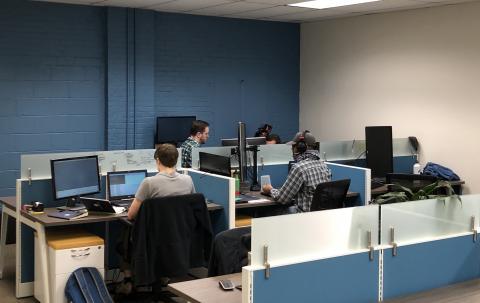
Sea Machines Robotics has opened a new advanced technology center in Boston that will be used to accelerate product development and accommodate the company’s growing team.
Located adjacent to Sea Machine’s headquarters and vessel testing sites in East Boston’s shipyard, the fully renovated workspace provides a collaborative, open working environment, as well as expansive conference and meeting areas. The technology center is also near local restaurants, Logan International Airport and Boston’s public transit system.
Navya's autonomous shuttle to be used at mixed-use destination in Georgia
A private, community development and commercial real estate firm called the Integral Group has announced an autonomous vehicle partnership with Navya that will result in Navya being the shuttle provider for Assembly, an adaptive reuse community, in Doraville, Georgia.
Headquartered in Atlanta, the Integral Group says that this technology will “enhance the overall accessibility of the site,” as it connects the mixed-use destination with two nearby Metropolitan Atlanta Rapid Transit Authority (MARTA) stations.
TuSimple develops automotive-grade camera and vision system for autonomous trucks
TuSimple has developed a proprietary automotive-grade camera and vision system that will be deployed on its autonomous customer fleet by Q3 2019.
Expected to go into volume production in Q2 2019, the system offers “enhanced reliability of autonomous operation,” according to TuSimple. The company adds that the system is a necessary step in its goal of commercializing the first driverless truck.