Autonomous Vehicles
Autonomous Vehicles
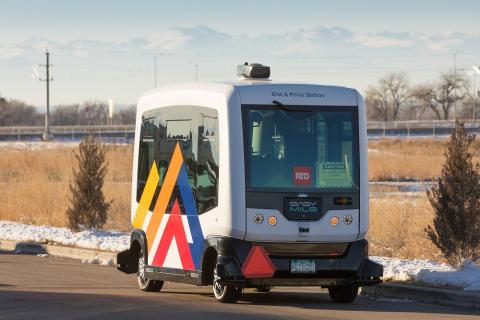
Colorado's Regional Transportation District deploys autonomous shuttle
The Regional Transportation District (RTD) in Colorado debuted its autonomous vehicle (AV) shuttle on Tuesday, Jan. 29. The EasyMile autonomous shuttle is expected to operate for the next four to six months.
According to RTD, this was the first on-road deployment of an AV shuttle not only in Denver, but the state of Colorado.
“We’re excited to see how driverless technology will work in Denver and to embrace new, innovative and better mobility options to move more people and improve travel for residents and visitors alike,” says Denver Mayor Michael B. Hancock, who was one of several in attendance for a ribbon cutting and ride aboard the shuttle.
Argo AI receives permit to test autonomous vehicles in California
According to TechCrunch, Pittsburgh-based self-driving car startup Argo AI has received a permit from the California Department of Motor Vehicles that allows the company to test its autonomous vehicles in the state.
The permit is for one vehicle and two drivers.
Launched in 2016, Argo AI received a $1 billion investment from Ford Motor Company in 2017, just months after forming. Together, Ford and Argo AI are looking to develop a virtual driver system for Ford’s fully autonomous, SAE level 4-capable vehicles, which Ford hopes to have on the roads by 2021.

Researchers from MIT and Microsoft uncover "blind spots" of artificial intelligence systems
Researchers from MIT and Microsoft have developed a model that identifies instances where autonomous systems have “learned” from training examples that don’t match what’s actually happening in the real world.
The researchers say that this model could be used by engineers to improve the safety of artificial intelligence (AI) systems, such as driverless vehicles and autonomous robots.
According to the researchers, AI systems that power driverless cars are thoroughly trained in virtual simulations to prepare the vehicle for nearly every event on the road. Sometimes, though, the car makes an unexpected error in the real world because an event occurs that should, but doesn’t, change the car’s behavior.
Texas Department of Transportation to create Connected and Autonomous Vehicle Task Force
The Texas Department of Transportation (TxDOT) has announced plans to create a Connected and Autonomous Vehicle (CAV) Task Force, which will serve as a central point for CAV advancement in Texas.
The task force will serve as a one-stop resource for information and coordination on all ongoing CAV projects, investments and initiatives in Texas. It will also be used to document the efforts of both public and private entities, and help facilitate partnerships.
Along with these responsibilities, the task force will also host industry forums and report lessons learned to enable progress and encourage more collaboration.
Ontario looks to grow its autonomous vehicle industry
During a recent visit at the University of Waterloo, Ontario, Canada’s Minister of Transportation Jeff Yurek showed his support for the innovation and growth of the autonomous vehicle industry within the Canadian province.
Ontario has updated its Automated Vehicle Pilot program to allow for more testing of emerging technologies, as well as to support future sales of the next generation of automobiles. These actions are a part of a recent package to create jobs by eliminating red tape and burdensome regulations.
Waymo looks forward to building self-driving vehicles in Michigan
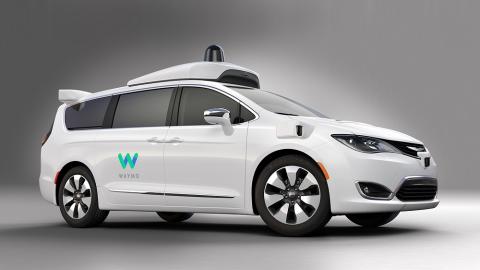
Waymo has announced that the Michigan Economic Development Corporation (MEDC) voted to approve its effort to establish the company’s manufacturing presence to build its self-driving vehicles in the state of Michigan, which will create hundreds of jobs along the way.
“Thanks to our collaboration with MEDC, we’ll bring new job opportunities to the talented citizens of Southeast Michigan,” Waymo says in a company blog post.
“The Great Lakes State is one we already know and love, with a talented workforce and excellent snowy conditions for our cars to test.”
Stop & Shop to deliver groceries in Greater Boston area using driverless vehicles
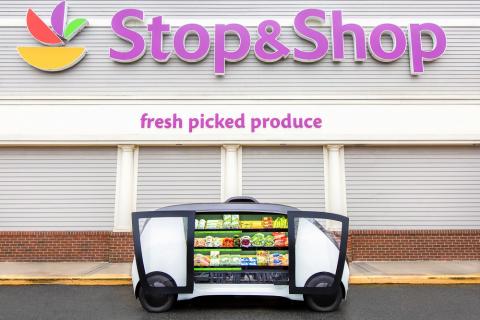
Beginning this spring, a neighborhood grocer called Stop & Shop will utilize driverless grocery vehicles from Robomart to give consumers in the Greater Boston area the opportunity to shop right from their doorsteps.
The vehicles will be used to bring a selection of Stop & Shop's produce, as well as meal kits and convenience items, directly to consumers, in an effort to address their desires to select their own fresh produce when shopping online or using a mobile app, while also delivering an even more convenient grocery shopping experience for Stop & Shop customers in the Boston area.
The vehicles will also provide the potential for Stop & Shop to expand beyond its existing brick-and-mortar footprint.
Bosch to test its autonomous vehicle technology in Victoria, Australia later this year
This year, autonomous vehicle technology will be tested in rural areas of Victoria, Australia, thanks to the first on-road trial approved under the new Automated Driving System (ADS) permit scheme.
Bosch, which is currently developing autonomous vehicle technology, has been awarded $2.3 million from the Connected and Automated Vehicle (CAV) Trial Grants Program. The company has also been granted the state’s first ADS permit for on-road testing of highly automated driving systems.
“Victoria is leading the nation in the future of on-road technology and this trial is an exciting step towards driverless vehicles hitting the road,” says Acting Premier Jacinta Allan.