
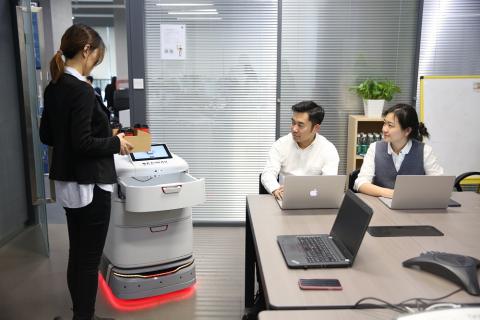
Segway-Ninebot has unveiled Loomo Delivery, which is the company’s first autonomous vehicle that is designed for the short distance delivery industry for take-outs, parcels, and goods.
Capable of safely navigating obstacles and crowded environments, Loomo Delivery is described by Segway-Ninebot as “fast, convenient and a fully automated transporter.”
Autonomous Vehicles
Autonomous Vehicles
Baraja to use latest funding to scale production of tech for autonomous vehicles
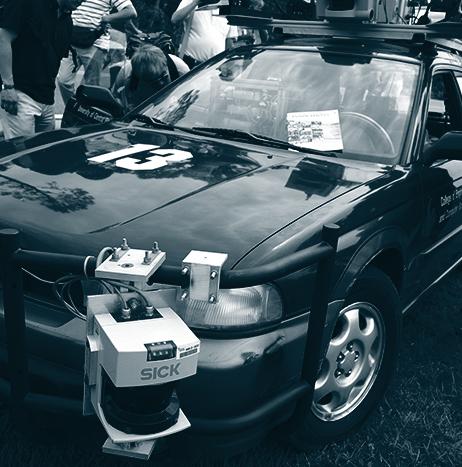
Known for developing Spectrum-Scan LiDAR for autonomous vehicles, a company called Baraja has announced a Series A investment of $32 million that it will use to scale production, hire talent and continue its mission to enable safer autonomous driving.
Headquartered in Sydney, Australia, and with plans to grow its offices in San Francisco and Shanghai, Baraja recently launched a novel LiDAR system that creates powerful eyes for self-driving vehicles using prism-like optics and shifting wavelengths of light.
Baraja says that since bringing its Spectrum-Scan LiDAR to market, it has worked with the world’s top autonomous technology companies.

TomTom and DENSO work together on software platform for autonomous vehicles
TomTom, which specializes in location technology, has announced that it will work with DENSO—a global automotive components manufacturer— on its software platform for autonomous vehicles.
The companies will develop a complete autonomous driving system by combing TomTom's High Definition (HD) Map with DENSO in-vehicle sensors such as cameras and radars to power the localization, perception and path planning functions for the system.
“This collaboration proves the value of the TomTom HD Map and TomTom AutoStream as critical components for autonomous vehicles,” says Harold Goddijn, CEO, TomTom.
DoorDash and Cruise Automation to use autonomous vehicles to deliver your food in San Francisco
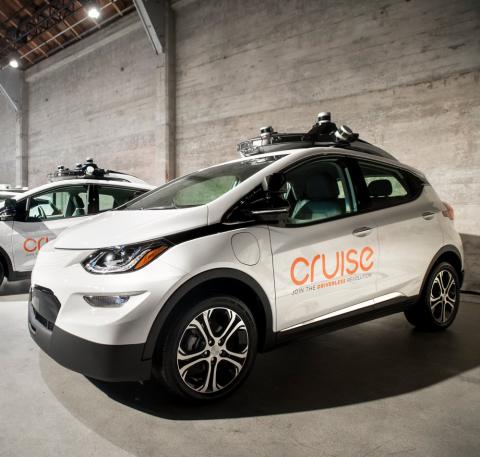
On-demand courier service DoorDash has partnered with General Motors’ Cruise Automation to test what the companies are calling the first food deliveries using autonomous vehicles in San Francisco.
Testing will begin in March.
During testing, DoorDash and Cruise will seek to answer the following three primary questions:
What key technical and infrastructure challenges exist with autonomous delivery?
How can autonomous delivery positively impact merchants, dashers, and customers?
And are autonomous vehicles capable of achieving the same quality standards DoorDash customers have come to know and love?
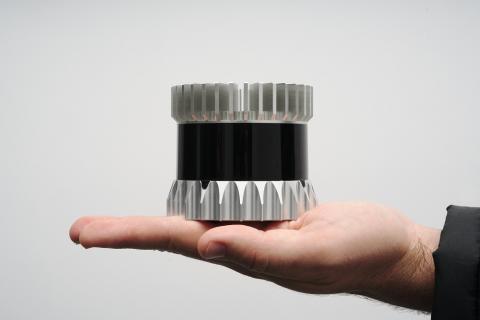
Ouster says its newest lidar sensor is the highest resolution lidar on the market
On Jan. 3, Ouster announced the OS-1-128, the company’s newest multi-beam flash lidar sensor.
Ideal for “safety-critical robotics applications” such as autonomous vehicles, the OS-1-128 is the highest resolution lidar on the market, Ouster says.
With no change in size, mass, power consumption, or ruggedness compared to the OS-1-64, the OS-1-128 continues to deliver on the promise of “Moore's Law-esque” product improvements enabled from Ouster's Multi-Beam Flash Lidar architecture, the company explains.
Priced at $18,000, the OS-1-128 is six times cheaper than the competing 128-channel lidar sensor, according to Ouster, allowing the company to extend its commitment of providing the lowest pricing at every performance level.

Local Motors announces winners of first fleet challenge; second challenge kicks off
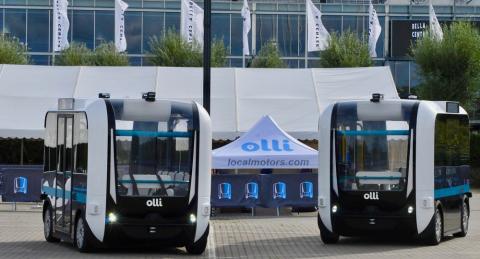
Local Motors by LM Industries Group Inc. has selected entities in Phoenix, Arizona and Sacramento, California as the winning entries for its first fleet challenge for its autonomous shuttle known as Olli.
According to Local Motors, the “first-of-its-kind global fleet challenge” invites municipalities, campuses and designated districts to propose a short-term, local use for Local Motors' self-driving, electric shuttles.
An Olli fleet is deployed to a series of select locations after the entries are evaluated and selected by a panel of esteemed judges.
DOT's BUILD Transportation Grants program awards $5.3 million to autonomous vehicle project planned for Las Vegas
An autonomous vehicle project planned by the City of Las Vegas and Regional Transportation Commission of Southern Nevada in the Las Vegas Medical District has been awarded $5.3 million by the U.S. Department of Transportation’s Better Utilizing Investments to Leverage Development (BUILD) Transportation Grants program, according to the Las Vegas Review-Journal.
Expected to begin late next year, the project, known as GoMed, will provide autonomous and connected vehicle service around a four-mile route between the Las Vegas Medical District and the Bonneville Transit Center downtown.