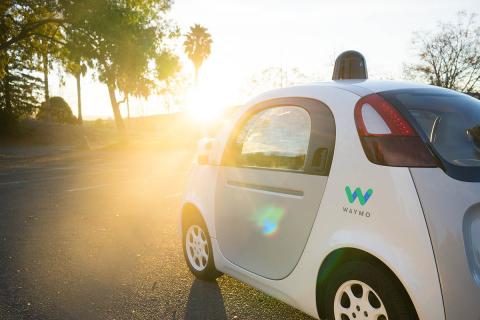
With a mind towards revolutionizing transportation, Lyft has acquired Blue Vision Labs, an Augmented Reality (AR) company that is enabling the next-generation of AR and robotics.
Thanks to the acquisition, Blue Vision Labs will be the first Lyft office in London, and will become part of Lyft’s Level 5 division to build technology for the ride-hailing service’s self-driving efforts.
“We are very excited to be working with Lyft to contribute to their efforts in enabling the future of autonomous mobility,” Blue Vision Labs says in a company blog post.
Autonomous Vehicles
Autonomous Vehicles
Auro receives license to test autonomous vehicles on public roadways in California
Auro, which is the self-driving vehicle division of Ridecell Inc., is now licensed to test autonomous vehicles on public roadways in California.
“Receiving a California autonomous testing permit signals an important expansion of our new mobility product offering,” says Aarjav Trivedi, CEO of Ridecell.
“Ridecell’s successful ridesharing and carsharing fleet management platform will now expand as our Auro division begins operations testing of self-driving passenger cars and minivans on public streets in cities across California.”
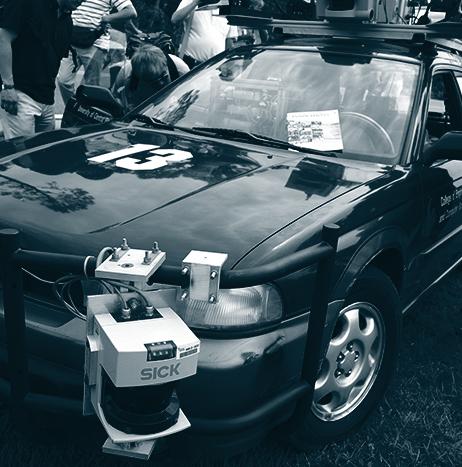
Calgary opens Point Trotter Autonomous Systems Testing Area to test UAS and autonomous vehicle tech
On Friday, Oct. 19, Point Trotter Autonomous Systems Testing Area (Point Trotter ASTA) opened in Calgary, Alberta, Canada.
Point Trotter ASTA will offer businesses, industry and researchers in Calgary a “low cost and accessible” place to test a variety of innovative technologies, including UAS and autonomous vehicles.
“Point Trotter Autonomous Systems Testing Area is a great example of how the The City of Calgary is working with our community partners to support innovation and allow entrepreneurs to bring their big ideas to fruition,” says Mayor Nenshi.
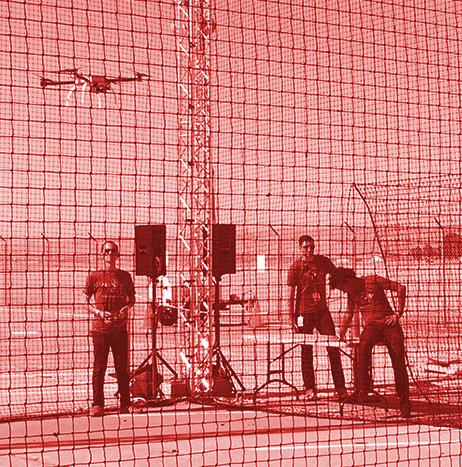
L3 ASV receives funding for "pioneering project" on autonomous navigation of maritime vessels
L3 ASV has received funding from the U.K. government for a “pioneering project” on autonomous navigation of maritime vessels.
Along with its partners in the Maritime & Coastguard Agency (MCA) and United Kingdom Hydrographic Office (UKHO), L3 ASV will conduct a study that focuses on the “future of marine navigational data and charts.”
Funded by the Department for Transport’s Transport Technology Research Innovation Grant (T-TRIG), the project will look to promote early-stage science, engineering or technology innovations, with the potential to advance the U.K.’s transport system.
To start, L3 ASV’s T-TRIG project will explore the characteristics of navigational data and charts in terms of what they’re made of, their structure and how they are updated.

Addison Lee Group and Oxbotica aim to provide self-driving services to customers in London by 2021
London-based private hire taxi company Addison Lee Group and autonomous vehicle software company Oxbotica have agreed to a “wide-ranging strategic alliance” that accelerates the implementation of autonomous vehicles to the streets of London.
Under the agreement, the two companies will work together on the development, deployment and operation of autonomous vehicles, with a goal of providing self-driving services to customers in London by 2021.

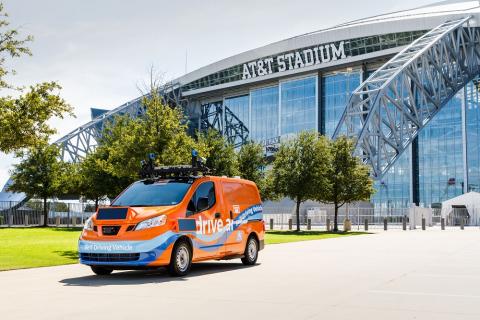
Drive.ai launches self-driving service in Arlington, Texas
On Friday, Oct. 19, Drive.ai officially launched its self-driving program in the city of Arlington, Texas.
For Drive.ai, this is the second self-driving service that it has launched on public roads in the last four months, with the first launching in Frisco, Texas back in July.
During the program in Arlington, Drive.ai is deploying its fleet of self-driving vehicles in Arlington’s downtown district, making the technology available to more than 400,000 residents, as well as visitors to the area.
Calgary's first driverless shuttle pilot project welcomes 4,500 passengers
According to the Canadian Broadcasting Corporation (CBC), the first public trial of a driverless shuttle in Calgary, Alberta, Canada has come to an end.
During the 22-day pilot project, a total of 4,500 visitors were shuttled between Telus Spark and the Calgary Zoo, as the vehicle operated on a separate roadway free of other vehicles, cyclists and pedestrians.
According to City transportation engineer Colin Chapman, passengers had a lot of questions about the vehicle.
“They were interested to see a vehicle that doesn't have a steering wheel, and obviously a bit unsure while they're getting on,” Chapman says via CBC.
RTI's Connext 6 includes first connectivity software designed to accelerate development and deployment of highly autonomous systems
On Oct. 16, industrial internet of things (IIoT) connectivity company Real-Time Innovations (RTI) announced the newest release of its Connext product suite, Connext 6, which includes the first connectivity software designed to accelerate the development and deployment of highly autonomous systems.
With Connext 6, autonomous vehicle developers are provided with the advanced technology necessary to address the complex data distribution challenges of Level 4 and Level 5 autonomy.
From Unmanned Systems Magazine: Self-driving cars ‘will be a reality,’ but regulatory hurdles remain
For the automobile industry, it might be said that everything old is new again, helped along by the coming of automated vehicles.
As in the early days of the industry, many players are entering the AV space, regulators are wondering how to keep up and the public is unsure of the technology.
“Automated or “self-driving” vehicles are a future technology rather than one that you’ll find in a dealership tomorrow or in the next few years,” the National Highway Traffic Safety Administration says in an overview of its guidelines for automakers and state regulators. “A variety of technological hurdles have to be cleared, and other important issues must be addressed before these types of vehicles can be available for sale in the United States.”