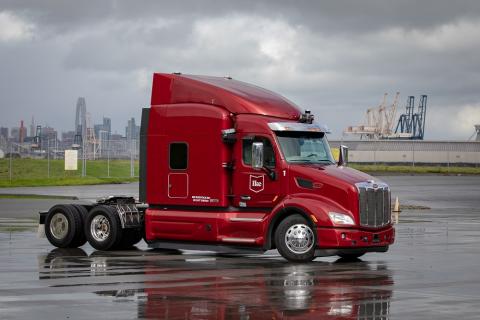
The Daimler AG and BMW Group will work together to develop next-generation technologies for automated driving, the companies announced on Thursday, Feb. 28.
The initial focus of the companies’ partnership will be advancing the development of next-generation technologies for driver assistance systems, automated driving on highways and parking features (up to SAE Level 4).
With this in mind, Daimler and BMW have signed a Memorandum of Understanding to jointly develop this technology, noting that they view their partnership as a “long-term, strategic cooperation,” with a goal of making next-level technologies widely available by the middle of the next decade.
Autonomous Vehicles
Autonomous Vehicles

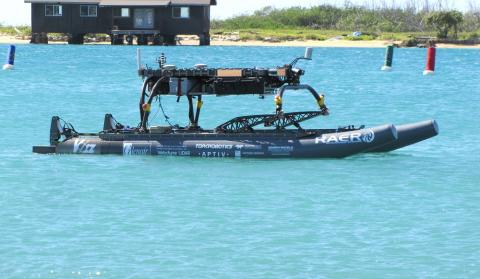
Embry-Riddle's Minion ASV impresses during Maritime Robot X Challenge
Students at Embry–Riddle Aeronautical University recently debuted their Minion autonomous surface vessel during the Maritime Robot X Challenge in December 2018.
Built by engineering student members of the Robotics Association at Embry–Riddle, the 16-foot long boat navigated an open water obstacle course, adapted to the waves and wind on the bay, and launched and recovered a small submarine before returning to dock.
According to Embry-Riddle, the Minion was created to compete in the Maritime Robot X Challenge, which is a weeklong biennial international competition co-sponsored by the Office of Naval Research (ONR), RoboNation, and a Hawaii-based company called NAVATEK that designs ships and other amphibious vehicles.
Scania and Nobina collaborating to test autonomous buses in Sweden
Swedish commercial vehicle manufacturer Scania and Nobina, the largest public transport operator in the Nordic countries, have announced that they will work together to begin trials of autonomous buses on regular routes in the Stockholm, Sweden area.
The trials will be conducted in two stages: first without passengers, and then with passengers. The buses will have a safety-driver onboard throughout the trials to monitor operations and help passengers.

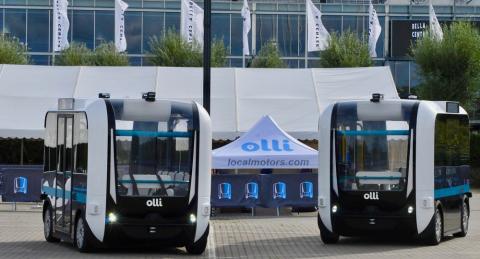
Sacramento State welcomes Olli self-driving shuttle to campus
After winning an Olli fleet challenge for presenting a best-use scenario for Local Motors' Olli self-driving shuttle, Sacramento State welcomed the autonomous shuttle to its campus on Thursday, Feb. 21.
In cooperation with Sacramento State, Local Motors officials have mapped a route that two Olli shuttles will use for the next few months.
“This deployment is a big moment for Sacramento State and for Local Motors, and follows months and months of co-creation, design and development,” says Jay Rogers, Local Motors co-founder and CEO.
Rhode Island Department of Transportation begins testing autonomous vehicles
On Wednesday, Feb. 20, Rhode Island Department of Transportation (RIDOT) Director Peter Alviti, Jr., along with state and local officials, hosted a demonstration of autonomous vehicle technology at the Quonset Business Park in North Kingstown, Rhode Island.
With the initial phase of a pilot project scheduled to launch in Providence, Rhode Island this spring, the autonomous vehicles are being tested this week on low-volume roads in the Park.
“This is a very exciting day as we kick-off testing of autonomous vehicles, putting Rhode Island on the map as a leader in this new high-tech field in transportation,” says Governor Gina Raimondo.
Beep and Navya bringing autonomous shuttles to Central Florida
A Florida-based autonomous mobility technologies provider called Beep has announced an exclusive dealer arrangement for the state of Florida with Navya.
Beep and Navya have also announced a development partnership for shared mobility and autonomous vehicle research, which will result in Beep leading the testing and pilot deployments of Navya’s driverless and fully electric AUTONOM Shuttle in Florida.
Beep is working with Lake Nona—a smart community within the City of Orlando and Orange County where the company is headquartered— to bring the first autonomous shuttles to Central Florida. Service is expected to begin this spring.
Canadian government invests $40 million in BlackBerry QNX for next generation of connected and autonomous vehicles
In an effort to establish Canada as a global leader in cybersecurity and automotive software for connected and autonomous vehicles, the Government of Canada has announced that it will invest $40 million in BlackBerry QNX to develop safe and secure software systems for the next generation of connected and autonomous vehicles.
BlackBerry QNX, which is a business unit of BlackBerry Limited, will create more than 800 new middle class jobs in Canada over the next ten years, with plans to maintain nearly 300 more.
The company will also provide new skills development and learning opportunities to help train Canadians for the jobs of tomorrow, and keep the country competitive in today’s global economy.
Ike believes self-driving trucks can help solve challenges plaguing trucking industry
A self-driving truck startup called Ike has announced that it has raised $52 million in Series A financing.
Ike notes that a number of factors such as a shortage of drivers, new regulations, growing accident rates, and the rise of ecommerce are having a major impact on the trucking industry, but the company believes that self-driving trucks can help solve these challenges.
“We came together over a passion for trucking, and created Ike with a mission to make trucks safer, truckers more valuable, and trucking more efficient,” Ike says in a company blog post.