
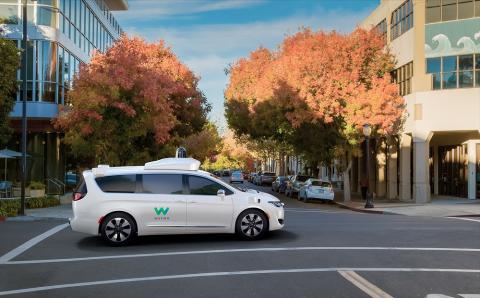
Waymo is preparing to launch a ride-hailing service that utilizes its driverless vehicles, after the company received a permit from the Arizona Department of Transportation to operate as a Transportation Network Company (TNC) in late January.
According to Bloomberg, the designation allows Waymo’s fleet of driverless Chrysler Pacifica minivans to pick up and drop off paying riders in Arizona through a smartphone app or website.
Since April 2017, Waymo has been testing a self-driving car service in the Phoenix area that lets passengers hail cars through an app, similar to ride-hailing services such as Uber and Lyft.
Autonomous Vehicles
Autonomous Vehicles
Weekend Roundup
This Week in the Unmanned Systems and Robotics World
Transport Canada has granted Drone Delivery Canada (DDC) a Compliant UAV Operator Special Flight Operations Certificate (SFOC). DDC says that receiving this additional approval “represents the balance of the remaining two steps of a methodical process to prove the Company’s operational safety practices and our professionalism to Transport Canada.” (Drone Delivery Canada)

D.C. to explore autonomous vehicle program through Interagency AV Working Group
In an effort to explore an autonomous vehicle (AV) program in the city, Washington, D.C. Mayor Muriel Bowser announced the establishment of the Interagency AV Working Group on Feb. 12. The working group will “proactively prepare the District for AV technologies and ensure that AV deployment will benefit District residents and visitors.”
The working group is made up of District agencies focused on transportation, disability rights, environmental issues, and public safety. It also includes representatives from a variety of entities across D.C., including from the Office of the City Administrator, the District Department of Transportation, and the Homeland Security and Emergency Management Agency.

Weekend Roundup
This Week in the Unmanned Systems and Robotics World
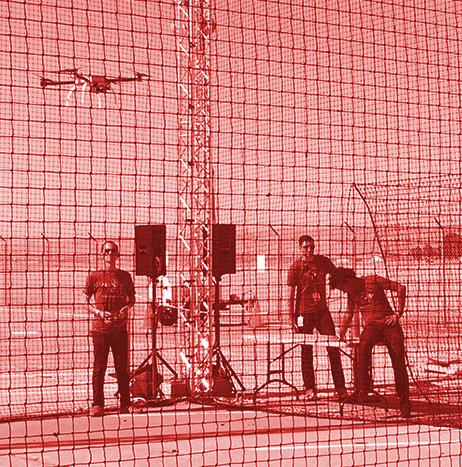
PropelUAS has announced that it is working with Lockheed Martin and Medical Express Ambulance Service (MedEx) to “combine the very best elements of emergency management systems with the potential of tactical UAS.” PropelUAS, which is a division of Evans Incorporated, works with organizations “to assist in navigating and integrating UAS technologies into their organizations.” (PropelUAS)
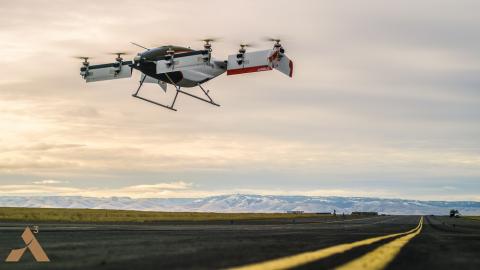
Airbus' Vahana aircraft successfully completes first full-scale flight test
Vahana, which is the all electric, self-piloted, VTOL aircraft from A³ by Airbus, successfully completed its first full-scale flight test on Jan. 31.
During the test, which was completed at the Pendleton UAS Range in Pendleton, Oregon, Vahana reached a height of 16 feet, before descending safely. The fully self-piloted flight lasted for a total of 53 seconds.
“Today we are celebrating a great accomplishment in aerospace innovation,” says Zach Lovering, Project Executive of Vahana.
Weekend Roundup
This Week in the Unmanned Systems and Robotics World
Officers from the Monmouth County Sheriff’s Office recently conducted a UAS demonstration at the Essex County Emergency Management Headquarters in Essex County, New Jersey. The technology is used in Monmouth County for search and rescue operations. (Baristanet)
Suncor Energy to use autonomous haulage systems at company-operated mines
Suncor Energy, which is a Canadian integrated energy company, has announced that it will proceed with the “phased implementation of autonomous haulage systems (AHS)” at company-operated mines, starting with the North Steepbank mine.
Over the next six years, Suncor expects to deploy more than 150 autonomous haul trucks in the full program, which will be “one of the largest investments in electric autonomous vehicles in the world,” according to the company.
Suncor has spent the past four years evaluating AHS technology, and the company has validated that this technology can be used “safely, effectively and efficiently in its operating environment.”
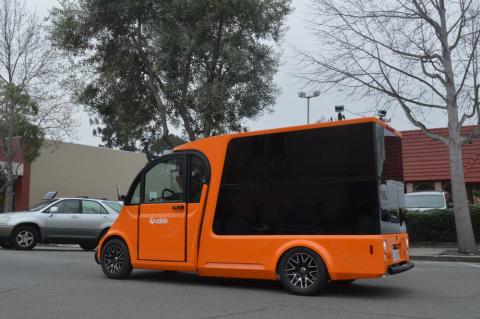
udelv makes world's first public road test deliveries using its autonomous delivery vehicle
A Burlingame, California company called udelv made the world’s first public road test deliveries on Jan. 30 using its autonomous, last-mile delivery vehicle. The vehicle made deliveries from Draeger’s Market in San Mateo, California to two nearby customers.
The vehicle, which was supervised by a safety driver and in test mode to stay compliant with existing California regulations, traveled on a 2.5-mile loop that included traffic lights, lane changes, unsignalized left turns and two delivery stops. According to udelv, the vehicle's journey was accomplished “flawlessly.”
Fiat-Chrysler Automobiles to supply Waymo with thousands of Chrysler Pacifica Hybrid minivans
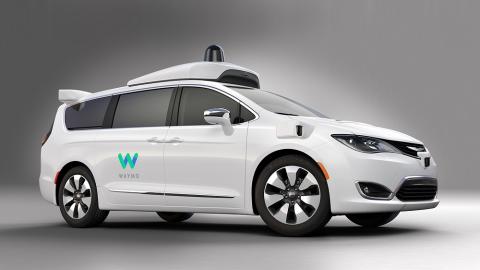
Fiat-Chrysler Automobiles (FCA) has announced that it will deliver thousands of its Chrysler Pacifica Hybrid minivans to Waymo, to support the launch of the world’s first driverless ride-hailing service.
This will not be the first mass delivery of Pacifica Hybrid minivans from Fiat-Chrysler Automobiles to Waymo, as in 2016, the automobile company delivered 100 Pacifica Hybrid minivans, adapted for self-driving, to Waymo. 500 more were delivered in 2017.
The collaboration between Waymo and FCA engineers allowed the teams to design a “self-driving vehicle built on a mass production platform.”
Driverless shuttle bus in Minneapolis welcomes passengers during Super Bowl festivities
On Friday, Jan. 26, the Minnesota Department of Transportation (MnDOT) offered free shuttle rides in a driverless shuttle bus traveling a one-block section of the Nicolet Mall, which is located in downtown Minneapolis. The rides were scheduled to continue, subject to weather conditions, on Jan. 27 and 28.
The rides were offered as part of the Super Bowl festivities taking place leading up to the game on Feb. 4 in Minneapolis. Approximately 80 people showed up to test out the vehicle on Jan. 26, and according to the Star Tribune, the vehicle received positive reviews. Shirley Moises called it “the wave of the future,” while Kyle Delahunt said the ride was “enjoyable.”