
From October 9 to 13, Ann Arbor, Michigan-based May Mobility Inc., which is a startup that became incorporated in January of this year, will operate a pilot program using autonomous vehicles to shuttle Bedrock LLC employees in downtown Detroit to and from a parking structure.
A total of 15 hours of testing will be conducted, as the service will be provided to staff from 7 to 10 p.m.
Two Polaris Industries Inc.-manufactured electric vehicles, which will be manned during testing, will be used during the program, and according to May Mobility CEO Edwin Olson, the vehicles have six doors for six seats.
This pilot program will be the sixth major autonomous vehicle project for the May Mobility team, which currently stands at 15 members.
Autonomous Vehicles
Autonomous Vehicles
Weekend Roundup
This Week in the Unmanned Systems and Robotics World
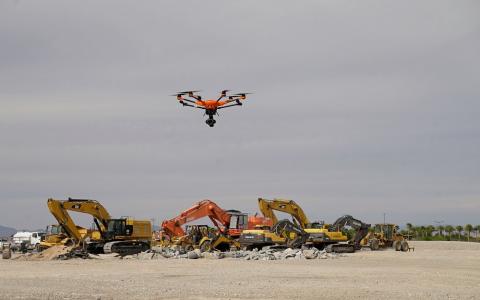
Yuneec International has announced that its “first product offering dedicated to commercial use,” the H520 sUAS, is now available. The H520 sUAS, which uses Yuneec’s six-rotor platform, includes enterprise-grade cameras and mission planning software, making it useful commercially across a variety of verticals such as construction, inspection and public safety. Some of the offerings of the sUAS include an assortment of payload options, reliable and stable flight, and an integrated ground controller. (Yuneec)
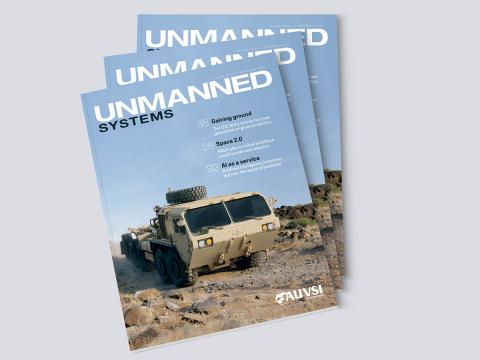
Inside the September 2017 issue of Unmanned Systems
The September 2017 issue of Unmanned Systems looks at Army plans for robotics, NASA plans to use robotics to refuel satellites in space, and how businesses, artists and others are using artificial intelligence to improve their products and services.
TuSimple to test driverless trucks in Tucson, Arizona after opening new office
TuSimple, which is a company based in China that is developing driverless commercial trucks, has opened an office in Tucson, Arizona, which will allow the company to test and demonstrate its vehicles in the city.
This will be TuSimple’s second office in the United States, as the company also has an office in San Diego.
“We believe that by leveraging the autonomous truck technology, we can help local economic growth by making Tucson the new nexus for [transportation logistics], and also sprout new job opportunities,” says TuSimple co-founder and Chief Technology Officer Xiaodi Hou, via Arizona Public Media.

EasyMile to open U.S. headquarters in Denver
This fall, EasyMile will open its U.S. headquarters in Denver, Colorado at the Panasonic Enterprise Solutions campus, according to the Denver Post.
The office will be located in a 6,000-square-foot office and warehouse space, after that space has its renovations completed.
According to Lauren Isaac with EasyMile, the company does not have a lot of employees in North America as of right now, but there are plans in place to change that very soon.
“There are only two employees in North America now, but we do have significant growth plans for the next two years,” Isaac says.
CDOT showcases autonomous vehicle designed to protect roadway maintenance crews
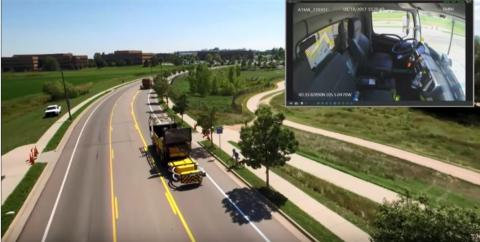
During a live roadway striping operation in Fort Collins, Colorado, the Colorado Department of Transportation (CDOT) and its partners unveiled and showcased the Autonomous Impact Protection Vehicle (AIPV), which is designed to help protect roadway maintenance crews.
Described as a “first-of-its kind work zone vehicle,” the AIPV is customarily positioned behind road construction crews so that it can protect road workers from the traveling public. Thanks to the AIPV removing the driver from a truck that is acrtually designed to be hit, the AIPV ultimately increases work zone safety for everybody.
Oregon State University researchers receive grant to study operation of autonomous marine vehicles
Five Oregon State University (OSU) researchers have received a $1 million grant from the National Science Foundation (NSF). The grant will be used to study the operation of autonomous marine vehicles.
Building on cross-campus collaborations, the project brings together engineers and ocean scientists so that they can produce “innovations in OSU-developed ocean-sensing technologies,” such as the robotic oceanographer surface sampler (ROSS), and advanced underwater glider operations.
Ultimately, the project will look improve the autonomous capabilities of vehicles by increasing their “neglect tolerance,” which is the ability to function for long periods of time despite minimal or no communication with a human technician.
Persistent Systems introduces Lower C-Band RF module that can be used by UGVs
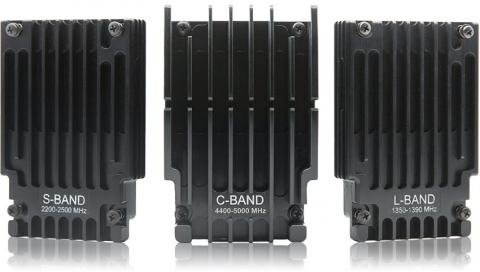
Persistent Systems, LLC has released a Lower C-Band RF module for its MPU5 radio system.
According to Persistent, the Lower C-Band frequency is a “requirement of multiple Unmanned Ground Vehicle (UGV) Programs of Record.”
The new Lower C-Band module operates in the 4400 to 5000 MHz frequency band; the same frequency band that is used by NATO Military Forces, Federal / Homeland Security (DHS, DOJ), and Public Safety organizations.
Long range performance and high throughput are achieved thanks to Persistent’s radio module providing “6W of transmit power via its 3×3 MIMO architecture.”
Michigan’s Willow Run facility could be ready for autonomous car testing by December
According to the Detroit News, the American Center for Mobility (ACM) expects the Willow Run facility in Michigan to be ready for testing autonomous cars by December, after construction for the nonprofit operation began in June.
Test tracks at the facility could be available for use by December 1, giving automakers, Tier One suppliers and technology companies a place to test their autonomous vehicle technologies.
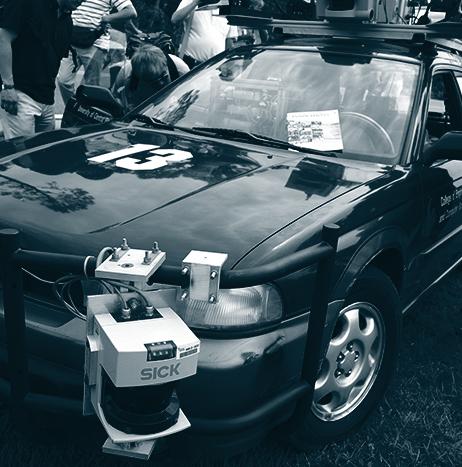
India’s Flux Auto looking to create affordable self-driving technology for trucks
According to TechCrunch, a startup company in India called Flux Auto is looking to make autonomous driving technology “more widely available” for truck operators, especially those outside of the United States, by significantly lowering the cost of the technology.
Based in Bangalore, India, the 16-person startup would like to democratize autonomous systems, as it is working on technology that, when finished, could allow any kind of truck to be retrofitted with self-driving technology at a much lower price.