
After completing its tender offer for Mobileye, Intel says that it is “poised to accelerate its autonomous driving business from car-to-cloud,” with the announcement that Mobileye will start building a fleet of fully autonomous (level 4 SAE) vehicles.
The initial vehicles will be deployed later on this year, and eventually, the fleet will expand to more than 100 automobiles.
The vehicles will be tested in the United States, Israel and Europe.
Autonomous Vehicles
Autonomous Vehicles

Driverless bus trial launching in Sydney, Australia
The New South Wales (NSW) state government will officially launch a two-year trial of autonomous vehicles when the first stage of the trial begins later this month.
During the first stage of the trial, a driverless shuttle bus, which will run autonomously on a pre-programmed route, will undergo tests and safety checks in an off-road environment at Newington Armoury, which is located near the former Olympic village.
Next year, the trial will be extended to roads at Sydney Olympic Park, giving office workers and other members of the public the opportunity to ride in the vehicle.
For Transport Minister Andrew Constance, this trial is all about finding out how this technology can benefit NSW.

World’s first crewless, autonomously operated ship expected to launch in 2018
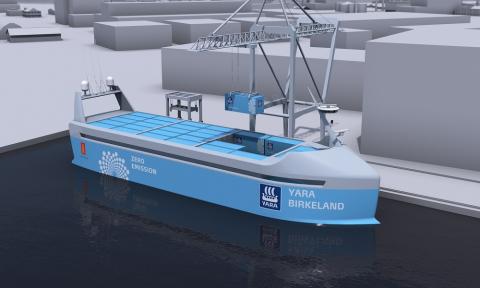
According to the Wall Street Journal, the world’s first crewless, autonomously operated ship is scheduled to launch in late 2018.
Known as the Yara Birkeland, the 100-container, electric ship is designed to “navigate itself around other boat traffic and to dock on its own,” using the Global Positioning System, radar, cameras and sensors.
The ship is being jointly developed by two Norwegian companies, Yara International ASA and Kongsberg Gruppen ASA. Yara International ASA is an agriculture firm, while Kongsberg Gruppen ASA builds guidance systems for civilian and military uses.
Microsoft and Baidu partner to advance autonomous driving
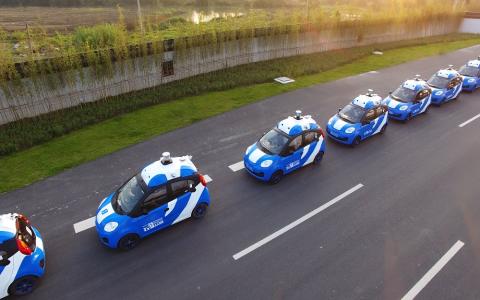
In an effort to “take the technical development and adoption of autonomous driving worldwide,” Microsoft Corp. and Baidu Inc. have announced a new partnership.
Through the partnership, the two companies will, among many things, look into opportunities on how to deliver “connected vehicle solutions and unique customer experiences that aim to digitally transform the autonomous driving industry.”
“Today’s vehicles already have an impressive level of sophistication when it comes to their ability to capture data,” says Kevin Dallas, corporate vice president, Microsoft.
Autonomous vehicle technology company Nauto raises $159 million
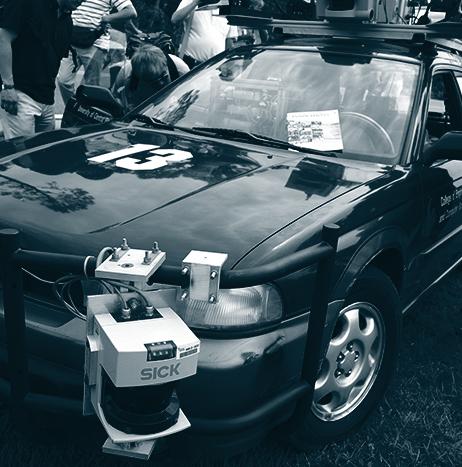
An autonomous vehicle technology company called Nauto has closed a $159 million Series B financing round, which was led by a subsidiary of SoftBank Group Corp. and Greylock Partners.
According to Nauto, the funds will be used to “fuel Nauto’s growth and the deployment of its retrofit safety and networking system into more vehicles around the globe.”
The funding will also support the Nauto data platform’s expansion in autonomous vehicle research and development across a variety of automakers.
Ride sharing a first step to automated vehicles, speakers say
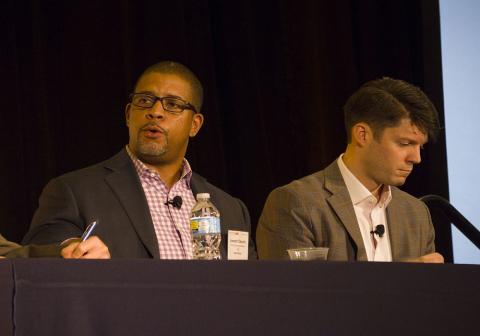
Shared rides — such as are offered by Lyft’s Lyft Line and Uber’s Uber Pool — are likely the first step to getting riders to accept future automated vehicles, representatives of those on-demand services said at the second day of the Automated Vehicles Symposium in San Francisco.
Joseph Okpaku, vice president of government operations for Lyft, said Lyft Line is available in 60 cities worldwide. In those cities, 20 percent of Lyft rides are shared rides, and some places, such as San Francisco, are much higher, verging on 50 to 60 percent.
Describing the company as “bullish” on automated vehicles, Okpaku said in five years, most of the company’s rides will be in automated vehicles, at least in urban core areas.
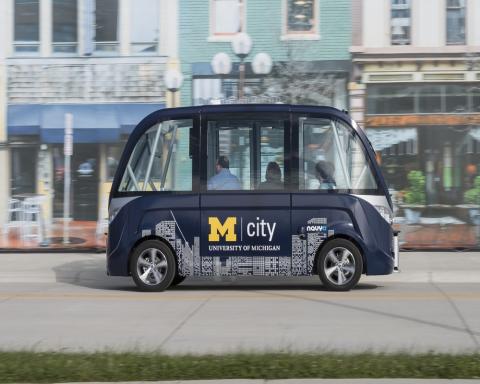
NAVYA will build its autonomous shuttle vehicles at new plant in Michigan
In a joint announcement with project collaborators Michigan Economic Development Corporation (MEDC) and Ann Arbor SPARK, NAVYA has announced that it will open its first U.S. production plant in Saline, Michigan.
NAVYA plans on building approximately 25 of its ARMA fully autonomous shuttle vehicles at the 20.000+ sq. foot plant by the end of the year.
“We at NAVYA could not be more pleased to call Saline, Michigan home to our first assembly plant in North America,” says NAVYA CEO Christophe Sapet.
“As the greater Ann Arbor area continues to establish itself as a hub for autonomous vehicle development, we feel it’s the perfect location for us.”
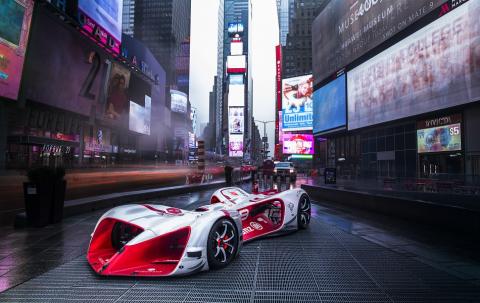
Roborace showcases world’s first driverless electric racing car in New York City
The world’s first driverless electric racing car, the Robocar, made its debut in the United States on Friday, July 14, as it was showcased in Times Square in New York City.
“We’re thrilled to mark Roborace’s U.S. debut with a showcase of our beautiful Robocar in the iconic Times Square,” said Denis Sverdlov, CEO of Roborace.
“Driverless and electric technologies will be extremely important in cities like New York City, and Roborace is bringing them into the public’s consciousness.”
BAE Systems to develop United Kingdom’s first dedicated autonomous systems testing service
BAE Systems, a company that provides “advanced, technology-led defence, aerospace and security solutions,” will “design and deliver the UK’s first dedicated autonomous systems testing service,” after being awarded a grant of £457,000 from the Solent Local Enterprise Partnership (LEP).
The new service, which is expected to be ready for use later this year, will give customers a “safe, controlled and realistic environment in the Solent” where they can conduct trials and test a variety of systems such as unmanned boats, air vehicles and autonomous sensors.
West Sacramento “kicking the tires” on idea of driverless shuttle bus
With the city of West Sacramento reportedly “kicking the tires” on the idea of using a driverless shuttle bus according to CBS Sacramento, an Easymile-manufactured EZ10 driverless shuttle bus was demonstrated on July 11 by city officials in West Sacramento and the makers of an autonomous vehicle company called Transdev, which operates the vehicle.
Capable of holding 12 passengers, and described as a “train but with virtual tracks,” the EZ10 shuttle runs on battery, and has a battery life of about 10 hours, depending on “how hot of a day and how much air conditioning is being pushed through it,” says Dick Alexander, vice president of Transdev.