
In an effort to determine whether or not UAS can be used to validate satellite data more efficiently, the National Oceanic and Atmospheric Administration (NOAA) has partnered with the University of Maryland Unmanned Aircraft Systems (UAS) Test Site.
NOAA regularly measures temperatures and light wavelengths from earth, and compares those results with results sent down from space.
While this process helps make sure that weather forecasts aren’t manipulated by inaccurate data, it is labor intensive and hard to conduct over large regions, which limits how directly the two data sets can be compared.
Through this partnership, NOAA and the UAS Test Site will investigate the potential of UAS saving time and money while collecting more data over a wider region.
Data
Data
Lyft setting up unit to develop autonomous vehicle technology
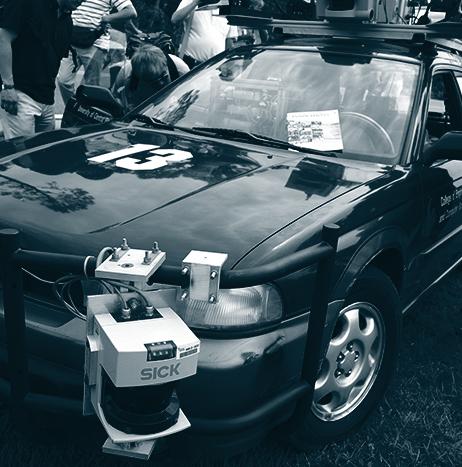
According to the Associated Press, San Francisco-based ride-hailing service Lyft is setting up its own unit, called “Level Five,” to develop autonomous vehicle technology. The unit is named after the industry term for fully autonomous vehicles.
Lyft says that it will open its network, and invite automakers and tech companies to use the network to transport passengers in their self-driving vehicles and gather data along the way.
Initially, the network will be open to Lyft’s current partners, which includes companies such as Google's Waymo autonomous vehicle operation and General Motors.
Microsoft and Baidu partner to advance autonomous driving
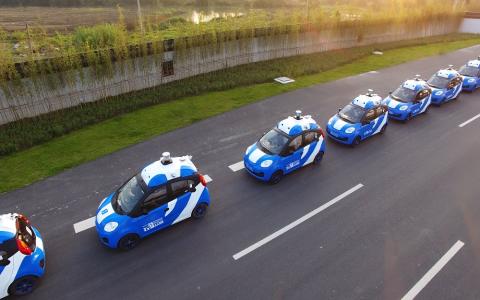
In an effort to “take the technical development and adoption of autonomous driving worldwide,” Microsoft Corp. and Baidu Inc. have announced a new partnership.
Through the partnership, the two companies will, among many things, look into opportunities on how to deliver “connected vehicle solutions and unique customer experiences that aim to digitally transform the autonomous driving industry.”
“Today’s vehicles already have an impressive level of sophistication when it comes to their ability to capture data,” says Kevin Dallas, corporate vice president, Microsoft.
Autonomous vehicle technology company Nauto raises $159 million
An autonomous vehicle technology company called Nauto has closed a $159 million Series B financing round, which was led by a subsidiary of SoftBank Group Corp. and Greylock Partners.
According to Nauto, the funds will be used to “fuel Nauto’s growth and the deployment of its retrofit safety and networking system into more vehicles around the globe.”
The funding will also support the Nauto data platform’s expansion in autonomous vehicle research and development across a variety of automakers.
Cell phone network takes Delair-Tech beyond line of sight
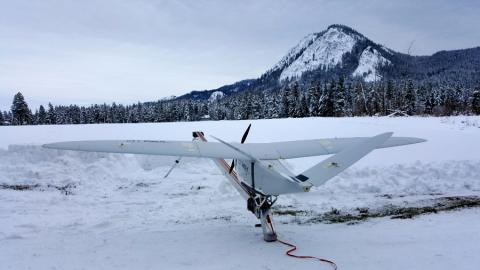
Delair-Tech, based in both France and California, announced it has used 3G cell phone connectivity to allow its DT18 drone to fly beyond line of sight to inspect power lines in France.
In early June, the company flew the aircraft for more than 50 kilometers (31 miles) for the company RTE, inspecting power lines between the towns of Samur and Poitiers, using only 3G connections to navigate.
“That’s a major step forward for beyond line of sight flight,” says Benjamin Benharrosh, the company’s cofounder.
French airspace regulators were present for the flight, and Benharrosh said the company would like to present the results to the U.S. Federal Aviation Administration as well.
Navy tests Mine Warfare Rapid Assessment Capability system that uses UAS to detect buried and submerged mines
A recent technology demonstration at Marine Corps Base Camp Pendleton tested the new Mine Warfare Rapid Assessment Capability (MIW RAC) system, which is a portable, remote-controlled system that uses a UAS to detect buried and submerged mines.
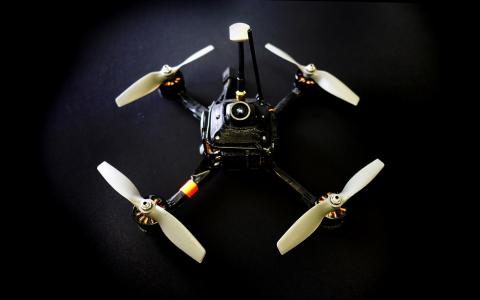
MIW RAC, which is sponsored by the Office of Naval Research’s (ONR) TechSolutions program, includes a tablet device, and a one-pound quadcopter UAS, which is equipped with “an ultra-sensitive magnetometer sensor system,” that allows the UAS to detect mines, and provide real-time search data to a handheld Android device.
Canadian UAVs, Lockheed Martin Conduct First BVLOS UAS Inspections of Pipelines and Powerlines in Canada
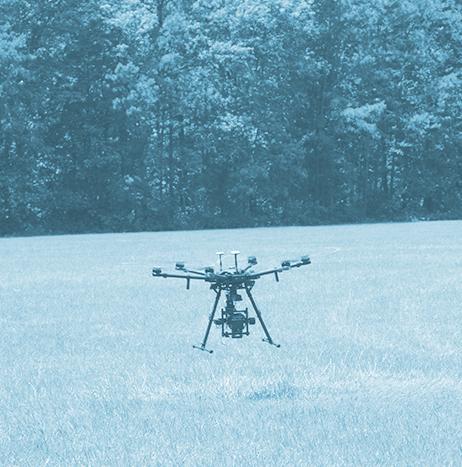
Canadian UAVs and Lockheed Martin CDL Systems have conducted the first beyond visual line of sight (BVLOS) inspections using UAS in Canada, at the Foremost Centre for Unmanned Systems in Alberta.
Using Lockheed Martin’s Indago 2 UAS, which was compliant with Transport Canada, several pipelines, well sites and power lines were inspected during the flights.
“Canadian UAVs has been focused on creating an end-to-end paradigm in coordination with Transport Canada to conduct these operations outside of Restricted Military Airspace where our customers have a substantial regulatory and logistical needs to acquire actionable data,” says Canadian UAVs Inc. President Sean Greenwood in a press release.
AkitaBox partners with PrecisionHawk to use UAS technology for facility inspections
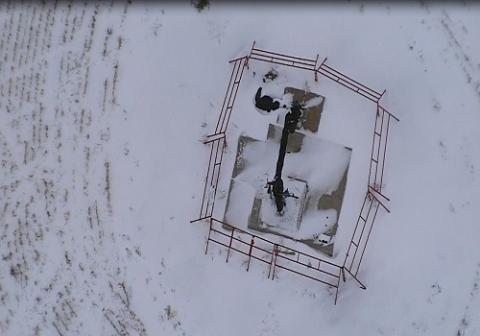
AkitaBox, which is a facility management software company that automates maintenance, planning and inspections, has announced a partnership with commercial UAS and data company PrecisionHawk, which will result in the two working together to integrate aerial data into the facility management workflow.
Through the partnership, AkitaBox’s customers will have access to PrecisionHawk’s UAS packages and services to improve visibility for inspections, surveys and scans of a worksite. AkitaBox is hopeful that by offering better data capture capabilities, it will advance technology in the facility management space, which can ultimately yield better business outcomes for its clients.

Oklahoma State University students and others use UAS to gather data on weather
About 60 students and staff from Oklahoma State University (OSU), and the universities of Kentucky, Oklahoma and Nebraska, are spending the week of June 26 flying UAS at OSU’s Unmanned Aircraft Flight Station, to collect data on weather.
This is the second year that the universities have come together to test UAS and their ability to improve weather forecasting, and the students seem to enjoy the collaborative environment as they work with students from different universities on a shared challenge.